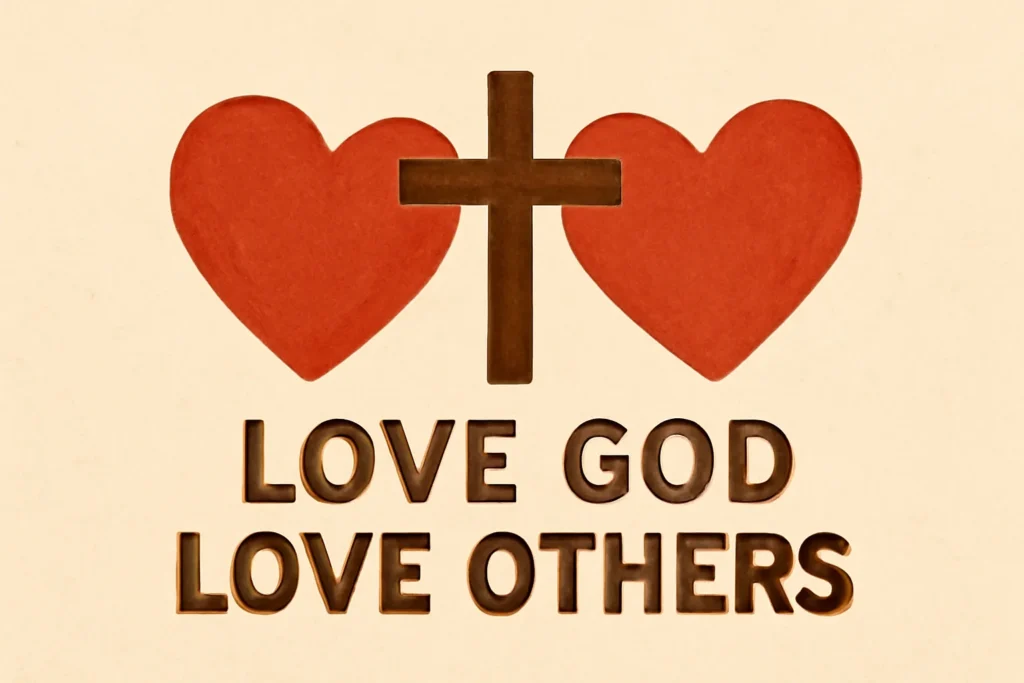
In Christian tradition, the call to Love God and Love Others stands as the cornerstone of ethical living, worship, and community. The biblical strands that weave these commands together appear across the narrative of Scripture, inviting believers to orient their entire being toward God and to extend that steadfast love toward neighbors, strangers, and even enemies. This article surveys the primary verses that express this dual obligation, explores their historical and literary contexts, and offers practical guidance for living out Love God and Love Others in daily life—from personal devotion to family life, church communities, and broader society.
Two overarching commandments repeatedly emerge in Scripture as the defining criterion of obedience. They are presented as complementary and inseparable: vertical love directed toward God and horizontal love directed toward others. The language emphasizes both breadth and depth—love that encompasses heart, mind, soul, and strength, and love that translates into concrete actions toward people around us.
The Greatest Commandment in Jesus’ Teaching
In the gospel of Matthew, Jesus highlights a single answer that summarizes the Law and the Prophets: “Love the Lord your God with all your heart and with all your soul and with all your mind.” He adds a second, equally important command: “Love your neighbor as yourself.” These two commands, often referred to together as the Great Commandment, form the ethical center of Christian life. Similar pronouncements appear in Mark and Luke, underscoring the unity of the vertical and horizontal dimensions of love.
Matthew 22:37-40 presents the twofold command as the summation of all biblical expectations.
Mark 12:29-31 echoes the same structure, reinforcing that love of God and neighbor are inseparable in Jesus’ teaching.
Luke 10:27 records a similar exhortation, with the proclamation that loving God and neighbor fulfills the righteous requirement of the Law.
In teaching about these commands, Jesus ties motive and action together. Love is not simply a sentiment; it is a way of ordering life around God’s purposes and the welfare of others. The phrases “Love the Lord” and “Love your neighbor” are not competing ideals but two sides of a single ethical coin—devotion to God that overflows into compassionate, just, and hospitable living toward people made in God’s image.
Two Dimensions: Vertical and Horizontal Love
The First Commandment places God at the center—mind, heart, and strength oriented toward the divine. The Second Commandment expands that orientation outward to a neighbor who bears God’s image. This dual emphasis creates a dynamic missional life: a spiritual relationship with God grounds ethical action in the real, everyday world. When Christians practice Love God, they learn to honor God in prayer, worship, study, and obedience. When they practice Love Others, they embody that same love in forgiveness, service, generosity, and solidarity with the marginalized.
Old Testament Foundations That Lead into Jesus’ Command
For many readers, the two great commands reflect a continuity with the Torah. The concept of loving God with all one’s being appears in the Shema, a central proclamation in Deuteronomy 6:5: “You shall love the Lord your God with all your heart and with all your soul and with all your might.” The command to love your neighbor as yourself originates in Leviticus 19:18 and is connected to a broader ethic of justice, mercy, and neighborliness. In Jesus’ day, these verses formed the integrated fabric of worship and conduct; he did not abolish them but reinterpreted them in light of his own life, death, and resurrection. The apostles later echoed this synthesis, making it a defining posture for Christian discipleship.
Variations and Semantics: Different Wording Across Translations and Languages
The biblical text has been translated into many languages and rendered in slightly different ways over centuries. These variations illuminate subtle differences in emphasis while preserving the core idea: loving God and loving others are inseparable guides for life. Here are representative forms you may encounter, each contributing to a broader semantic field around the command to love:
“Love the Lord your God with all your heart and with all your soul and with all your strength and with all your mind.” (longer, fuller phrasing that highlights the totality of personhood involved in worship)
“Love the Lord your God with all your heart, with all your soul, and with all your mind.” (compressed version focusing on core faculties)
“Love your neighbor as yourself.” (Leviticus-based expression that grounds neighbor-love in self-love and dignity)
“Love one another.” (New Testament shorthand highlighting relational discipleship within the Christian community)
“You shall love one another as I have loved you.” (Jesus’ imperative to imitate his self-giving love in relationships)
Across translations, the structure remains clear: a vertical dimension toward God and a horizontal dimension toward others. The wording variations help readers connect with the text in different contexts—liturgical settings, devotional reading, or practical teaching in small groups. The breadth of wording also invites readers to pick up nuances: the depth of worship, the scope of neighbor-love, and the character of Christian community.
Theological Significance: Why Love Is the Guiding Ethic
Love as the Guiding Ethic for Obedience
One of the most important theological assertions about these commands is that love fulfills the law. When Paul writes that the entire law is fulfilled in keeping this one command to love your neighbor as yourself (Galatians 5:14, paraphrased in some translations), he is not diminishing the law but revealing its true purpose: love is the operational energy behind obedience. The ethical life—justice, mercy, humility, and care for the vulnerable—emerges when believers let Love God direct all they are and all they do, and let Love Others be the outward expression of that devotion.
Agape, Phileo, and Storge: Dimensions of Love in Scripture
Biblical languages offer different shades of love, with agape (self-giving, unconditional love) often used to describe God’s love for humanity and the love humans should extend to each other, especially in contexts of forgiveness and sacrifice. Phileo (brotherly love) and storge (familial love) describe affection within friendship and family, respectively. In the command to Love God and Love Others, the New Testament invites believers to cultivate agape-like love that transcends temperament, preference, or convenience. The call to imitate Christ’s love—willing to lay down one’s life for others—reflects the highest form of agape in action.
Practical Applications: How to Practice Love in Daily Life
Understanding the commands is one thing; applying them is another. The following practical categories offer pathways to embody Love God and Love Others in everyday settings—at home, in church, at work, and in the wider culture.
In worship and prayer: Center your times of devotion on God’s character—His holiness, faithfulness, and mercy—and ask for the Spirit’s help to love others as He loves. Use prayer to cultivate humility, compassion, and patience.
In family life: Practice intentional love that is patient, kind, and honest. Demonstrate respect for each member’s dignity, forgive readily, and prioritize reconciliation over division.
In neighborly relationships: Seek the good of those around you—neighbors, coworkers, and strangers. Hospitality, acts of service, and practical generosity reflect a love that is tangible and connected to daily routines.
In community service and justice: Work for just structures that protect the vulnerable, care for the marginalized, and uphold human dignity. Christian love often translates into advocacy, mercy ministries, and equitable policy engagement.
In family conflicts and forgiveness: When tensions rise, respond with gentleness, truth-telling, and a readiness to forgive as Christ forgives. Love becomes a healing force that rebuilds trust and fosters reconciliation.
In digital spaces and social media: Practice restraint, truth-telling, and kindness. Consider how your words reflect your devotion to God and your care for others, including those with whom you disagree.
Below are practical steps you can take today to live out Love God and Love Others in ordinary circumstances:
Begin with self-examination—recognize areas where fear, anger, or pride hinder your ability to love.
Choose one concrete action this week to demonstrate love—such as listening more attentively, offering practical help, or choosing to forgive.
Invite accountability—share your goals with a friend or mentor who can encourage you and gently challenge you.
Reflect on outcomes—note how love affects relationships, attitudes, and spiritual growth, and adjust as needed.
Common Questions and Clarifications
As people study the Great Commandment, they often encounter questions about its scope and application. Here are some common clarifications to help illuminate the path of love in daily life:
Q: Does loving God mean we must hate the world or people who disagree with us? A: No. Biblical love seeks the good of others, even when truth must be proclaimed. Love does not require compromising truth, but it does require humility, patience, and grace in speech and action.
Q: Can we love God without loving others, or vice versa? A: The New Testament consistently links the two. Genuine devotion to God is expressed through love of neighbor, and acts of love toward others reveal the reality of one’s love for God.
Q: How should we love people who oppose us or harm us? A: Christian love includes boundaries and justice, but it also calls for forgiveness, mercy, and a non-retaliatory posture that seeks healing and reconciliation whenever possible.
Q: Is love merely sentiment or does it require action? A: Scripture consistently binds love to action—service, generosity, and ethical choices that reflect God’s character and purposes in the world.
Historical Context: How the Command Was Understood in Jewish Law and Jesus’ Teaching
To truly appreciate the two great commands, it helps to situate them within their historical and religious context. In Judaism, the love of God and the love of neighbor stand as a coherent ethical framework that guides worship, ethical conduct, and communal life. The Shema, a central confession in Deuteronomy 6:4-5, calls God’s people to love God with all their being. The Levitical injunction to love one’s neighbor as oneself (Leviticus 19:18) places neighbor-love within the covenantal ethic of Israel—an ethic that extends beyond kin and tribe to strangers, the poor, and the vulnerable. Jesus did not replace these commands; he deepened them, showing how love is manifested in a life laid down for others. His teaching reoriented religious life from ritual performance to relational virtue grounded in self-giving love.
This historical continuum helps explain why the early church saw Love God and Love Others as the pivot around which all other commandments revolve. The apostolic writings insist that love is the evidence of genuine faith, the mark that identifies disciples of Christ, and the engine that powers mission and community life.
Living the Command in Community: The Church, Family, and Society
Across church history, communities have sought to translate the Great Commandment into habits, structures, and witness. In worship, Love God shapes theology, music, and liturgy as believers approach God with reverence and gratitude. In the church community, Love Others becomes visible in hospitality, care for the vulnerable, mutual accountability, and peacemaking. In society at large, the command challenges believers to advocate for justice, mercy, and peace, seeing social reform as an arena where love can be enacted for the common good.
Key dimensions of communal life influenced by these commands include:
The formation of communities that practice generosity and mutual support (Acts 2 and 4-style fellowship, where believers shared resources to meet each other’s needs).
Generous hospitality toward strangers—the kind that embodies hospitality without suspicion and seeks to welcome the other as a friend, not a threat.
Forgiveness and reconciliation in conflicts, recognizing that ongoing peace requires grace and truth exercised together.
Peacemaking and social engagement that align with justice, mercy, and humility, not merely political alignment.
These patterns are not just ideals; they have shaped institutions, missions, and daily practices in countless communities around the world. The thread tying all of them together is a living out of Love God and Love Others in ways that reveal the character of God to the world.
In the end, the biblical invitation to Love God and Love Others calls believers to a holistic life—one that honors God in worship, grows in faith through study and prayer, and translates belief into tangible acts of mercy, justice, and service. The two greatest commandments are not merely abstract ideas; they are a practical invitation to redesign life around the God who loves and the neighbor who needs love. When a community consistently seeks to love God with wholehearted devotion and to love its members and neighbors with sincerity and courage, it becomes a living witness to the world, a sign of the kingdom that is coming and, in part, already here.
As you reflect on these verses, consider the ways you can cultivate a rhythm of love that starts with God and spills over into every relationship. Whether through prayer, study, service, or daily acts of kindness, the invitation remains: let your life be defined by Love God and Love Others.









Leave a Reply