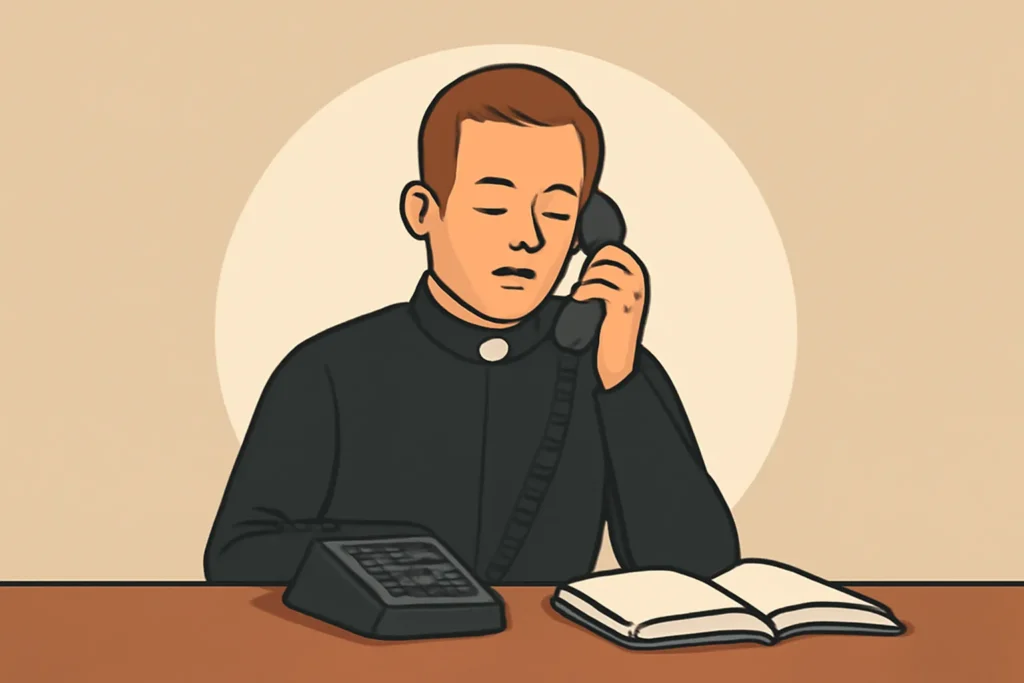
In moments of crisis, doubt, grief, or decision, many people turn to spiritual resources for grounding and clarity. For Catholics, 24/7 spiritual support can come from a trusted priest who provides pastoral care, sacramental grace, and compassionate listening. The phrase call a Catholic priest 24/7 captures a practical reality in many communities: priests and dioceses strive to offer timely access to ordained ministers who can guide, comfort, and bless, no matter the hour. This article explores what that access can look like, how to use it responsibly, and what to expect when you reach out for 24/7 priestly guidance. Whether you are facing a medical emergency, a family crisis, a time of personal discernment, or the loss of a loved one, the possibility of connecting with a priest around the clock can be a meaningful resource.
Catholic tradition has long valued the sacramental and pastoral presence of a priest. In many parishes and dioceses, on‑call priests or emergency priest lines exist to respond to urgent needs outside normal office hours. The goal is not to replace local parish life but to extend spiritual care when normal channels are unavailable. This article will describe practical pathways to access, explain what happens on a call, outline the sacramental rites typically available, and offer advice on when to seek additional support.
Ways to access a priest around the clock
Access to a priest around the clock can occur through several channels. The exact system varies by country, diocese, and parish, but common models include parish on‑call rosters, hospital chaplaincy, diocesan hotlines, and special emergency numbers. Here are the most typical avenues you may encounter.
Parish on‑call rotas and emergency numbers
Many parishes maintain an on‑call priest schedule for evenings and weekends. If you contact the parish office outside ordinary hours, you may be directed to the priest on duty or to a voicemail with instructions for urgent calls.
Some parishes publish a dedicated emergency phone line or contact method for after‑hours needs. In some cases, your call may be transferred to the on‑call priest or to a diocesan operator who can connect you to pastoral care quickly.
In emergencies, you may also be asked to contact local emergency services (e.g., if a person is in immediate danger) while the priest is being located or contacted.
Hospital chaplaincies and on‑site priests
Hospitals often provide 24/7 pastoral care through chaplains, including Catholic priests who are assigned to units or who rotate on call. If you or a loved one is in a hospital, ask the intake staff or the nurse in charge about a Catholic chaplain.
Chaplains can offer anointing of the sick, prayers, sacramental counseling, and guidance for families facing medical decisions. They work in coordination with the patient’s parish and diocese to ensure continuity of care.
Even if you are not Catholic, hospital chaplaincy teams can connect you with a Catholic priest if requested. They serve people of many faith traditions and can facilitate respectful, confidential conversations.
Diocesan hotlines and emergency lines
Some dioceses maintain a central 24/7 priest contact line to serve Catholics across multiple parishes. A diocesan office may route you to the appropriate priest or provide virtual options for prayer and counsel.
Diocesan resources may also include information about local sacramental availability, sacramental preparation, and guidance for crisis situations that require immediate pastoral care.
Religious orders and on‑call priests
Priests from religious communities (e.g., mendicant orders or dedicated missionary congregations) sometimes operate out of central facilities with around‑the‑clock availability. They may be dispatched to urgent pastoral needs in collaboration with the local diocese.
In certain regions, chaplaincies in universities, prisons, or military settings provide 24/7 access through dedicated chaplains who can connect you with a Catholic priest when needed.
What to expect when you call or reach out to a priest at any hour
Reaching out for call a Catholic priest 24/7 support involves a confidential, pastoral conversation designed to listen, discern, and serve. While every situation is different, there are common practices that help ensure the experience is respectful, clear, and spiritually meaningful.
The priest will typically begin with a moment of prayer or a simple blessing, if appropriate and desired by you.
You will be invited to share the reason for the call, whether it is a medical crisis, a family conflict, moral uncertainty, emotional pain, or a request for sacramental grace.
Confidentiality is a core pastoral principle in Catholic ministry, though there are legal and ethical limits in exceptional circumstances (for example, imminent danger to self or others). The priest should explain these boundaries at the outset.
Guidance, prayer, and discernment
Priests provide spiritual guidance rooted in Sacred Scripture, Catholic teaching, and personal discretion. This may include a time of prayer, liturgical blessing, and practical counsel for the situation at hand.
Explicit sacramental requests (such as confession, absolution, or the anointing of the sick) are handled with appropriate reverence and within the bounds of priestly faculty and parish policy.
In many cases, the conversation will include help with decision‑making, coping strategies, and encouragement to engage with local parish communities or support networks for ongoing care.
Sacraments and pastoral rites on short notice
Confession (Reconciliation) and absolution may be offered if the situation permits and the priest is available, especially when personal contrition or forgiveness is important to the caller.
Anointing of the sick (if warranted by illness or risk) is sometimes possible during emergencies, particularly if the person is seriously ill or near death. This sacrament is deeply consoling for many Catholics.
Blessings and prayers for families, homes, and travelers can be included in a call when a formal sacrament is not required or available.
Boundaries and scope of care
Priests offer spiritual and sacramental care, not professional medical or psychological treatment. If mental health concerns are present, the priest may encourage seeking support from a licensed clinician, counselor, or social worker in addition to ongoing pastoral care.
When appropriate, the priest may refer you to trusted parish or diocesan resources, such as a catechetical program, a spiritual director, or a support group that can continue beyond the immediate call.
Sacraments and rites available through 24/7 priest access
A key reason people seek a call a Catholic priest 24/7 service is the availability of sacraments or sacramental blessings in urgent moments. The availability can depend on local policy and the priest’s capacity, but some rites are commonly prioritized in emergencies.
Confession and absolution
In times of spiritual distress or moral struggle, a priest may hear a confession and grant absolution, offering forgiveness and spiritual reassurance.
Even when regular confession times are not available, a priest may provide an occasional opportunity for confession if the caller sincerely seeks reconciliation and the circumstances permit it.
Anointing of the Sick
The Anointing of the Sick is one of the most requested sacramental rites in urgent situations. It involves prayers with the laying on of hands and anointing with holy oil, seeking grace, strength, and healing.
When a priest visits a home, hospital, or hospice, this rite can be offered to the seriously ill, elderly, or those facing a grave illness, with the patient’s consent or the family’s request.
Blessings and spiritual counsel
Priests can bestow blessings on individuals, families, homes, and objects (e.g., religious articles) when requested during a 24/7 contact.
Prayerful guidance and spiritual direction may accompany blessings, helping the caller reflect on meaning, vocation, and hope in difficult times.
Funeral rite planning and vigil support
In the hours or days following a death, a priest may assist with funeral planning, vigil prayers, and the pastoral care of grieving relatives.
Even if a family cannot gather immediately, a priest can coordinate arrangements, provide prayers, and connect families with funeral ministers and catechetical resources.
Practical guidance for contacting a priest at any hour
If you need to reach out for 24/7 priest access, here are practical steps to prepare for the call and make the most of the pastoral encounter.
Write down your name, location, and a brief description of the situation. This helps the priest understand the context quickly when time is limited.
Determine which sacrament or rite you are seeking (confession, anointing, blessing) and whether consent from a patient is possible or required.
Identify any people who should be contacted or informed (family members, caregivers, or medical staff) so the priest can guide you to the right path while respecting privacy and confidentiality.
What to say on the call
Explain the urgent need and the preferred outcome (e.g., “I would like to receive the anointing of the sick for my mother who is in hospital.””).
Share practical details: your location, the hospital or parish involved, and the estimated timing of the event if applicable.
Ask about what the priest can provide in that moment and what might require follow‑up at a later time, including whether additional sacraments or follow‑up visits are possible.
Respectful expectations during the encounter
Be prepared for a period of listening, prayer, and discernment. The priest may ask questions to understand the spiritual and pastoral needs more clearly.
Understand boundaries: the priest is there for spiritual support, not to take the place of medical professionals. If medical decisions are involved, the priest may offer counsel but will typically defer to doctors and patient consent as the primary basis for care.
Be open to ongoing pastoral care. Many people find that a one‑time call leads to continued connection with a parish community or a spiritual director for long‑term growth.
Understanding the limits and responsibilities of 24/7 priest access
While 24/7 access to a Catholic priest can be profoundly comforting, it is important to recognize its scope and limits. Priests provide spiritual companionship, sacramental grace, and pastoral wisdom, but they are not substitutes for all forms of professional help.
Respecting professional boundaries
Priests offer pastoral care grounded in Catholic teaching and sacramental life. They are not clinical psychologists, doctors, or social workers, though they may collaborate with those professionals for holistic care.
In cases involving mental health crises, a priest may encourage seeking help from licensed professionals and may help connect you with trusted resources in the local community.
When to seek additional support
If there is imminent danger to anyone’s safety, call local emergency services immediately. A priest can be contacted in parallel, but emergency responders have primary responsibility in urgent situations.
For ongoing spiritual well‑being, coordinate with your parish for regular confessions, Mass attendance, and participation in faith communities that provide sustained support.
In some regions, there are diocesan programs for spiritual direction and retreat opportunities that can complement crisis care with longer‑term formation and consolation.
Ethical and pastoral considerations for 24/7 contact
The practice of calling a Catholic priest 24/7 carries ethical considerations that help ensure the encounter remains respectful, confidential, and beneficial for all involved.
Confidentiality and trust
Priests preserve confessional and pastoral confidentiality according to the norms of the sacrament and civil law. When confidentiality must be balanced with safety concerns, the priest will explain how information is handled and what must be shared.
Trust is built through careful listening, nonjudgmental presence, and clear boundaries about what can be provided during a crisis contact.
Inclusivity and compassion
Priests strive to honor the dignity of every person, regardless of age, gender, background, or life choices. A crisis call may involve sensitive topics, and pastoral care should be offered with humility and respect.
If you are seeking guidance for someone else (a family member, for example), the priest will seek consent and involve the appropriate parties while maintaining discretion and care.
How to participate in ongoing 24/7 pastoral care after a call
A single urgent call can become the doorway to a broader pattern of spiritual nourishments, such as ongoing sacramental life, spiritual direction, or parish involvement. Here are ways to integrate 24/7 priest access into a sustained practice of faith.
Request information about regular confession times, Mass schedules, and planned hospital visits for future emergencies.
Ask about opportunities for spiritual direction or small faith communities that provide steady spiritual development and mutual support.
Explore hospital and community chaplaincy networks
Keep a list of chaplaincy contacts for hospitals or care facilities where you or your loved ones may be admitted. Chaplains can coordinate with a family’s parish to ensure continuity of care.
Consider identifying a preferred priest or chaplain who can be called upon in future emergencies, reducing delay in receiving sacraments or prayers during critical moments.
Utilize digital and telecommunication options responsibly
Some dioceses offer secure video calls, teleconferencing for spiritual direction, or electronic submission forms for prayer requests that can accelerate a future response.
Always verify the identity and legitimacy of contact channels to protect privacy, especially when using unfamiliar apps or platforms in sensitive situations.
Frequently asked questions about 24/7 Catholic priest access
Is there a universal policy for 24/7 priest availability?
No universal policy exists across all dioceses; availability depends on local resources, priest rosters, and hospital partnerships. However, many communities aim to provide some form of after‑hours access or rapid connection to a priest when requested.
Can non‑Catholics use 24/7 priest access?
Catholic chaplains and parish staff serve people of diverse backgrounds with respect and compassion. While sacramental rites are typically offered to Catholics, priests and chaplains can provide prayers, blessings, and spiritual support to non‑Catholics as well, and can guide them toward appropriate faith resources as requested.
What should I do if I cannot reach a priest immediately?
If immediate contact is not possible, consider alternative spiritual resources available in your community, such as prayer lines, online Catholic communities, or faith‑based counseling services. You can also leave a message with a parish office or diocesan line, and a priest may return the call as soon as feasible.
embracing 24/7 spiritual support and guidance
The promise of Call a Catholic Priest 24/7 is not simply about late hours; it is about ensuring that faith, mercy, and sacramental grace remain accessible during moments when every breath feels heavier and every decision feels uncertain. A priest who is on call can offer prayer, presence, sacraments, and pastoral wisdom that helps you face crisis with hope, courage, and a sense of belonging to a wider community of faith. Whether you seek urgent rites such as anointing of the sick or a guiding conversation about moral discernment, the possibility of contacting a priest around the clock provides a powerful reminder that you are not alone. As you navigate difficult times, remember that 24/7 pastoral care exists to support your soul, to bless your home, and to walk with you toward healing and grace.
If you are unsure how to begin, you can start by contacting your local parish office and asking for information about the emergency priest line or the hospital chaplaincy contact. Be clear about your needs and the level of care you expect, and you will likely find a compassionate response that aligns with Catholic teaching and pastoral care. In every case, approach the encounter with honesty, trust, and an openness to the quiet, transformative work that prayer and sacraments can accomplish in the midst of life’s most challenging moments.









Leave a Reply