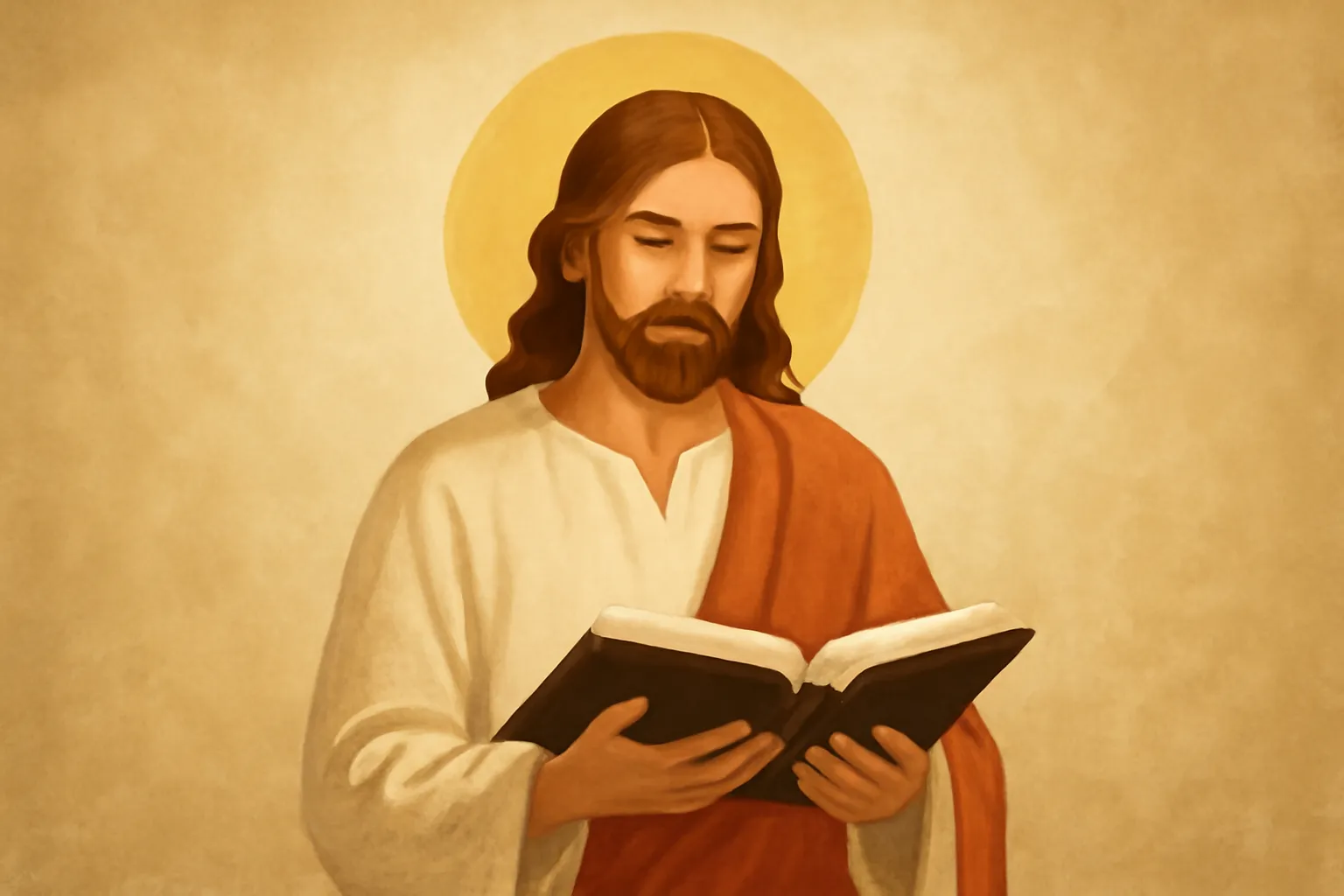
Exploring the question “Who is Jesus?” through the Bible invites readers into a tapestry of identity—Jesus as the eternal Son, the fulfillment of prophecy, the revelation of God, and the Savior who brings redemption. This article gathers a broad spectrum of passages that speak to who Jesus is, using a variety of verses to give a robust sense of his identity across both the Old and New Testaments. Each section draws on multiple verses and presents the core convictions in a way that is both informative and faithful to the biblical witness.
In Christian faith, the question of Jesus’ identity anchors the meaning of salvation, worship, and discipleship. If Jesus is merely a historical teacher or a moral example, the Christian message changes entirely. But the Bible presents Jesus as the eternal Word made flesh, the Son of God, and the promised Messiah who participates in creation, reveals God, and reconciles humanity to God. The following sections walk through these themes with a curated set of passages that speak to Jesus’ nature, his divine prerogatives, and his role in God’s redemptive plan.
Jesus as the Eternal Word Made Flesh
The Gospel of John opens with a powerful claim about Jesus: he is the Word who was with God and who was God, through whom all things were created and who becomes human to dwell among us. This foundational identification shapes how the New Testament presents Jesus throughout the rest of the scriptures.
Key ideas and verses
John 1:1-3 — In the beginning was the Word, and the Word was with God, and the Word was God. All things came into being through him.
John 1:14 — The Word became flesh and dwelt among us, and we have seen his glory, glory as of the only Son from the Father.
Hebrews 1:3 — He is the radiance of God’s glory and the exact representation of his being, sustaining all things by his powerful word.
Colossians 1:16-17 — For in him all things were created, things in heaven and on earth, visible and invisible. He is before all things, and in him all things hold together.
John 8:58 — Jesus declares pre-existence, saying, “Before Abraham was born, I am.” This echoes the divine self-identification that underlines his eternal nature.
These verses collectively teach that the Word is not merely a messenger about God but God himself in the form of a person who can be seen, heard, and touched (John 1:14). The idea of the Word made flesh is central to understanding Jesus’ identity as more than a human teacher—he is the divine Logos who reveals God to the world.
Jesus as the Son of God and Lord
A second core strand is Jesus’ divine Sonship and his lordship over creation. The New Testament consistently identifies Jesus as the Son of God in a unique, authoritative sense, a truth that becomes the basis for his authority, his relationship with the Father, and the trust placed in him by his followers.
Key ideas and verses
John 1:14 — The Word becomes flesh; the incarnation reveals the glory of the Son of God.
John 3:16 — The Father’s love: God gave his only Son that whoever believes in him shall not perish but have eternal life.
Matthew 16:15-17 —Peter’s confession that Jesus is the Messiah, the Son of the living God, and Jesus’ blessing that this revelation came from the Father.
John 10:30 — Jesus declares unity with the Father: “I and the Father are one.”
Colossians 2:9 — In Christ all the fullness of the Deity lives in bodily form, underscoring his divine status.
1 Timothy 3:16 — A concise affirmation that Jesus Christ is revealed in the flesh, vindicated by the Spirit, seen by angels, proclaimed among the nations, believed on in the world, taken up in glory.
Across these passages, the theme is consistent: Jesus is not merely a human teacher or prophet; he embodies the very identity of God in human form and bears the authority due to the divine Son. This is the foundation for trust in his word, worship of him, and the claim that he is Lord over all creation.
Jesus’ Pre-existence and Creation Role
Several passages emphasize that Jesus did not come into existence at his birth; rather, he is involved in creation itself and has always existed with God. This pre-existence strengthens the claim that Jesus is not a created being but the eternal Word and Creator.
Key ideas and verses
John 8:58 — Jesus states, “Before Abraham was, I am,” linking his identity to the divine name revealed to Moses and signaling eternal pre-existence.
Colossians 1:16-17 — All things were created through him and for him; he is before all things, and in him all things hold together.
Hebrews 1:2-3 — God has spoken through his Son, whom he appointed as heir of all things, through whom also he made the universe; the Son radiates God’s glory and sustains all things by his powerful word.
Revelation 3:14 — The faithful and true witness, the beginning of God’s creation, points toward Jesus as the origin of all creation in a revelatory sense (within the prophetic and revelatory literature).
These verses together present Jesus not simply as a participant in creation but as the source and sustainer of creation. The claim of pre-existence underpins his authority to redeem, judge, and bring about the fulfillment of God’s plan for the cosmos.
Messiah and Savior: The Anointed One
A third essential dimension of Jesus’ identity is his role as the Messiah, the long-awaited Savior who fulfills prophecies about the coming king who will save and restore God’s people. This theme threads through prophecies in the Old Testament and the annunciations and recognitions in the Gospels and epistles.
Key ideas and verses
Isaiah 9:6 — The prophecy of a child to be born who will be called Wonderful Counselor, Mighty God, Everlasting Father, Prince of Peace, identifying a figure who embodies divine attributes in the messianic role.
Luke 2:11 — The heavenly proclamation to shepherds: “Today in the town of David a Savior has been born to you; he is Christ the Lord.”
Romans 1:3-4 — Jesus Christ, who was descended from David according to the flesh, declared with power to be the Son of God by the resurrection from the dead.
1 Timothy 3:16 — The mystery of godliness: God appeared in the flesh, vindicated by the Spirit, seen by angels, preached among the nations, believed on in the world, taken up in glory.
1 John 4:14-15 — We have seen and testify that the Father has sent his Son to be the Savior of the world; whoever confesses that Jesus is the Son of God, God abides in them, and they in God.
In these passages, Jesus is not primarily described as a wise teacher or a distant deity but as the anointed Savior who fulfills Old Testament expectations, brings redemption, and embodies God’s saving presence among his people. The exact titles—Messiah, Lord, and Son of God—each highlight a facet of his mission and identity in the biblical narrative.
Jesus as the Revelation of God
To know Jesus is often described as to know God himself. In the New Testament, Jesus serves as the ultimate revelation of God—the one in whom God makes himself known in a way that humanity can grasp, respond to, and worship.
Key ideas and verses
John 14:9 — Jesus answers, “Whoever has seen me has seen the Father; how can you say, ‘Show us the Father’?”
John 1:18 — No one has ever seen God, but the one and only Son who is at the Father’s side has made him known.
Colossians 1:15-20 — Jesus is the image of the invisible God, the firstborn over all creation, through whom God reconciles all things to himself.
Hebrews 1:1-3 — In the past God spoke to our ancestors through the prophets at many times and in various ways, but in these last days he has spoken to us by his Son, who is the radiance of God’s glory and the exact representation of his being.
2 Corinthians 4:6 — God, who said, “Let light shine out of darkness,” has shown in our hearts to give the light of the knowledge of the glory of God in the face of Jesus Christ.
These verses frame Jesus not only as a bearer of good news but as the definitive disclosure of who God is. In him, God’s character, will, and purposes are made visible to the world, inviting people to respond in faith and worship. The phrase “the revelation of God” thus becomes a central way of understanding Jesus’ identity in biblical theology.
Jesus in Human Life: The God-Man
Beyond the cosmic and salvific categories, the Bible presents Jesus as the one who entered human life in a realistic, experiential way—born of a woman, growing in wisdom, and experiencing the full range of human existence while retaining divine nature. This hypostatic union—the divine and human natures in one person—speaks to both accessibility and authority.
Key ideas and verses
Luke 2:7 — Mary gave birth to her firstborn, a son, and she wrapped him in cloths and placed him in a manger; this child is the long-awaited Messiah who enters human history.
Matthew 1:23 — The virgin birth fulfills the prophecy that a Savior would come; the child is “Immanuel” (God with us).
Philippians 2:6-7 — Though he was in the form of God, Jesus did not count equality with God a thing to be grasped; he made himself nothing, taking the form of a servant and being made in human likeness.
Hebrews 2:17 — Jesus had to be made like his brothers and sisters in every way, so that he could become a merciful and faithful high priest in service to God.
John 1:14 — The Word became flesh and lived among us, a foundational articulation of Jesus’ humanity joined to divinity.
These passages underscore that Jesus is not a distant divine force but a person who experienced human life’s joys and sorrows. The God-man identity makes possible empathetic discipleship, obedience, and the witness that God is intimately involved with his creation.
Jesus’ Titles and Their Meanings
The Bible uses a variety of titles for Jesus, each highlighting a different dimension of his person and mission. Taken together, these titles provide a holistic portrait of who Jesus is.
Key ideas and verses
Lord — Jesus is recognized as Lord over all, a title tied to authority and divine status (Philippians 2:9-11; Romans 10:9).
Messiah/Christ — The anointed king and savior foretold in Scripture (Matthew 16:16-17; John 4:25-26).
Prophet — In some contexts, Jesus is depicted as the fulfillment of prophetic expectation who speaks God’s word with authority (Matthew 21:11; Luke 7:16).
Bread of Life and Light of the World — Metaphors that describe how Jesus sustains spiritual life and dispels spiritual darkness (John 6:35; John 8:12).
Immanuel — God with us (Matthew 1:23), highlighting the divine presence in human history.
Alpha and Omega / Beginning and End — Descriptions of Jesus’ eternal scope and sovereignty (Revelation 1:8; 22:13).
Each title carries doctrinal weight: to call Jesus Lord is to acknowledge his divine authority; to call him Messiah is to affirm his role in God’s plan of salvation; to call him Immanuel affirms that God has entered human history to save and redeem. The variety of titles is not a contradiction but a comprehensive portrayal of who Jesus is in God’s redemptive plan.
Jesus and the Resurrection: Identity Confirmed
The resurrection of Jesus is not just a future event; in the biblical witness, it serves as the definitive public validation of his identity as the risen Lord and the one through whom God has demonstrated victory over sin and death.
Romans 1:4 — Jesus Christ is declared with power to be the Son of God by the resurrection from the dead.
1 Corinthians 15:3-4 — Christ died for our sins, was buried, and was raised on the third day, all in accordance with the scriptures.
John 11:25-26 — Jesus declares, I am the resurrection and the life. Whoever believes in me, though they die, will live.
Revelation 1:17-18 — Jesus proclaims, “I am the first and the last. I am the living one; I was dead, and now I am alive forevermore.”
The rising of Jesus is presented as the culmination of his earthly ministry and the seal on his divine identity. It confirms that Jesus is not merely a figure of faith but the one who conquers death and inaugurates God’s new creation. The resurrection invites believers to share in new life with him and to await his return with confidence.
Practical Reflections: What Jesus’ Identity Means for Believers
Understanding who Jesus is has direct implications for prayer, worship, ethical living, and missions. The biblical portrait of Jesus as the Word, the Son, the Messiah, the revelation of God, and the risen Lord shapes both belief and behavior for Christians today.
Points to ponder
Worship and awe— Recognizing Jesus as God’s self-disclosure invites reverence and devotion.
Faith and trust— Believing in Jesus as the Son of God and Saviour grounds trust in his promises and his victory over sin.
Ethical living— Jesus’ example as the God-man calls believers to humble service, sacrificial love, and obedience to God the Father (Philippians 2:5-8).
Ecumenical and interfaith conversations— The diverse biblical portraits of Jesus can inform respectful dialogue about who he is and what he means for different communities, while remaining anchored in the core gospel messages.
Hope in persecution and suffering— The reminders of Jesus as the resurrected Lord provide assurance that suffering has an arc toward God’s redemptive purpose (Romans 8:18-39).
Integrated View: A Cohesive Portrait of Jesus
What emerges from the breadth of the Bible is a coherent, multi-faceted portrait of Jesus. He is eternal, coexisting with God, and one with God, yet he also becomes a human being who lives among us, experiences temptation, and demonstrates perfect obedience to the Father. He is the Messiah, the anointed king who fulfills prophetic expectations and inaugurates God’s reign. He is God’s revelation in human form, the one who makes God known in a palatable, relatable way. And he is the risen Lord who conquers sin and death and then entrusts his followers with the mission of making him known to all nations.
For readers studying the Bible, these passages offer a robust framework for understanding who Jesus is. They invite reflection on the nature of God, the scope of salvation, and the ethical and spiritual implications of acknowledging Jesus as Lord. The breadth of language—Word, Son, Messiah, Immanuel, Alpha and Omega, Rabbi, Teacher, Savior—reflects the depth and complexity of the biblical witness. Yet together they converge on a single, transformative conclusion: Jesus is the central figure of God’s unfolding plan for humanity.
Closing Thoughts: How to Engage with These Passages
Engaging with the biblical portrait of Jesus is not merely an academic exercise; it invites personal response and communal worship. Here are some practical steps to deepen your understanding and encounter with Jesus through these passages:
Read in context — When you study a verse, read the surrounding text to grasp the intended meaning within its literary and historical setting.
Compare cross-references — Look at related passages across the Gospels and Epistles to gain a fuller sense of Jesus’ identity.
Reflect on titles and implications — Consider what each title (Word, Son, Messiah, Immanuel, Lord) implies about Jesus’ authority, relationship with the Father, and mission.
Pray through the passages — Ask for deeper recognition of Jesus as Lord, the revelation of God in Christ, and the empowerment to live out the gospel in daily life.
Share and discuss — Engage with a community of readers, pastors, or study groups to hear different perspectives and grow in discernment.
The Bible’s testimony about Jesus is not a single thread but a tapestry woven from many strands. Each strand contributes to the overall image of Jesus as the eternal Word, the divine Son, the Messiah, the revelation of God, and the risen Lord. By contemplating these passages together, readers can approach a more integrated, more faithful understanding of who Jesus is and why he remains central to Christian faith and practice.
Introduction: Bible Verses About Mission Work Mission work is a central theme of the Christian story, weaving together proclamation, service, and the transformative power of the gospel. This article gathers a broad selection of scriptures that have guided and inspired believers in the task of mission—sharing good news, serving those in need, and partnering with…
Bible Verses for Living for God offers a curated guide to scriptures that speak into everyday life — reminding us how to walk in faith, how to orient our thoughts toward God, and how to live out love in a world that often tests our resolve. This article gathers timeless verses, presenting them not merely…
Introduction The practice of bible verse seek is a timeless discipline among people of faith who turn to Scripture for guidance and comfort. In a world full of noise and distraction, many readers discover that a single verse or a few lines can anchor the heart, illuminate a path forward, or quiet the soul in…
Introduction: The Call to Purity and Patience In a culture that often treats romance and physical intimacy as casual or if-it-feels-right-it-is-right, the biblical stance on waiting until marriage can feel countercultural. Yet many readers find in biblical guidance a steady, compassionate framework for pursuing a life of self-control, honor, and spiritual integrity. This article serves…
According to the Bible, When Will the World End? A Comprehensive Guide to Prophecies and Timelines The question of when the world will end has engaged readers, theologians, and curious minds for generations. This article offers a careful, educational overview of what the Bible says about the end times, the prophecies that shape the most…
Bible Verse for Service to God: 10 Uplifting Scriptures In every season of faith, believers seek guidance for serving God faithfully in a world that often values achievement over sacrifice. Scripture offers a compass for ways to serve the Lord with purpose, whether in the classroom, workplace, church, or home. The following ten verses provide…