Overview: The phrase Holy, Holy, Holy and its significance
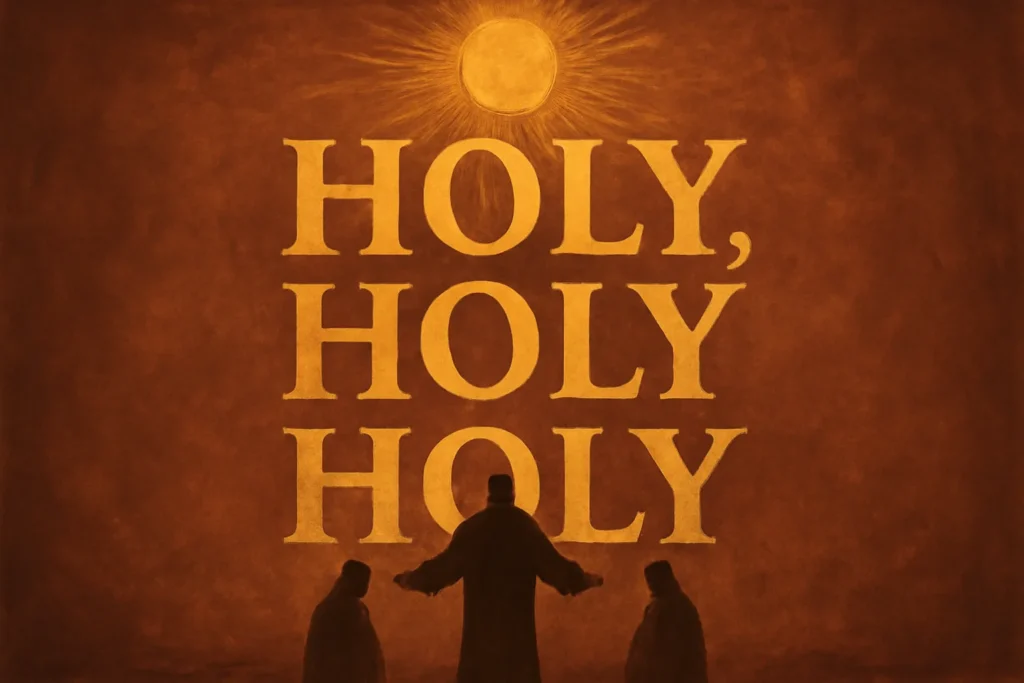
The expression “Holy, Holy, Holy” stands out in biblical language as one of the most emphatic declarations about God’s nature. When readers encounter this triple repetition, they are invited into a mood of awe, reverence, and worship. In English translations, the cadence often mirrors the rhythm of the original Hebrew and Greek texts, and in liturgical settings the phrase becomes a centerpiece for recognizing God’s majesty, transcendence, and perfection. This article explores what triple holiness means, where it appears in Scripture, and how readers today might reflect on its meaning for faith, worship, and daily life.
What does the phrase “Holy, Holy, Holy” mean, and why is it repeated?
To say that God is holy is to acknowledge that God is set apart, incomparable, and perfectly pure in all attributes. In biblical languages, holiness carries two broad facets: moral purity (the absence of sin) and otherness or sacredness (being distinct from creation in an ultimate, defining way). When the word is repeated three times, scholars note an intensification that signals fullness or completeness. The triple form signals that God’s holiness is not a quality the divine possesses in a partial measure; it is the defining condition of who God is.
Consider the role of repetition in biblical poetry and prophetic literature. A single declaration of holiness would already set the tone for reverence, but a threefold emphasis goes further. It points to the totality of God’s holiness—the holiness that reaches every attribute, every action, every decision, and every revelation of God’s character. Thus, when you encounter Holy, Holy, Holy, you are invited to contemplate a holiness that covers all of reality: creature and creator, time and eternity, judgment and mercy, justice and grace.
In addition to semantic depth, the triple form also reflects ancient biblical patterns of summarizing perfection. In Hebrew thought, the number three often signals completeness (think of creation’s structure and other triadic patterns in Scripture). While the Bible does not present holiness as a numerical formula, the threefold refrain communicates a sense of ultimate sufficiency: God’s holiness is complete, unchanging, and utterly trustworthy.
Where the phrase appears: Isaiah 6 and Revelation 4
Isaiah 6:3 — The vision in the temple
The most famous instance of the triple refrain appears in Isaiah 6:3, within a dramatic temple vision that begins with a prophet’s encounter with the divine. In the text, seraphim are pictured circling the throne of the Lord, crying out the refrain:
“Holy, Holy, Holy is the Lord Almighty; the whole earth is full of his glory.”
This scene unfolds in the year that King Uzziah died, a moment that carries political and personal weight. In that context, Isaiah is invited into a revelation about the nature of the divine: the God who sits above the tumult of human affairs and whose glory fills all of creation. The triple holiness here emphasizes not only God’s moral perfection but also the profound distance between the sacred and the profane. The surrounding imagery—smoke filling the temple, the shifting of heavenly beings, and the cleansing of the prophet’s unclean lips—draws the reader into a posture of repentance and welcome before God’s inexhaustible holiness.
A second, equally weighty occurrence of the phrase appears in Revelation 4:8, in the visionary description of heaven’s throne room. Here, the living creatures and elders continuously worship before the throne with a similar acclamation:
“Holy, Holy, Holy is the Lord God Almighty, who was, and is, and is to come.”
The setting is massively liturgical: a throne, a divine figure who is eternal, and a chorus of worshipers who acknowledge God’s eternal sovereignty and unchanging majesty. The phrase in Revelation extends Isaiah’s pattern into the cosmic, eternal realm. It also connects the divine holiness with God’s omnipotence and eternality, emphasizing that the holiness of God is not a mere moral attribute but a foundational reality of God’s Being.
Other biblical uses and echoes
While Isaiah 6:3 and Revelation 4:8 provide the clearest instances of a threefold holiness declaration, the biblical tradition uses the language of holiness in many forms that illuminate its breadth. Across the Psalms, prophets, and the apostolic writings, holiness is consistently linked to God’s glory, his covenantal fidelity, and his justice. The repeated adjective holy in parallel phrases sometimes intensifies praise or warning, always signaling that God’s character stands far above ordinary human categories.
Impact on Christian worship and liturgy
In Christendom, the double or triple repetition of holiness has shaped some of the church’s most ancient prayers and hymns. The Sanctus in the Roman Catholic, Anglican, and many Reformed traditions draws directly on this biblical motif, forming part of the Eucharistic liturgy. Throughout centuries, congregations have recited or sung the words “Holy, Holy, Holy” as a way of aligning themselves with the reverent posture of the heavenly host and acknowledging God’s supremacy over all ages and spaces.
Holiness in the Bible is not primarily about moralizing rules detached from God’s nature; it begins with God’s own character—God is set apart from all that is unholy, and God’s purity is intrinsic. This is why to declare God holy is to acknowledge that there is no fault, no defect, no compromise in God. The triple reiteration emphasizes that this is not a minor virtue but a defining attribute of God’s essence.
Holiness as relational and ethical demand
Holiness does not stand alone as a solitary attribute; it intersects with God’s justice, mercy, righteousness, and faithfulness. When God is described as holy, holy, holy, the text invites believers into a corresponding response: reverent worship, repentance where necessary, and a life oriented toward God’s purposes. The triple emphasis thus interacts with human vocation—calling people to holiness themselves as a response to God’s holiness.
Holiness and creation: the cosmos as a theatre of glory
The phrase often ends with the claim that “the whole earth is full of his glory.” In this light, holiness is not merely about a temple or a throne room; it is a reality that binds the entire cosmos. Creation itself bears the stamp of holiness because it exists under God’s sovereignty and purpose. This perspective invites believers to see ethical life, environmental stewardship, and social justice as part of recognizing God’s holiness everywhere—whether in temple worship, the marketplace, or the home.
Historical and devotional significance: how believers have engaged with Holy, Holy, Holy
Worship and prayer through the centuries
The canonical phrase has repeatedly functioned as a focal point of confession and praise. In congregational life, the refrain is more than a tag for liturgy—it becomes a spiritual posture: humility before the divine majesty, gratitude for God’s saving work, and trust in God’s sovereignty in times of trouble and trial.
Pastoral reflections: encountering God in light of holiness
For many Christians, meditating on the triple holiness fosters a posture of dependence on God. In personal prayer or spiritual direction, the word helps ground a sense of awe that counters cynicism or spiritual fatigue. When one says or sings, “Holy, Holy, Holy,” it can become a reminder that God is worthy of unending praise, even when life feels uncertain.
Ecumenical resonance
Across traditions—Catholic, Orthodox, Protestant, and Evangelical—the core idea remains: God’s holiness is central to who God is and how human beings should respond. While phrasing and liturgical style differ, the underlying conviction about God’s nature unites diverse communities in a shared sense of reverence and worship.
Reflection and practical applications for readers today
How might the idea of triple holiness shape daily life and spiritual practice? The following prompts and suggestions offer ways to engage with this concept in personal devotion, family life, and community worship.
Personal reflection prompts
When you hear “Holy, Holy, Holy”, what emotions arise in you? Fear, wonder, gratitude, surrender—name them and explore why they appear.
In what areas of life do you most readily recognize God’s holiness, and in what areas do you find it hardest to acknowledge it?
How does recognizing God’s set-apartness influence your decisions, time management, or relationships?
Corporate worship suggestions
Include a liturgical moment that recites the Sanctus or a paraphrase of “Holy, Holy, Holy” to anchor the congregation in God’s majesty.
Use imagery from Isaiah 6 and Revelation 4 in meditative readings to help participants glimpse the spatial and temporal breadth of God’s holiness.
Pair a hymn or song that centers on holiness with a period of silent reflection, inviting people to respond in confession, gratitude, or renewed commitment.
Family and community life
In family devotions, discuss what it means to treat one another as people created in God’s holy image and how this affects daily interactions.
Plan service projects that reflect God’s justice and mercy, aligning with the sense that holiness includes care for the vulnerable and the creation.
Encourage children and youth to articulate what they understand about “being set apart” and how that relates to kindness, honesty, and generosity.
Common questions about Holy, Holy, Holy and their answers
Is the triple holiness about the Trinity?
Many readers wonder whether threefold holiness indicates the Trinity. The most careful approach is to see the repetition as a literary and theological emphasis on God’s complete holiness, not as a doctrinal statement about three distinct persons. While Christian tradition affirms the Trinity, the triple refrain in Isaiah and Revelation speaks primarily to God’s uncompromised holiness and sovereign majesty. Some theologians note that the triadic form can harmonize with Trinitarian theology, but this is a secondary interpretation rather than the primary intention of the texts.
What does triple holiness tell us about human conduct?
If God’s holiness is complete and perfect, then humans are called to reflect holiness in how we live. Scripture often links holiness with moral integrity, justice, mercy, and humility. The triple emphasis invites believers to pursue righteous living, to pursue peace and justice in the world, and to cultivate a reverent posture before God in all areas of life—work, family, and community.
How does holiness relate to worship?
In worship, recognizing God as Holy, Holy, Holy shapes the approach: with reverence, awe, and gratitude. It helps worshipers keep the central aim of liturgy in view: to praise God who is eternally exalted and to enter into a relationship with the holy God through faith, prayer, and, in Christian belief, the grace extended through Jesus Christ.
holiness
The phrase Holy, Holy, Holy is more than a formula; it is a doorway into a vision of reality where God’s majesty and glory permeate creation, history, and everyday life. From Isaiah’s temple encounter to John’s heavenly vision, the triple holiness calls believers to a posture of worship and a life oriented toward God’s purposes. As you read, meditate, or sing these words, let the holiness of God read you as well: examine your motives, seek reconciliation where there is brokenness, and give thanks for the gift of a God who is wholly other, yet deeply present with you.
Key takeaways
Holiness is God’s distinctive, pure, set-apart nature that defines all of God’s actions.
The threefold repetition intensifies the attribute, signaling completeness and ultimate reality.
Isaiah 6:3 and Revelation 4:8 anchor the phrase in two climactic visions: one in the earthly temple and one in the heavenly throne room.
Holiness informs worship, ethics, and daily living, inviting believers to respond with reverence, repentance, and faithful service.









Leave a Reply