When readers encounter the term Baal in the Bible, it carries more layers than a single dictionary entry. The Baal Bible definition is historically and linguistically nuanced: it begins with a common Semitic word meaning “lord” or “master,” then widens to refer to a class of deities worshiped in various Ancient Near Eastern cultures, most prominently among the Canaanites and their neighbors. In the Hebrew Bible, Baal is used both as a generic label for multiple gods and as the name of specific deities such as Baal Hadad, Baal Zebub, or Baal of Peor in distinct local cults. This dual usage helps explain why the term appears repeatedly in narratives about loyalty, apostasy, and prophetic confrontation.
This article offers a thorough exploration of the baal bible definition, tracing its etymology, the religious world in which Baal was worshiped, and the most important biblical passages that discuss Baal. Along the way, we will differentiate between the linguistic sense of Baal as “lord” and the theological sense of Baal as a collective name for competing deities. We will also look at how the Bible portrays Baal worship and why it presents it as a major challenge to the worship of Yahweh, the God of Israel.
Origins and Etymology: What Baal Means
The linguistic roots of the term
The word Baal originates in Northwest Semitic languages, where it generally means “owner,” “lord,” or “master.” In the biblical text, this term serves a dual purpose: it is a title—often used for a divine being—and, in some contexts, a name-by-name reference to particular local gods. In its simplest sense, Baal is a title that could be applied to any powerful deity. In practice, however, it came to designate a network of specific cults and deities in the Canaanite and neighboring religious landscapes.
In Ugaritic and Phoenician inscriptions, the cognate forms of Baal clearly function as a family of “lords.” The biblical authors frequently employ the phrase “the Baalim” (plural), indicating not one fixed god but a pantheon of local lords whose worship was common throughout the region. The Bible’s rhetoric often frames this polytheistic environment as a direct challenge to exclusive worship of Yahweh.
From title to deity: Baal as a name for multiple gods
Because Baal is a generic term for “lord,” it was attached to many local deities. Some of the most prominent named Baals include:
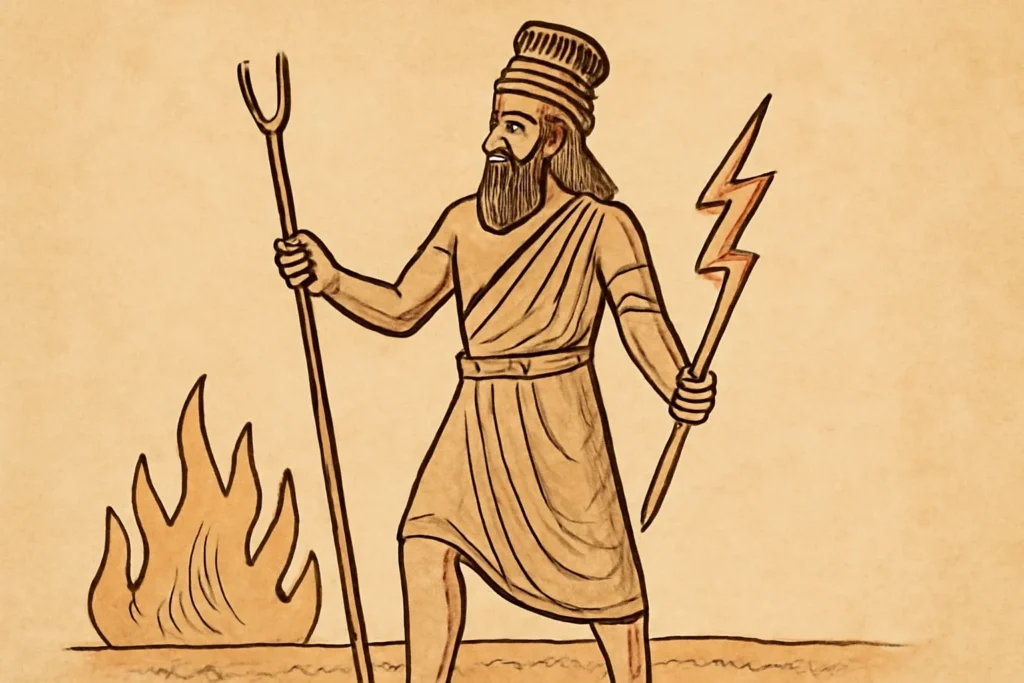
Baal Hadad, the storm and fertility god in the broader Syria–Palestine region.
Baal Zebub (often rendered “Beelzebub” in later tradition), a god associated with Ekron; in the biblical narrative he appears as a rival deity invoked by enemies of Israel.
Baal Peor, connected with Moabite or Midianite fertility rituals at Peor; the episode is famous for its punitive plague in Numbers 25.
Baal Hammon, worshiped in some Phoenician cities and mentioned in later inscriptions and biblical paraphrases.
The sense in which Baal is used in the Bible thus depends on context. At times it functions as a generic term for “idols” or “false gods” the authors oppose; in other places it names specific cults or cultic centers. The resulting baal bible definition thus blends linguistic sense with religious history.
Baal in the Old Testament: A Conceptual Overview
Baal as a symbol of competing religious systems
In the Hebrew Bible, Baal stands as a potent symbol of the religious milieu into which Israel was embedded. The biblical authors repeatedly portray Baal worship as a serious breach of the covenant with Yahweh. The rivalry between Yahweh and various Baals is a recurring literary and theological frame in which fidelity, reform, and judgment are explored. The narrative consistently casts Baal worship as appealing to natural human needs—fertility, rain, crops, and national success—yet it condemns those cults as political and spiritual treachery against the unique covenantal relationship with the God of Israel.
This complex portrait depends on recognizing that Baal is not a single, uniform religion in the ancient world. Rather, it represents a constellation of rites and beliefs that could vary from place to place. The biblical writers emphasize the incompatibility of Baal worship with the exclusive demands of Yahweh, especially in the Deuteronomistic history, which ties religious allegiance to political and moral outcomes.
Baal and the practice of idolatry: a recurring motif
The baal bible definition in many passages is inseparable from the charge of idolatry. The Israelites are warned against “going after other gods” and “serving Baals,” with warnings that such apostasy leads to recallable consequences. The concept of idolatry in this frame is not only theological but practical: it involves ritual practices, altars, sacrifices, and often socio-political alliances that undermine the exclusive worship of Yahweh.
Key Biblical References to Baal: A Guided Tour
The following representative passages illustrate how the Bible treats Baal, including both general usage and specific cults with that name.
Judges and the early monarchy: a pattern of apostasy and reform
Judges 2:11–13 — “The children of Israel did evil in the sight of the LORD, and they served Baalim.” This summary statement encapsulates a cycle: apostasy, oppression, repentance, and deliverance that recurs throughout the book.
Judges 3:7 — “The children of Israel did evil in the sight of the LORD, and forgot the LORD their God, and served Baalim and the groves.” This verse emphasizes forgetfulness of Yahweh alongside Baal worship, underscoring the spiritual drift of the nation.
Judges 6–7 — In the story of Gideon, the Midianites press Israel, and a new encounter with Baal imagery crops up in the broader contest between Israel and its neighbors. The narrative frames the struggle as a test of fidelity to the God who calls Israel to trust Him rather than the fertility rites offered by Baal cults.
Elijah, Mount Carmel, and the showdown with Baal worship
1 Kings 18 — The epic confrontation between the prophet Elijah and the 450 prophets of Baal is one of the clearest biblical depictions of Baal’s perceived impotence compared to Yahweh’s power. The story centers on a test of divine fire and culminates in the destruction of the prophets of Baal, signaling a decisive turn away from Baal worship in the prophetic imagination.
The royal arena: Ahab, Jezebel, and the political pressure of Baal
1 Kings 16:31–33 — Ahab “did more evil than all the kings of Israel who were before him” by building a temple to Baal and making an altar to Baal in Samaria, intensifying the state-supported dimension of Baal worship.
1 Kings 18:20–40 — The assembly of Israel at Carmel becomes a public indictment of Baal worship; the dramatic victory of Yahweh over Baal’s prophets is presented as evidence of Yahweh’s supremacy in the land.
The ongoing purge of Baal worship: prophetic reform and destruction
2 Kings 10:18–28 — The monarch Jehu orders the destruction of Baal worship in the kingdom, purging the cult in an act of political-religious reform. This episode connects political consolidation with religious purification in the biblical narrative.
Hosea 2:13 — “I will punish her for the days of the Baals” (paraphrase), where the prophet frames Baal worship as a complicating factor in Israel’s spiritual infidelity and social harms.
Prophetic condemnations: Hosea, Jeremiah, and the moral critique of Baal worship
Hosea 2:13 — The prophet denounces Baal worship as part of Israel’s spiritual adultery, tying religious unfaithfulness to ethical and social breakdown.
Jeremiah 2:8 — The text contrasts priestly neglect of covenant loyalty with the wayward worship of Baal and other deities, highlighting the moral dimension of idolatry in the prophetic critique.
Jeremiah 7:9–10 — A biting warning about trafficking in sins “to steal, murder, commit adultery, lie, and burn incense to Baal,” illustrating the deceptive allure of Baal rites when embedded in communal life.
1 Kings 11:5–8 — Solomon’s wives lead him into the worship of other gods, including Baal-aligned cults; the passage contextualizes Baal worship as a symptom of syncretism in Israel’s monarchy.
Distinctions within the Baal landscape: Baal, Baalim, and Related Terms
How to parse the vocabulary
In biblical Hebrew, several related terms appear:
Baal (singular) — the generic title “lord,” used for a range of deities or divinities.
Baalim (plural) — “lords,” referring to multiple gods or cults collectively.
Baal Hadad — the storm/fertility deity often identified with the national pantheon’s chief god in Canaanite religion.
Baal Zebub — literally “lord of the flies,” the name used in Ekron for a deity referenced in 2 Kings 1; the term demonstrates how Baal-named gods could gain different reputations in various locales.
Baal Peor — associated with the Moabite/Christian-era narratives of immorality and idolatry inNumbers 25; this is a specific cultic identity tied to a particular locale and story.
Why the distinction matters for understanding the baal bible definition
Recognizing these distinctions helps readers avoid oversimplifying Baal as a single, unified deity. In the biblical corpus, Baal often functions as a foil to Yahweh—a name that locals invoked for a class of rival cults rather than a single, uniform temple cult. This nuance matters for both literary analysis and theological interpretation: it reveals how the biblical authors understood religious competition in ancient Israel and how they cast Baal-worship as a threat to covenantal fidelity.
Origins of Baal Worship in the Ancient Near East
Regional context and cultural ecology
The worship of deities named Baal emerged in a broader ancient Near Eastern milieu where city-states and kingdoms vied for rainfall, crops, and political power. Fertility cults and weather gods were common across many communities, and the term Baal became a functional label for these divine figures. In places like Zidon, Ugarit, Ekron, and other centers, the name was attached to different temples, shrines, and ritual calendars. The biblical authors, writing from their own perspective within this milieu, perceive Baal worship as part of a broader ecosystem of polytheistic practices that competed with the exclusive worship of Yahweh.
Cross-cultural links: Baal in Ugaritic and Phoenician sources
In Ugaritic texts, Baal is a central deity named in a pantheon with a sophisticated cosmology. The parallels between Ugaritic Baal and the biblical Baal Hadad illuminate how ancient Israelites borrowed and reframed elements of neighboring religious traditions. In Phoenician contexts, the worship of Baal-related forms (including Baal Hammon) appears in civic cults tied to commerce and city life. The biblical writers, while writing in Hebrew, were conversant with these regional religious currents, and their polemical portrayal of Baal worship reflects both theological conviction and cultural contest.
Baal Worship and Its Theological Significance
Exclusive worship of Yahweh vs. competing cults
A central thread in the biblical treatment of Baal concerns the tension between exclusive devotion to Yahweh and the presence of competing cults. The Hebrew Bible frames this tension not merely as doctrinal disagreement but as a social and political rupture: alliances, altars, and ritual practices connected to Baal cults are depicted as threats to national unity, religious integrity, and covenant faithfulness. The prophets insist that “you shall have no other gods before me” is a command with practical consequences for justice, social policy, and national security.
Consequences and reform: purification and judgment
The biblical narrative often connects Baal worship with moral compromise and political instability. Reform movements—whether in the time of Elisha, Elijah, Jehu, or various reform-minded kings—tend to center on restoring exclusive allegiance to Yahweh and dismantling Baal institutions. In this light, the Baal definition within biblical theology is not simply about naming a deity; it is about evaluating allegiance, fidelity, and communal identity under the covenant.
Misunderstanding: Baal is just one god with a fixed, universal cult.
Clarification: The term is better understood as a title used for several deities across different locales; the Bible itself reveals a spectrum of Baal forms, including Baal Hadad, Baal Zebub, and Baal Peor, each with distinct cultic associations.
Misunderstanding: The biblical Bibles present Baal worship as a minor issue.
Clarification: Across narratives, Baal worship is repeatedly framed as a major test of faithfulness with significant political and spiritual consequences for Israel.
Misunderstanding: Baal is merely a figment of later tradition.
Clarification: The presence of Baal in multiple biblical texts and in parallel Near Eastern corpora shows that Baal was a real and influential cult niché in the ancient world, one that the authors of the Hebrew Bible sought to critique and distinguish from Yahweh worship.
Modern Scholarly Readings: Interpreting the baal bible definition Today
Modern scholars often approach the Baal material by examining the historical context of Israelite religion. They explore how the authors used Baal imagery to articulate concerns about covenant fidelity, social reform, and kingship. These readings emphasize that the biblical text speaks to a historically specific struggle—between an emerging monotheistic/monolatrous stream and a polytheistic environment—rather than presenting a monolithic ancient myth.
Other scholars focus on the rhetorical strategy surrounding Baal references. They examine how the biblical writers frame Baal as a category of idolatry that tests the moral imagination of the people. This perspective highlights how prophetic literature uses Baal as a mirror to illuminate what it means to be faithful to the covenant, including issues of justice, mercy, and social order.
How to Use the Baal Definition in Study and Teaching
Define terms clearly: Distinguish between Baal as a generic title and Baal as a named deity with particular cults.
Context matters: Consider geographical setting, political climate, and literary genre when encountering Baal in biblical passages.
Connect to broader themes: Tie Baal references to Israel’s covenantal obligations, prophetic critique, and questions of national identity.
Balance sources: Combine biblical text with archaeological and philological evidence to gain a fuller picture of Baal worship in the ancient world.
The Legacy of Baal in Biblical and Theological Thought
The Baal Bible definition is a gateway to understanding a larger story about religion, power, and identity in the ancient Near East. Far from being a single, static character, Baal represents a family of deities and cults whose presence in the land of Israel provoked repeated calls to fidelity to Yahweh. The biblical writers use Baal as a coherent symbol of competing religious forces—forces that could shape law, politics, and daily life. By examining the linguistic roots, the major biblical episodes, and the interpretive debates that surround Baal, readers gain a richer appreciation for how the ancient community wrestled with questions of worship, loyalty, and what it means to follow the God of Israel.
For students and readers today, the study of Baal is not about dethroning a distant myth but about clarifying how ancient faith communities understood divine sovereignty, human responsibility, and the moral stakes of worship. The enduring lessons of this topic remind us that religious allegiance—in any tradition—has consequences that stretch beyond ritual practices to shape communities, laws, and personal consciences.










Leave a Reply