The opening pages of the Bible present a set of stories about how the world came to be, who made it, and what it means for humans to live within it. These narratives do not arise in a vacuum but emerge from long-standing questions about order, purpose, and divine sovereignty that circulated in the ancient Near East and among the communities that preserved Israelite faith. Two recurring concerns stand out across these early texts: first, the emergence of cosmic order from a formless beginning, and second, the special status of human beings within that order. In the course of centuries, Jewish and Christian interpreters would read these stories in a variety of ways—historical, liturgical, moral, allegorical, and symbolic—often drawing on broader discourse about creation that existed in the surrounding cultures.
A defining feature of the biblical material is that it does not present a single, monolithic blueprint for creation. Instead, it offers multiple voices, motifs, and theological aims. When scholars speak about the Bible’s creation texts, they frequently distinguish between distinct literary strands or sources, such as the earlier, more formal and orderly account associated with the Priestly tradition and the more anthropocentric, relational depiction sometimes linked to the Yahwist or J source. This diversity does not undermine coherence so much as it reveals a dynamic conversation about the meaning of the world and humanity’s place within it.
Across traditions, readers have asked: How did God create? What is the nature of the world’s beginning? What is humanity’s purpose? And how should people live in light of these narratives? The answers have never been purely literal or purely metaphorical; instead, they have hovered between history, poetry, theology, and moral instruction. In this article, we will trace the major accounts, examine how different religious communities interpret them, and consider how these creation stories speak to contemporary questions about science, faith, and human responsibility.
Genesis 1 and Genesis 2: Two Perspectives on Creation
The two most famous biblical creation texts are found in the opening chapters of Genesis. They present distinctive voices and purposes, yet they also illuminate how early Israelite writers understood the relationship between God, the world, and humanity.
Genesis 1: The Priestly Account of Order and Purpose
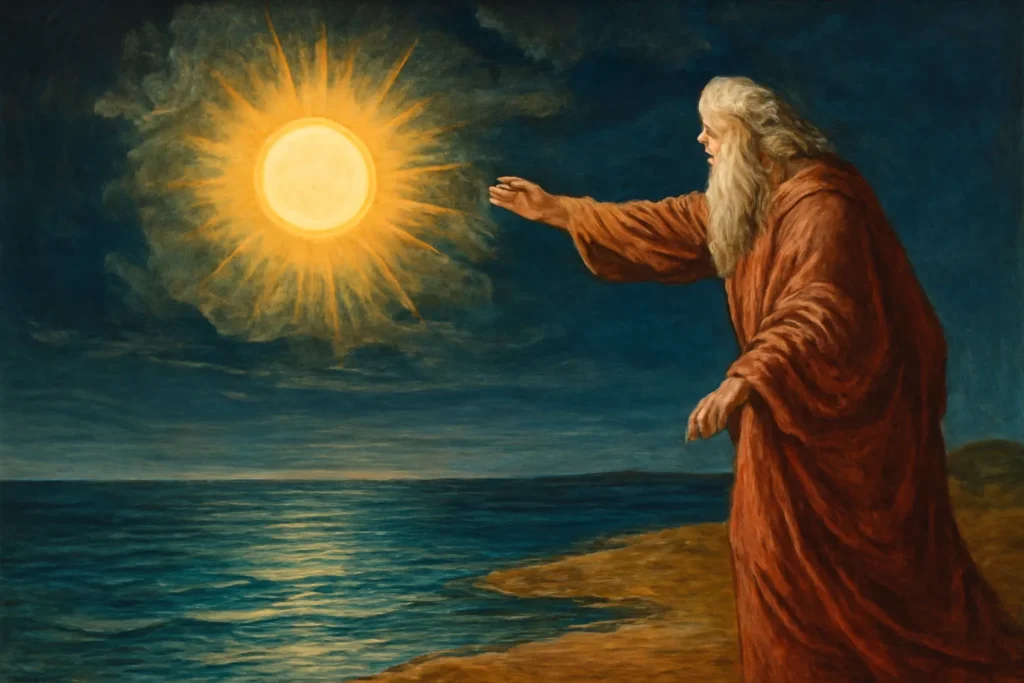
In Genesis 1 the cosmos comes into being through a sequence of deliberate acts by God who speaks creation into existence. The narrative unfolds in six days, culminating in the creation of humanity as the pinnacle of God’s creative activity. The text emphasizes structure, form, and function. Light appears first, followed by the sky, land, vegetation, celestial bodies, sea creatures, birds, and land animals, with humans made in the image of God and given dominion over the earth. A final, seventh day of rest inaugurates the divine pattern of work and Sabbath rest.
Key features of this account include:
Divine speech as the instrument of creation: “And God said, Let there be…,” and it was so.
Cosmic order established through ordained succession and a clear division of realms (light/dark, sky/sea/land, vegetation, heavens, and life forms).
Humans in the image of God (tselem and demut): a distinctive status that confers responsibility and relational capacity.
The act of resting on the Sabbath: the seventh day becomes a pattern for human life and worship.
The Genesis 1 account has often been read as a model of divine sovereignty and purposeful architecture. It stresses how everything exists for a divine intention and highlights the good creation and the orderly structure of creation.
Genesis 2: The Yahwist Perspective on Relationship and Humility
In Genesis 2, a different voice emerges, focusing more intently on the intimate relationship between God and humanity and on the details of human life in a garden world. Rather than a broad cosmic panorama, this account centers on the formation of the first human being, the creation of animals as potential companions, and the divine initiative that culminates in the creation of the woman from the man’s side.
Distinctive features of Genesis 2 include:
A focus on hands-on formation—God forms the first man from the dust of the ground and breathes life into him.
The naming of animals as a process by which the human discovers a suitable companion, highlighting the humble and relational dimension of creation.
The emergence of woman as a co-equal partner who shares in vocation and responsibility.
A garden-centric setting that foregrounds intimacy with God and moral agency within a specific moral/ethical framework.
Read together, Genesis 1 and Genesis 2 present complementary angles on creation: one emphasizes cosmic order and universal purpose; the other foregrounds human relationship, vocation, and responsibility within a lush, intimate setting. The two accounts invite readers to consider how God is at work both in the grand structure of the cosmos and in the lived experience of daily life.
Comparison: Differences, Convergences, and Theological Implications
The juxtaposition of these two narratives invites several important observations:
Different emphases—one stresses the public, cosmic creation; the other emphasizes human relationships, responsibility, and companionship.
Shared themes—both images of God as the deliberate maker, both declare the goodness of creation, and both locate humans within a framework of stewardship and moral choice.
Terminology and cadence—the use of divine titles shifts slightly between the chapters, and the literary delineation suggests distinct sources or purposes within a broader biblical tradition.
Across traditions, these two accounts are often read as complementary rather than contradictory. The synthesis invites believers to hold in tension the grandeur of the cosmos and the intimate, personal call to live rightly in a created order.
Implications for Theology and Ethics
The two Genesis narratives have profound ethical and doctrinal implications. The concept of imago Dei (being made in God’s image) underwrites the inherent dignity of every person and grounds a moral vision that respects life, freedom, and responsibility. The Sabbath rest in Genesis 1 sets a rhythm for creation that shapes attitudes toward labor, time, and worship. The relational orientation of Genesis 2 grounds ethical commitments in community, partnership, and responsibility to others and to the created world.
Other Biblical and Deuterocanonical Accounts of Creation
While Genesis provides the foundational narratives, other biblical books—and some later, deuterocanonical writings—offer additional perspectives on creation, providence, and the ordering of the world. Together, these texts contribute to a broader tapestry of belief and interpretation that has shaped mountains of teaching, liturgy, and art.
Psalm and Wisdom Literature: Creation in Liturgy and Reflection
In Psalms and Wisdom literature, creation is often described with vivid imagery and reverence. Psalm 104, for example, poetically recounts God’s care for the world, the ordering of nature, and the sustenance of all living things. Job 38–41 presents a dramatic theophany in which God’s sovereignty over the cosmos is asserted in the face of human limitations. These texts emphasize divine wisdom, power, and providence, reinforcing the sense that creation is a dynamic relationship between God and the world, rather than a one-time event alone.
Deuterocanonical and Apocryphal Texts: Variations Within Families of Faith
In traditions that include the Deuterocanonical books (such as some branches of Catholic and Orthodox Christianity), additional creation motifs appear. For instance, certain passages in the Book of Wisdom articulate a highly luminous view of creation, praising God’s governance of the world and highlighting the moral dimension of creation. In some of these texts, creation is linked to the providential care for humankind and the ordering of the universe as a sign of divine wisdom. While not universally present in all biblical canons, these writings contribute to a broader, inter-textual conversation about how creation reveals God’s character and purpose.
Canonical Limits and Interpretive Riches
Even when the canons differ, the core questions remain: Where did the world come from?What is humanity’s role? What counts as a good life within creation? The various texts, while sometimes divergent in detail, converge on a recognition of a creator who orders, sustains, and calls humanity to live responsibly within a gifted cosmos.
Interpretive Traditions: Judaism
In Jewish interpretation, creation narratives have provoked a long chain of exegetical and philosophical thought. Classical Jewish exegesis, from the rabbinic midrash to medieval commentators, often treats the early Genesis accounts not purely as a chronological report but as a framework for understanding God’s relationship with the world, human responsibility, and ethical conduct.
The rabbis frequently engage with the text in creative ways, drawing out lessons about justice, mercy, and stewardship. They interpret the order of creation as a template for moral order in human society and stress that the Sabbath command in Genesis has implications for the rhythm of worship and work in daily life. In rabbinic thought, the special status of human beings is tied to the capacity to choose between good and evil, to care for others, and to participate in God’s ongoing work in the world.
Medieval and Modern Jewish Thought
Later Jewish philosophers and theologians—such as Moses Maimonides and Philo of Alexandria—explored creation through the lenses of logic, metaphysics, and ethics. Some emphasize creation’s compatibility with reason and the idea that nature itself bears witness to divine wisdom. Others focus on the ethical call embedded in creation: to protect the vulnerable, to steward the earth, and to pursue justice. In contemporary Jewish thought, readers increasingly approach Genesis with attention to scientific insights, while preserving a reverent sense of mystery about the origins of life and the structure of reality.
Christian interpretation of creation narratives spans a wide spectrum, from literal to symbolic to allegorical readings. This diversity reflects different theological priorities, historical contexts, and relationships to science. Across centuries, Christian thinkers have wrestled with how best to understand Genesis in light of revelation, church teaching, and empirical knowledge about the natural world.
Patristic and Medieval Readings: From Augustine to Aquinas
The early centuries of Christian thought include influential voices that wrestled with the relationship between faith and reason. Augustine of Hippo argued for the goodness of creation and explored whether the apparent age of the world was compatible with divine wisdom. Later, Thomas Aquinas integrated creation with a broader metaphysical account of existence, form, and causality. Medieval interpreters often sought harmony between Scripture and observed nature, sometimes allowing for non-literal readings when necessary to preserve doctrinal integrity.
Renaissance and Modern: Literalism, Allegory, and Theistic Evolution
In the modern era, Christians have engaged creation narratives with new vigor. Literalist approaches tend to read the six-day creation as a straightforward historical sequence, often advocating young-earth cosmologies. In contrast, allegorical or symbolic readings emphasize the theological truths about God’s sovereignty, the goodness of creation, and humanity’s responsibility, even if the exact chronology is read as figurative. A third trajectory, the theistic evolution or evolutionary creation view, seeks to reconcile science with faith by affirming that natural processes—guided by God—account for much of the diversity and complexity of life.
Across Christian traditions, creation narratives influence liturgy, ethics, and social action. The Sabbath principle from Genesis 2–3 informs Sunday worship patterns and rest in many churches, while the mandate to “have dominion” has been interpreted in varying ways—from stewardship and care for creation to responsible use of resources and planetary guardianship. The image of God in humanity bears ethical weight: it has propelled debates about human dignity, justice, and responsibility toward the vulnerable, the poor, and the environment.
Across Traditions: Interfaith Contexts and Contemporary Debates
The Bible’s creation stories do not exist in isolation. They are part of a broader interfaith conversation about origins, meaning, and responsibility. In the contemporary world, biblical creation narratives intersect with science, philosophy, theology, and public discourse. This intersection raises essential questions: How should people interpret ancient texts in light of modern science? What counts as authoritative truth—historical detail, theological meaning, or moral guidance? And how can communities of faith engage respectfully with others who hold different beliefs about origins?
Science and Faith: Dialogues About Origins
The dialogues between science and faith are wide-ranging. Some believers adopt a young-earth creationist stance, which reads the Genesis creation story as a literal account of an event in a recent historical timeframe. Others embrace old-earth creationism, recognizing the long ages of the cosmos and Earth while maintaining a belief in a divine Creator. A growing number of theologians and scientists advocate for theistic evolution, proposing that God works through natural processes such as evolution to bring about biodiversity and complexity. Still others read the Genesis accounts as mythopoetic or allegorical literature that conveys truth about God, humanity, and purpose without committing to a scientific chronology.
Literary and Theological Readings Across Traditions
Regardless of approach, many readers find that the creation narratives speak best when read for their theological depth and ethical significance. The stories ask important questions about humility before the mystery of existence, responsibility toward fellow beings, and reverence for the created order. Across traditions, readers often emphasize the following ideas:
God as Creator and Provider who brings order out of chaos.
The dignity of all life and the call to stewardship rather than exploitation.
The image of God as a basis for ethical conduct and social responsibility.
The rhythm of work and rest, and the invitation to gratitude and worship.
Contemporary Synthesis: Reading Creation for Today
The enduring value of biblical creation stories lies not only in their ancient words but in their ability to speak to contemporary life. Readers across faith communities use these narratives to explore questions about meaning, purpose, and responsibility in a complex world. How should we treat ecosystems and creatures? How do we honor the dignity of every person? What does it mean to live wisely in a time when science reveals new details about our origins?
A fruitful approach for many is to hold multi-voiced readings that acknowledge the literary diversity within the biblical corpus while seeking a coherent vision of God’s creative purpose. In this sense, the Bible’s creation stories are not a static doctrine to be memorized but a living conversation to be engaged with—one that invites ongoing reflection, humility, and wonder.
Practical Ways to Engage Creation Narratives Today
Study both Genesis 1 and Genesis 2 side by side to observe how they complement each other and what each account adds to the overall picture of creation.
Read creation texts in conversation with other ancient Near Eastern creation accounts to understand common motifs and distinctive claims.
Explore how different traditions interpret the concept of the image of God and how that shapes questions of human dignity, rights, and responsibility.
Reflect on the role of Sabbath and rest as a practice that grounds contemporary life in gratitude rather than constant labor.
Consider how theological interpretations can engage with science in constructive ways that honor both reason and faith.
The Enduring Question of Origins
The Bible’s creation narratives continue to invite readers into a dialogue about origins, meaning, and responsibility. Whether approached as historical recounting, mythic storytelling, or a blend of genres, these texts consistently place God at the center of reality, affirm human dignity, and charge humanity with care for the world. Across Jewish, Christian, and broader faith contexts, interpreters have kept alive a conversation about how to live with wonder before the mystery of creation, how to honor the gifts of the natural world, and how to pursue justice in light of a divine purpose that binds all things together.
In a time when science illuminates more about the universe and biology than ever before, the creation narratives offer a framework for meaningful reflection rather than a mere catalog of dates and events. They remind readers that origin stories matter because they shape ethics, worship, and polity. What emerges from this long conversation is a shared sense that life is a sacred treasure, that human beings bear a serious obligation toward one another and the rest of creation, and that the mysteries of origin invite humility, curiosity, and sacred responsibility.









Leave a Reply