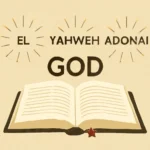
The phrase commonly described as the all-powerful God verse refers to biblical and religious expressions that articulate the idea of omnipotence—the capacity of the divine to do all that is consistent with divine nature. In many traditions, the assertion that God is Almighty serves as a central pillar for understanding creation, providence, prayer, and moral order. This article explores what such verses mean, their historical and linguistic contexts, and why they matter for faith, worship, and everyday life. We will use variations of the term god all-powerful verse to show how scholars and readers talk about these texts from different angles, from biblical phrasing like El Shaddai (often translated as “God Almighty”) to the New Testament affirmation that nothing is impossible with God.
To approach this topic responsibly, we will distinguish between ontological power (what it means for God to be all-powerful in nature) and functional power (how that power is exercised in history, creation, and redemption). We will also address how believers wrestle with the tension between divine sovereignty and human freedom, patience in suffering, and the problem of evil. Across ages and cultures, the notion of an omniscient, omnipotent deity has shaped liturgy, ethics, art, and public discourse about what it means to live under a supreme authority.
Key Verses Across the Biblical Canon
Old Testament Emphases on God’s Omnipotence
Genesis 17:1 — “I am the Almighty God; walk before me, and be blameless.” This verse introduces the name often translated as El Shaddai, highlighting a personal, covenantal power that accompanies divine invitation and promise.
Jeremiah 32:17 — “Ah Lord GOD! Behold, you have made the heaven and the earth by your great power and by your outstretched arm, and there is nothing too hard for you.” This reflects a robust confidence in divine sovereignty over all creation.
Job 42:2 — “I know that you can do all things, and that no purpose of yours can be thwarted.” The verse testifies to God’s unrestricted capacity in the face of human limitation and suffering.
Isaiah 46:9–10 — “Remember the former things of old; for I am God, and there is no other; I am God, and there is none like me, declaring the end from the beginning, and from ancient times things not yet done, saying, My counsel shall stand, and I will accomplish all my purpose.” The passage emphasizes divine sovereignty over history and destiny.
Psalm 115:3 — “Our God is in the heavens; he does all that he pleases.” This succinctly expresses a sense of unbounded divine agency.
Psalm 147:5 — “Great is our Lord, and abundant in power; his understanding is beyond measure.” While focusing on power, it also highlights knowledge as part of divine grandeur.
New Testament Affirmations of Divine Power
Luke 1:37 — “For nothing will be impossible with God.” A bold, decisive claim about the scope of divine action within human history and personal life.
Matthew 19:26 — “With man this is impossible, but with God all things are possible.” Jesus’ teaching frames human limits against divine possibility.
Revelation 19:6 — “Hallelujah! For the Lord our God the Almighty reigns.” The imagery ties divine power to cosmic kingship and righteous rule.
Variations on the Theme Across Texts
In many passages, the combination of power and presence invites trust: the Almighty is not a distant force but a personal, guiding agent.
Another recurring pattern is the contrast between human weakness and divine strength, often framed in terms of faith, obedience, or prayerful petition.
Different literary genres—narrative, poetry, prophecy, and apocalypse—present omnipotence from multiple angles: creation, judgment, deliverance, and salvation.
Linguistic, Historical, and Theological Context
Linguistic Roots of the Idea of “All-Powerful”
In the Hebrew Bible, the term most closely associated with almighty power is El Shaddai, commonly rendered as “God Almighty.” The etymology is debated, but its resonance is not merely about strength; it also carries implications of nourishment, abundance, and blessing in some contexts. In the Greek New Testament, the concept is conveyed through terms like pantokrator (often translated as “All-Powerful” or “Almighty”) and other phrases that emphasize sovereignty over creation, history, and salvation.
Across the ancient Near East, nations spoke of gods with vast powers and control over natural forces. The biblical writers, however, redefined power in a monotheistic frame: the one God is not merely strong but sovereign over all that is. This reframing mattered for moral life, worship, and political order. In post-biblical periods, theologians wrestled with how to speak of divine power while safeguarding human moral agency and fidelity. In the medieval and Reformation eras, debates about divine sovereignty, predestination, and human responsibility further shaped how Christians understood omnipotence in relation to love, justice, and freedom.
Translation and Interpretation Challenges
Translators face choices about how to render words that denote power, will, and purpose. The word “Almighty” in English carries a weighty, formal tone that may differ from other languages’ nuances. Some scholars highlight splits between omnipotence as a metaphysical maximality (God can do anything) versus omnipotence as omnipotent within the constraints of divine nature (God cannot do what would contradict God’s own character, such as lying or doing evil). Readers should note that interpretations vary, and biblical authors often encode moral and eschatological meaning into statements about power, not simply a catalogue of capabilities.
Theological Significance: Why the All-Powerful God Verse Matters
Verses that affirm the omnipotence of God influence many facets of faith and practice. They shape how believers understand creation, providence, prayer, moral responsibility, and eschatology. Below are several dimensions in which the idea of an all-powerful God functions within religious life.
Creation and Sovereignty: If God is Almighty, then creation itself displays divine authorship and governance. The universe, from galaxies to cells, is animated and directed by a will powerful beyond human reach.
Providence and Sustenance: The belief that God sustains existence and orders history under a purposeful plan offers comfort in uncertainty and a framework for ethical action grounded in trust rather than fear.
Prayer and Miracles: The conviction that God can act beyond natural limits invites petition, lament, and praise. It also raises questions about the nature and timing of miracles in the life of communities and individuals.
Theodicy and Suffering: Omnipotence raises questions about suffering, evil, and the moral use of power. Faith communities often respond with a mature theology that honors both divine sovereignty and human responsibility.
Ethics and Justice: An all-powerful God is often imagined as the ultimate standard for justice, mercy, and righteousness, compelling believers toward courage and compassion in the face of injustice.
Practical Implications for Worship
Because many worship traditions invoke God’s power, liturgy frequently centers on praise, awe, and adoration. The language of power becomes language of relationship—God as liberator, creator, sustainer, and judge. This shape of worship can encourage humility, gratitude, and a sense of belonging to a larger, divine drama in which human beings are called to participate with courage and fidelity.
Reading and Interpreting the All-Powerful Verse in Practice
Principles for Reading
Context matters: Read verses within their surrounding narrative, poetic structure, and historical setting to avoid taking a line out of context.
Literary genre informs meaning: Poetry may use metaphor and hyperbole; historical narrative emphasizes acts of deliverance and creation; prophetic writings call for repentance and trust.
Balance with other attributes: Omnipotence is often paired with attributes like wisdom, faithfulness, and mercy. A holistic reading honors the full character of the divine.
Church tradition and interpretation: Communities have varied in how they articulate divine power, so engaging with tradition helps readers see the range of legitimate interpretations.
Ethical impulse: An emphasis on divine power should lead to ethical reflection about how to exercise one’s own freedom responsibly in light of God’s sovereignty.
Practical Applications for Individuals and Communities
In times of crisis, reciting or reflecting on statements like “With God, all things are possible” can foster hope and perseverance.
In social action, the belief in a just and powerful God can motivate communities to confront oppression, advocate for the vulnerable, and pursue peace with courage.
In personal life, the conviction of divine sovereignty can shape daily decisions, prompting humility, gratitude, and trust in times of uncertainty.
In Judaism, the concept of God’s omnipotence is closely tied to the covenantal relationship, the act of creation, and the ongoing engagement with history through acts of deliverance and law. Passages in the Tanakh speak of God’s might in ways that call for reverence and fidelity, while literary forms such as psalms and prophetic oracles address how power should be exercised in justice and mercy.
Christianity
Christian interpretations of the all-powerful God emphasize the triune nature of God, the person of Jesus, and the work of the Holy Spirit. The New Testament phrases, such as “With God all things are possible”, are read against the backdrop of salvation history and the mission of the church. The concept of omnipotence is often harmonized with divine love, wisdom, and righteousness, so that believers see power as oriented toward restoration and reconciliation rather than domination alone.
Islam
In Islamic theology, God (Allah) is described with attributes that include power (Quwwah) and capability (Qadir), and the Qur’anic rhetoric often emphasizes that nothing occurs without God’s will. The idea that God is over all things competent (able to do all things) frames prayer, providence, and moral accountability, while still inviting humans to respond with obedience and trust.
Other Traditions
Many other religious and spiritual traditions grapple with the question of ultimate power in ways that emphasize harmony, order, and causality within a larger cosmos. Even when different faiths do not share identical doctrinal language, the idea that a supreme principle or deity governs reality can foster shared themes such as humility before mystery, responsibility toward others, and ethical living in light of a transcendent order.
The Cultural Impact of the All-Powerful Verse
Across centuries and cultures, verses about God’s omnipotence have shaped literature, art, music, and public discourse. They have inspired epic poems, hymns, and philosophical treatises that explore questions like “If God is all-powerful, why is there suffering?” and “How should human beings respond to power that is both generous and inscrutable?” This section surveys some of the broad cultural resonances that arise when readers encounter the idea of a divine power that is unlimited yet purposeful.
Literature and poetry: Poets have used imagery of the Almighty’s strength to evoke awe, challenge, or consolation, weaving themes of creation, exile, exile’s longing, and redemption.
Music and liturgy: Hymns and spiritual songs often celebrate God’s might, inviting believers to worship with lively praise, trust, and reverent fear.
Art and iconography: Visual representations of divine sovereignty—cosmic thrones, celestial scenes, and depictions of deliverance—reflect a longing to convey the immensity of power while remaining attentive to moral beauty and mercy.
Ethical and political discourse: The claim that the divine ruler is just and merciful has sometimes been invoked to critique tyranny or to advocate for human rights, with varying degrees of success and critique.
Cautions for Readers
Engaging with the idea of God’s all-powerful nature requires sensitivity to how power is imagined and used in human institutions. It is important to distinguish between awe at divine sovereignty and coercive impulses in human leadership. A responsible reading recognizes both the majesty and the mercy of God, inviting believers to act with justice, compassion, and humility in light of divine sovereignty.
Cautions, Misinterpretations, and Healthy Skepticism
As with any major theological claim, the concept of an all-powerful God can be misused or misunderstood. A few common cautions help readers navigate difficult questions:
Literalism versus literary imagination: Some readers may treat omnipotence as a literal catalog of every potential action. Others recognize poetic, symbolic, and theological expressions that convey meaning beyond sheer mechanism.
Problem of evil: The existence of suffering and injustice is sometimes posed as an apparent contradiction to omnipotence. Faith traditions approach this with a range of explanations, such as free will, soul-making, mystery, or the ultimately benevolent purposes of God.
Power used for love: A standard of interpretation often centers on how divine power is exercised in love, mercy, justice, and grace, rather than power for power’s sake alone.
Confidence without coercion: Believers are called to trust in God’s power while also respecting human agency and ethical responsibility in the world.
Set a purpose: Decide whether you are studying for personal devotion, academic understanding, or teaching others.
Map the verses: Create a simple chart noting the verse, its context, the author’s perspective, and the key takeaway about power.
Compare translations: Look at multiple translations to see how wording shifts nuance, especially for words like omnipotent and Almighty.
Cross-reference: Relate passages across sections (prophetic, wisdom, and gospel writings) to see how the concept evolves in different genres.
Reflect and journal: Note questions that arise, such as how this power translates into daily life, ethics, and communal responsibility.
Sample Study Questions
What does it mean for God to be omnipotent within the limits of divine goodness?
How do different writers describe the relationship between divine power and divine love?
In what ways does prayer assume or test the power of God?
How does the idea of an all-powerful judge interact with mercy and forgiveness?
Further Resources and How to Continue Your Exploration
If you want to dive deeper into the topic of the all-powerful verse, consider a mix of biblical commentaries, theological essays, and comparative religion sources. The following ideas can guide further study:
Commentary series on the specific verses mentioned, focusing on historical context and linguistic nuance.
Lexical studies of terms like El Shaddai and pantokrator to understand how translators have rendered power across languages.
Theological essays discussing the relationship between divine sovereignty and human freedom.
Interfaith dialogues that explore how different faith communities articulate the idea of an all-powerful deity—what similarities and differences emerge, and why they matter for interreligious understanding.
To further enrich your understanding, you might compile a personal library of editions that present these verses with varied commentary, or participate in study groups that examine how the concept of divine omnipotence informs ethics, worship, and community life.
The Living Significance of the All-Powerful Verse
Across the god all-powerful verse tradition, the claim that there is an omnipotent God serves as a touchstone for faith, hope, and action. It is not merely a statement about power in the abstract; it is a call to recognize sovereignty while embracing responsibility, gratitude, and trust. Whether one reads Genesis 17:1 as a name-based confession of covenantal power, Job 42:2 as a test of human adequacy in the presence of the divine, or Luke 1:37 as a promise of possibility against all odds, the central insight remains: the divine is both sovereign and solicitous, mighty and merciful, transcendent and personal. This duality shapes worship, informs ethical life, and invites ongoing conversation about how human beings should live under a power that is far beyond their own reach yet fully present to sustain and redeem creation.
As you engage with these texts, you may discover that the all-powerful verse is less a simple assertion of control and more a doorway to trust—trust that, even in mystery and struggle, the divine purposes reveal themselves in acts of mercy, justice, and steadfast love. This is the lasting significance of the omnipotent God across traditions: a powerful invitation to awe, fidelity, and hopeful action in the face of the world’s many challenges.







Leave a Reply