Understanding the Verse: Revelation 13:18 and the Number of the Beast
The phrase “the number of the beast” sits at a pivotal junction in the biblical book of Revelation. Feminized by popular culture as a symbol of ominous prophecy, the verse sits within a tense discourse about power, allegiance, and the struggle between cosmic forces of good and evil. The core emphasis of Revelation 13:18 is not a modern curiosity about numerology alone but an invitation to discernment—“Here is wisdom. Let him that hath understanding count the number of the beast.” This opening line signals that the verse is a riddle of sorts, a deliberately coded statement that invites careful interpretation.
In the King James Version of the Bible, the verse culminates with a striking declaration:
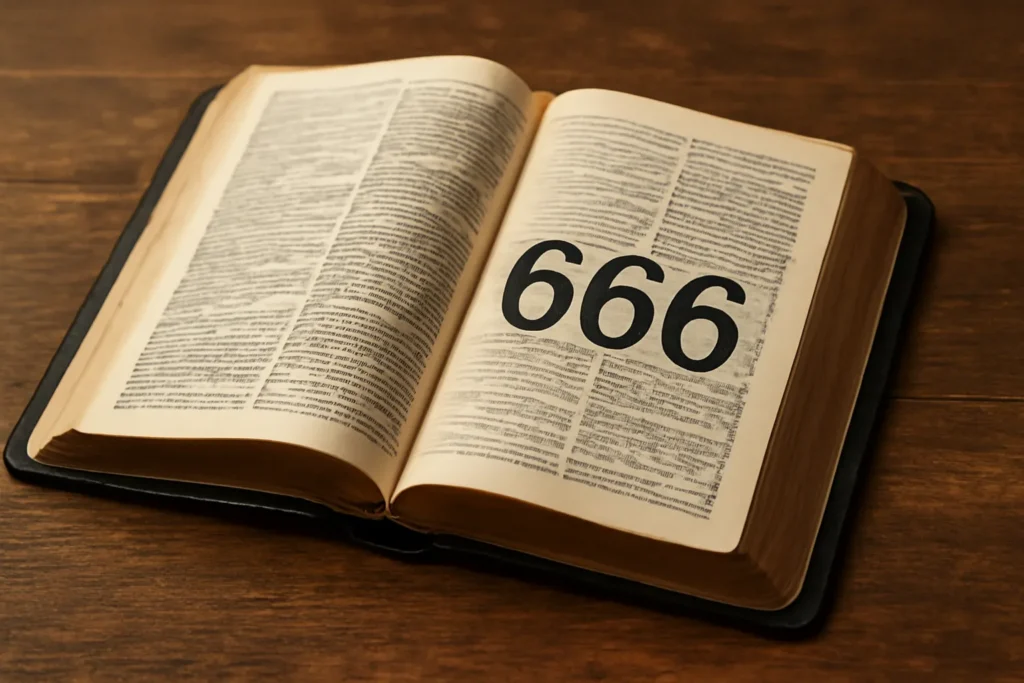
Here is wisdom. Let him that hath understanding count the number of the beast: for the number of the beast: for it is the number of a man; and his number is Six hundred threescore and six.
The line emphasizes two ideas: first, that wisdom is needed to interpret the symbol, and second, that the number is traced to human limitation—a reminder that the source of evil, in this passage, is rooted in human sinfulness and flawed systems of power.
Across biblical translations, the exact wording may vary, but the core message remains: the number is a symbolic identifier tied to a force opposed to God’s reign. Scholars and faithful readers alike engage this text not to fixate on a numeric curiosity but to explore what the number reveals about authority, worship, and moral testing in history and in contemporary life.
Textual Variants: 666 vs 616
Biblical manuscripts preserve a fascinating textual nuance: not all ancient witnesses agree on the precise digits. The vast majority of Greek manuscripts read 666, but a small variant exists in some manuscripts where the number reads 616.
666 is the reading of the most widely used manuscripts and is the form most Christians have encountered in liturgy, memory, and preaching.
616 appears in a few early manuscripts, notably some papyri and manuscript traditions. Some scholars connect 616 to a different theological or historical reference, while others view it as a scribal adjustment or a variant that reflects a different numerical encoding.
The existence of the variant does not negate the weight of the symbol; rather, it invites careful study about how numbers function in apocalyptic literature. In all cases, the number is presented as a symbolic marker rather than a purely literal code, and its interpretation often depends on broader literary and historical context.
For readers today, the key takeaway is not merely which digits appear in a given manuscript but how the number functions as a symbol of a flawed human system of power that demands loyalty, shapes identity, and ultimately stands under God’s judgment as the narrative unfolds.
Historical Context and Gematria: The Number as a Symbol
The concept of numerology, or gematria, was common in the ancient world. Numbers carried symbolic weight and could encode names or titles through letter-to-number correspondences. In Revelation, the number 666 is often analyzed through the lens of gematria to suggest possible identities for the figure described as the Beast.
A frequently discussed historical hypothesis is that the number encodes the name Nero Caesar (the Roman emperor known for his brutal persecution of Christians). In Greek, the letters representing “Nero Caesar” can be mapped to numbers, and the sum can converge on six hundred sixty-six. This interpretive path rests on the phenomenon that persecuting powers during the first century often used emperorship and political authority as objects of worship, creating a direct link between allegiance and economic or social systems.
Beyond the Nero hypothesis, scholars note that the phrase “the number of a man” points toward a symbol of human pride, fallibility, and the temptation to equate order or power with divinity. The symbolism encompasses not only an emperor but any system—political, economic, or religious—that demands worship, loyalty, and obedience above all else.
Theological Interpretations Across Traditions
Readers and scholars approach Revelation 13:18 from several interpretive frameworks, each offering distinct insights into how 666 functions within Scripture. The major strands are broadly categorized as futurist, historicist, idealist, and preterist interpretations. While these approaches differ in their emphasis and timeline, they share a concern with fidelity to the biblical text and its themes of obedience, counterfeit worship, and ultimate divine sovereignty.
Futurist Perspective
In the futurist view, the Beast is a person or organization that will arise in the end times, often associated with the “Antichrist.” The number 666 is read as a mark of loyalty to that future power. This interpretation emphasizes how the verse serves as a warning against idolatry and compromising witness in a world dominated by deceptive systems. For readers, the futurist lens highlights discernment, perseverance, and the need to remain faithful even when social and political pressures escalate.
Historist Perspective
The historist approach situates Revelation within the sweep of church history. The Beast is understood as a symbol of oppressive powers that have risen and fallen across centuries—whether imperial regimes, corrupt ecclesial structures, or political authorities that demand allegiance at the expense of truth. In this reading, 666 becomes a recurring motif: the persistent, cyclical temptations to worship power rather than God, and the warning that history is full of such episodes that require faithful resistance.
Idealist (Symbolic) Perspective
The idealists focus on the timeless moral and spiritual lessons embedded in Revelation. They emphasize that the Beast represents a universal pattern of power that seduces humanity into worship of self and empire. The number 666 then stands as a rhetorical symbol rather than a precise historical label. Readers are invited to discern the underlying dynamics of coercive power, counterfeit worship, and the testing of conscience in every age.
The preterist reading locates Revelation’s imagery primarily in the first century CE, seeing the Beast as emblematic of Roman oppression and the imperial cult present in John’s own world. In this framework, 666 underscores the vulnerability of early Christian communities as they faced persecution, social pressure, and the temptations to integrate with a dominant power structure that demanded allegiance.
Related Passages and the Wider Biblical Context
The theme of the mark and the danger of worshiping power extends beyond Revelation 13:18. Several other passages in Revelation deepen the moral and spiritual stakes of receiving or resisting allegiance to the Beast:
Revelation 14:9-11 describes a stark warning against worshiping the Beast or receiving its mark, with consequences described in terms of divine judgment and eternal separation from God.
Revelation 16:2 speaks of painful sores that fall upon those who bear the mark of the Beast, illustrating the personal and communal harm caused by enabling systems of coercive power.
Revelation 19:20 and Revelation 20:4 emphasize ultimate defeat of the Beast and the vindication of the faithful, reinforcing the message that earthly powers are not the final authority.
These passages together highlight a consistent biblical pattern: wisdom and discernment are required to navigate a world where political, economic, and religious forces often seek ultimate loyalty. The Bible invites readers to test every claim against the standard of God’s revealed truth, to resist coercive worship, and to endure in faith until the final triumph of God’s kingdom.
Practical Guidance for Readers Today
For contemporary readers, the topic of 666 can feel distant or sensational. Yet the underlying concerns remain deeply relevant: how should Christians respond to powerful systems that require unquestioning loyalty, or that blur the line between public virtue and private conscience? Here are some practical takeaways:
Read in context: Understand Revelation as a highly symbolic book that uses imagery to critique temporal powers and to encourage steadfast faith.
Focus on moral themes: The passage invites reflection on worship, loyalty, compromise, and perseverance.
Acknowledge historical layers: Recognize that different interpretive strands read the same symbols through different historical lenses, from earliest persecution to modern global power dynamics.
Use responsible interpretation: Avoid sensationalizing numbers as predictive of specific individuals or events unless there is solid, contextual grounding in Scripture and history.
Emphasize ethical living: The call to integrity in worship and conduct remains a central aim of Revelation, encouraging believers to embody fidelity, justice, and mercy in daily life.
When readers engage with 666, they are not simply decoding a mystery but engaging a theological argument: power in human hands is dangerous when it overstates its own legitimacy, whereas God’s sovereignty endures and remains the final reference point for truth and justice.
The Enduring Significance of the Number
The number of the beast—whether read as 666 or 616 in textual variants—serves as a lasting reminder that the Bible uses symbolic language to critique the idolatry of power and the temptation to worship systems over the Creator. The verse’s insistence on wisdom and its invitation to discernment challenge readers to examine the loyalties that shape their lives, communities, and moral choices.
Across historical contexts and interpretive traditions, the core message remains clear: a faithful response to wicked powers involves more than speculation about numbers. It involves courage, integrity, and a commitment to Christ-centered living that bears witness in a world of competing claims. By approaching Revelation 13:18 with humility and care, readers can glean enduring lessons about worship, allegiance, and the lasting hope that God’s sovereignty will prevail.
Beast: A symbolic figure representing oppressive political or spiritual powers opposed to God.
Gematria: A method of interpreting numbers by assigning numerical value to letters, often used in ancient symbolism.
Mark of the Beast: A symbol of allegiance to the Beast’s power, contrasted with the seal of God on the faithful.
Wisdom: A call for discernment and understanding in the face of complex symbolic language.
For readers who want to explore further, consult reliable study Bibles, historical commentaries, and reputable introductions to Revelation. Consider reading Revelation 13 in parallel with related passages in Revelation 14, 16, 19, and 20 to see how the narrative develops and how the motifs of power, worship, and judgment interact across the broader biblical context.









Leave a Reply