Aramaic is a language with a deep footprint in late antiquity and the early Christian centuries. Among its most recognizable traces in religious life is the Our Father, commonly called the Lord’s Prayer. In its Aramaic form, the prayer appears in multiple dialects and manuscript traditions, most famously in the Syriac, or Peshitta, tradition, but also reflected in the broader Aramaic-speaking world of the time. This article surveys the Aramaic Lords Prayer in terms of its text, its meaning, and its history. We will look at how the prayer is rendered in Aramaic, how that text has traveled through time, and what it has meant to believers in different Christian communities.
Overview: Aramaic, the Lord’s Prayer, and the textual landscape
The Lord’s Prayer is a compact piece of early Christian liturgy and pedagogy. It is presented in two places in the New Testament gospels, with the Matthean version often cited as the longer form and the Lukan version as a somewhat shorter, though parallel, variant. In Aramaic studies, scholars emphasize that Jesus would have spoken in a Galilean Aramaic variety, and that the form that later circulated in churches reflects the linguistic and liturgical shaping that occurred as the church grew across regions and centuries. In the church’s longer memory, the prayer was not merely a private devotion; it became a staple of public worship, catechesis, and personal piety across the Aramaic-speaking world and beyond.
In the scholarly and ecclesial record, there are dialectal differences and textual variants that affect both the wording and the nuance of the prayer. The key dialects to know are:
Galilean Aramaic and the language likely used by Jesus in the homeland of Galilee.
Syriac Aramaic (including the Peshitta and related liturgical traditions) as the standard ancient and medieval Eastern Christian formulation.
Western Syriac and Eastern Syriac variants that developed in different church communities but share a common Aramaic core.
Because the prayer is preserved most fully in Syriac texts used in the churches of the East, the textual presentation that many readers encounter comes with a Syriac coloration: distinctive vocabulary, line breaks that reflect liturgical chant, and occasionally slight shifts in order or emphasis. The present article keeps in view that there are multiple legitimate renderings, and that modern readers across languages encounter the prayer in slightly different guises. The purpose here is to describe the core text pattern, to discuss its meaning, and to map its history across time and tradition.
Text: Aramaic variants, transliterations, and representative renderings
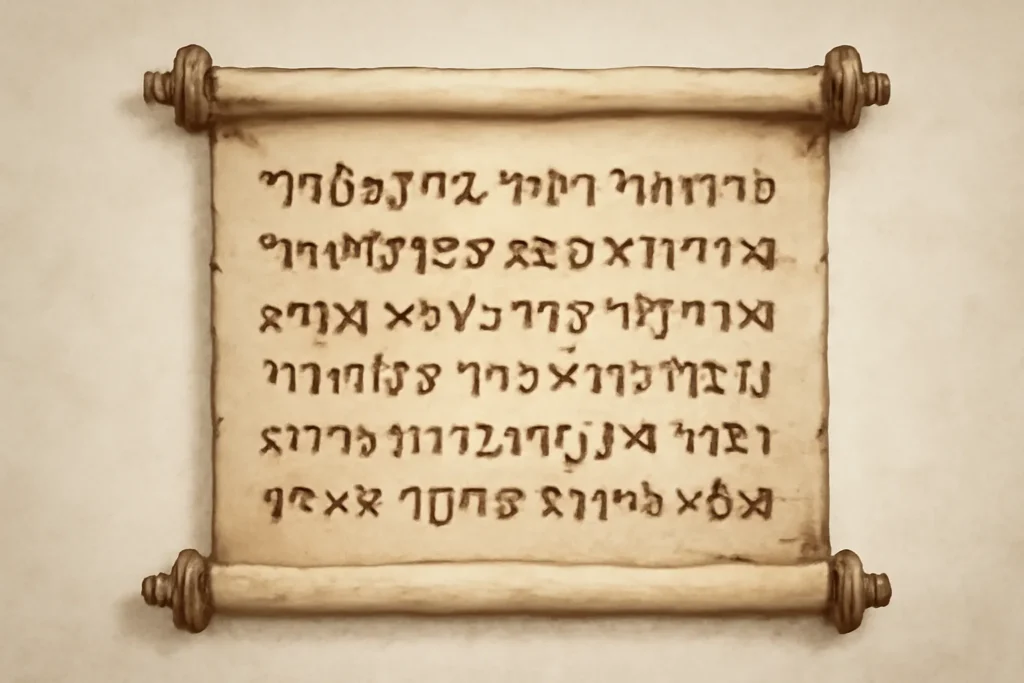
Because there are several distinct Aramaic-speaking communities with their own liturgical books, there is no single universal “Aramaic Lord’s Prayer” text. What follows is a representative overview of the Aramaic renderings most frequently cited in academic and liturgical contexts. The lines below are presented as transliterations that reflect common scholarly and ecclesial conventions; they are not an exact quotation from any one edition, but they capture the standard shape and major phrases of the prayer as it appears in Syriac Aramaic traditions. Variants exist, especially between Western and Eastern Syriac renderings, and in the Luke-Matthew textual relationship the Aramaic form represents a rooted, early-Christian articulation of the prayer.
Representative Syriac Peshitta form (transliteration)
Note: in the lines below, spacing and punctuation are used to indicate phrase breaks for readability in Latin-script transliteration. The underlying Semitic morphology in Aramaic would render these lines with diacritics and glyphs that reflect Syriac script. The content is aligned with the standard liturgical pattern widely recognized in Syriac churches.
Abun d’bashmaya, Our Father who is in heaven.
Nethqaddash shmakh, May your name be sanctified or hallowed.
Tethe d’malkuthakh, May your kingdom come.
Nehweh d’shakhtakh or Nehwe d’khaye d’makhakh, May your will be done on earth as it is in heaven.
Hav lan leḥmā d’sunā d’yoma, Give us today our daily bread (bread of the day).
Waḥwāqḗn lǝḥaqāyā dḥāynā or uḥḇwād lan ḥḏa dšarā عطshukh, And forgive us our trespasses as we forgive those who trespass against us.
Wlā taʿlanā l-fitrā, And lead us not into temptation, but deliver us from evil (the Evil One).
In addition to the above, a parallel line of wording used by many communities in the Syriac tradition emphasizes the final doxology differently in liturgies and translations. A commonly heard closing in some Aramaic liturgies is a doxology that echoes the Greek and Latin liturgical families: “For thine is the kingdom, and the power, and the glory, forever.” In Syriac, this closing may appear in a separate liturgical formula or be folded into the concluding petition, depending on the manuscript or rite. The important point for readers is that the core content—address to God as Father, sanctification of God’s name, the coming of God’s kingdom, obedience to God’s will, , forgiveness, and deliverance from temptation and evil—is preserved across variants.
Several features deserve emphasis when thinking about the Aramaic text as a living document in liturgy and devotion:
Formulaic structure that mirrors a template for prayer rather than a casual, improvised prayer.
Linguistic echo of the Semitic world, with phrases that parallel Aramaic and Hebrew prayer traditions (for example, a taqaddash-like concept of sanctification and a plea for daily sustenance).
Interdependence with Luke and Matthew in the sense that Aramaic-insights into the prayer must be read with awareness of the different gospel contexts in Greek, and then into Aramaic understanding in later liturgical practice.
For readers seeking a more formal, fully recognized Aramaic text, the best route is to consult a critical edition of the Syriac Peshitta or a scholarly edition of Galilean Aramaic materials. The present rendering serves to illuminate the basic form and meaning while acknowledging dialectal variety.
Textual notes and variants
The earliest Greek texts of the New Testament present two slightly different orders and vocabulary for the same prayer. When rendered into Aramaic, these differences often show up as alternate words for “kingdom” (malḵut) or for “daily bread” and for “trespasses/debts.”
In Syriac practice, the Aramaic word for bread is often connected to the daily sustenance of life, and the phrase bread for the day or daily bread is often a focal point for debates about social justice, hospitality, and economic life in early Christian communities.
“Deliver us from evil” is sometimes rendered as “deliver us from the evil one” in later liturgical versions, signaling a shift toward a more personal, adversarial framing of spiritual danger in certain traditions.
In short, the Aramaic text is best understood as a living conversation across centuries and communities. Its core motifs remain stable, even as the exact words adapt to the needs and emphases of particular churches and languages.
Meaning: a close look at the key ideas and phrases
To understand the meaning of the Aramaic Lord’s Prayer, it helps to look at it line by line and then consider its theological and ethical implications. The prayer is not merely a collection of pious statements; it is a compact catechism and a model for a life oriented toward God and neighbor. Below is a structured gloss of the main sections, highlighting thematic clusters that recur in Christian theology and devotional life.
A. Address and reverence: “Our Father who is in heaven”
Our Father signals a personal, intimate relationship with God, while in heaven conveys sovereignty, transcendence, and holiness. The Aramaic phrasing binds the believer to a divine Father figure who is not distant but transcendent—present beyond ordinary life yet intimately involved in creation and history.
B. Sanctification of God’s name
Sanctify (or hallow) Your name is a petition for reverence, for the name of God to be honored in human life and in the world. The line is less about God’s need for praise and more about the believer’s desire for a world in which God’s character—justice, mercy, truth, and faithfulness—becomes visible and real.
C. The coming of the kingdom and obedience to divine will
Thy kingdom come expresses eschatological hope: a future moment when God’s reign is decisively present, bringing justice, peace, and wholeness. Thy will be done on earth as it is in heaven speaks to alignment between God’s purposes and earthly life. The believer is invited to join in the divine mission by living in accordance with that will here and now.
D. Daily sustenance and social ethics
Give us this day our daily bread grounds the prayer in ordinary life—food, safety, provision. It has a social dimension, inviting readers to consider communal responsibility for the hungry and vulnerable and recalling the desert narratives of biblical tradition in which God sustains people day by day.
Forgive us our debts (trespasses) as we forgive our debtors represents a radical moral posture: forgiveness is not offered in isolation but in a reciprocal social economy. The prayer ties divine pardon to human forgiveness, modeling a moral ecology in which reconciliation among people mirrors God’s mercy toward humanity.
F. Deliverance from temptation and evil
Lead us not into temptation acknowledges human vulnerability and dependence on divine guidance. Deliver us from evil or from the Evil One points to spiritual protection and cosmic opposition to injustice and sin. The petition invites trust in God’s providence when facing moral risk and spiritual danger.
History: origins, transmission, and the Aramaic lifeworld
The history of the Lord’s Prayer in Aramaic is inseparable from the broader story of early Christianity, the spread of Aramaic as a scholarly and liturgical language, and the later crystallization of Christian worship in Syriac-speaking communities. Here, we sketch the major lines of this history, with a focus on how Aramaic language and culture shaped the prayer’s reception and usage.
Origins in the Gospels and the Aramaic milieu
Scholars typically date the literary origins of the text in the Gospels to Jesus’ teaching of prayer in a Jewish-Aramaic environment, likely Galilean and Palestinian Aramaic varieties. The prayer’s early form would have circulated orally among Jesus’ followers and been integrated into catechetical instruction. In that sense, the Aramaic form preserves a memory of Jesus’ own speech patterns and theological concerns about God’s name, rule, and will.
From Aramaic speech to a written Syriac tradition
As Christianity grew beyond its Galilean heartland, the Aramaic-speaking churches in Syria, Mesopotamia, and surrounding regions began to translate and preserve the gospel material in Syriac. The Peshitta, a canonical Syriac text assembled in late antiquity (roughly 2nd–5th centuries CE, with regional variations), became the standard vehicle for the Lord’s Prayer in many Eastern churches. In this Syriac milieu, the prayer acquired a heavily liturgical shape, with cantillation, rhythmic line breaks, and a place in daily prayers and catechesis.
Two broad trajectories shaped the transmission:
The Eastern Syriac tradition, aligned with churches such as the Assyrian Church of the East and the Church of the East, which preserved a rich Peshitta tradition and a vast body of liturgical texts.
The Western Syriac tradition, associated with the Syriac Orthodox Church, the Maronite Church, and certain Coptic-influenced communities, which also used Syriac liturgical forms and shared many Aramaic roots.
Influence on liturgy and daily devotion
In the centuries that followed, the prayer’s form and function broadened. It appeared not only in private piety but also in public worship, catechesis for new converts, and private devotion across monasteries and lay households. Its position as a model for correct prayer—both in content and in attitude—made it a reference point for doctrinal teaching about the nature of God, the plan for human life, and the ethical responsibilities of believers.
In liturgical life: how Aramaic renditions shaped worship and practice
Across the broader Christian world, the Lord’s Prayer in Aramaic and its Syriac forms influenced liturgical practice in multiple ways. While the exact wording may differ in Greek, Latin, Coptic, or modern vernaculars, the Aramaic heritage helps illuminate the prayer’s theological core in a way that resonates across cultures.
Liturgy and catechesis: In many Syriac churches, the Lord’s Prayer appears in choir antiphons, morning and evening prayers, and as a catechetical text that introduces converts to the rhythm of Christian prayer—address to God, reverence, petition for daily needs and moral forgiveness, and spiritual protection.
Devotional culture: In private prayer books and monastic practice, the Aramaic form—whether in Syriac or Aramaic-derived languages—serves as a guarantee of continuity with the earliest Christian communities, encouraging believers to imitate the simplicity and depth of early prayer life.
Translations and ecumenical dialogue: The prayer’s form in Aramaic helps scholars and theologians appreciate the way later translations (into Greek, Latin, Coptic, Georgian, Church Slavonic, and modern languages) maintain theological coherence while adapting to new cultural contexts.
Variations and dialectal breadth: the Aramaic family in focus
What many readers encounter as “the Lord’s Prayer in Aramaic” is really a family of related texts shaped by dialect and tradition. The principal branches include:
Syriac Peshitta form: The standardized Syriac version used in a wide range of Eastern and Western Syriac liturgies, notable for its smooth cadence and familiar biblical phrases.
Galilean Aramaic background: Although not preserved as a separate “Galilean” text in the way that some other Galilean phrases survive in liturgical forms, the Galilean milieu informs the possible original intonations and phonology of the prayer’s spoken form.
Western Syriac and Eastern Syriac variants: Differences in vocabulary, line order, or the inclusion of a final doxology in some rites reflect the diversity of Syrian Christian communities.
Luke vs. Matthew textual echoes: The prayer as remembered by communities using Luke’s Gospel form can differ in nuance from the Matthean form, both in Aramaic and in subsequent translations; this is part of the broader textual history of the prayer in Aramaic-speaking circles.
Influence and legacy: why the Aramaic Lord’s Prayer matters today
In contemporary scholarship and in the practice of faith communities, the Aramaic Lord’s Prayer holds a robust place for several reasons:
Linguistic heritage: The Aramaic form grounds Christian prayer in a language that was widely spoken in the time and place of Jesus, offering a window into how early Christians might have structured their prayer life.
Ecumenical resonance: The prayer’s core content—relationship with God, reverence for the divine name, eschatological hope, reliance on God’s will, care for daily needs, forgiveness, and spiritual safety—unites diverse Christian traditions around shared concerns.
Historical memory: For communities that value liturgical continuity, the Aramaic text is a tangible link to the earliest Christian worship and to the semantic world of the first Christians.
Contemporary translations: In modern ecumenical translations, scholars strive to preserve the integrity of the Aramaic sense while making the prayer accessible to readers who speak a wide range of languages and dialects.
the Aramaic Lord’s Prayer as a living bridge
The Aramaic Lord’s Prayer connects the ancient world of Jesus’ hearers with churches across centuries and continents. Its text—a living lineage of Syriac and related Aramaic forms—has traveled through liturgy, catechesis, and devotion. Its meaning remains-rich and deeply ethical: a call to reverence for God, to participate in God’s coming rule, to share in daily sustenance, to forgive, and to seek spiritual protection. Its history reminds us that prayer is both personal and communal: a way of addressing the divine, and a way of shaping life in light of that relationship. Whether encountered in a Syriac liturgical book, in a scholarly edition of Aramaic texts, or in a modern translation used in a church pew, the prayer continues to be a centerpiece of Christian spiritual practice—the Aramaic roots of a prayer that has become a global and enduring fragment of human devotion.
If you are looking to explore further, here are a few directions you might consider:
Study the Peshitta and related Syriac manuscripts to see how the prayer is framed in one of the most enduring Syriac Christian textual traditions.
Compare the Matthean and Lukan renderings in Greek and then observe how those lines are appropriated in Aramaic translations.
Explore how different Christian communities—Catholic, Orthodox, Protestant, and Oriental Orthodox—incorporate the Our Father into their daily prayers and official liturgies, noting how the Aramaic heritage informs modern language variants.
Delve into linguistic studies of Galilean Aramaic and Syriac Aramaic to understand the phonology, syntax, and vocabulary that shape the prayer’s Aramaic form.
In the end, the Aramaic Lord’s Prayer serves as a bridge between a historical language and contemporary faith. It invites readers to reflect on the basic elements of prayer—relationship with God, holiness, longing for God’s rule, dependence on provision, and a practice of forgiveness and protection—while reminding us that the way people speak to God can shape the way they live for God in the world.









Leave a Reply