The image of planting seeds runs through the Bible as a hopeful,
practical, and deeply spiritual metaphor. From the earliest
agricultural societies to the pages of the New Testament, the
language of sowing, growing, and harvesting speaks to how people
live with purpose, faith, and anticipation. This article gathers
a broad range of biblical seed imagery—from parables and
proverbs to direct exhortations—to explore how growth, faith, and harvest are
portrayed when we consider seeds, soil, and seasons. Whether you are
studying for personal devotion, teaching a class, or reflecting on
the rhythms of life, these verses offer a cohesive framework for
understanding how small beginnings become lasting fruit.
Seeds and Growth: Small Beginnings Becoming Life-Giving Expansion
The Bible often begins with something small that becomes something
greater because it is placed in the right condition and tended with
intention. A seed is not merely a plant waiting to happen; it is an
invitation to partnership with God’s work in the world. When we read
about seed becoming growth, we are invited to see
our own spiritual journeys as something that begins in humility and
matures through the patient work of God.
The Mustard Seed: A Tiny Seed with Extraordinary Growth
One of the most famous seed images is the mustard seed, tied to the
invitation to faithful, patient trust. The kingdom of God is said to be
like a mustard seed that a person plants; though it is “the smallest of
all seeds,” it grows into a tree large enough for birds to lodge in
its branches. This image emphasizes two truths:
Hope can begin in the smallest acts.
Growth is ultimately under God’s sovereign oversight, turning a tiny start into a visible expansion.
Related echoes appear in parallel accounts that describe the seed’s
growth pattern: a seed planted, it grows secretly and persistently,
and only later can its full size be perceived. This pattern invites
believers to trust the process and to celebrate the trajectory—even
when the current moment does not yet reveal the final result.
Key Verses About Seed, Growth, and Planting
Below is a curated list of verses (with brief notes) that trace the
arc from sowing to growth to harvest. Read them as a tapestry of
imagery that reinforces the same core truth from different angles.
Matthew 13:3-9 (The Parable of the Sower) – A farmer sows seed on various soils,
and outcomes differ according to conditions. The seed itself carries
life; the soil determines whether life takes root and flourishes. Key idea: the environment matters for growth and fruitfulness.
Luke 8:4-15 (The Parable of the Sower, with soil explanations) –
The seed is the word of God, and the way people receive it affects
whether it yields a crop “a hundredfold, sixtyfold, or thirtyfold.” Key idea: receptivity determines the harvest.
Mark 4:26-29 – A man scatters seed, sleeps and rises, and the seed grows
unseen by the planter, then suddenly the blade appears and the full
grain grows. Key idea: growth often happens quietly and mysteriously.
Matthew 13:31-32 – The kingdom of heaven is like a
mustard seed: smallest of seeds that becomes a large tree. Key idea:
growth exceeds the seed’s apparent size.
Mark 4:30-32 – A similar account of the mustard seed and its
growth into a tree with large branches. Key idea: God’s purposes can
make room for many to find shelter in growth.
Luke 13:18-19 – The mustard seed parable echoed with
emphasis on the transformative outcome: a small seed becomes a
tree, offering shelter. Key idea: small beginnings lead to expansive
hospitality.
John 12:24 – “Very truly I tell you, unless a kernel of wheat
falls to the ground and dies, it remains only a single seed. But if it dies,
it produces many seeds.” Key idea: through sacrifice, life multiplies.
1 Corinthians 3:6-7 – “I planted the seed, Apollos watered it,
but God gave the increase.” Key idea: human labor intersects with divine
blessing.
Galatians 6:7-9 – “Do not be deceived: God is not mocked; for
whatever one sows, that will he also reap… let us not grow weary of doing
good, for in due season we shall reap, if we do not lose heart.” Key idea:
perseverance in sowing yields a righteous harvest.
James 3:18 – “And the harvest of righteousness is sown in peace
by those who make peace.” Key idea: harvest and peace are bound together with
righteous living.
Psalm 126:5-6 – “Those who sow in tears shall reap with shouts of joy;
he who goes out weeping, bearing precious seed, shall come home with shouts of joy,
bringing his sheaves with him.” Key idea: endurance in hardship yields joyful fruit.
Seed as a Pathway to Faith: The Inner Growth of Belief
Seeds in Scripture are not only about crops; they symbolize the formation
and maturation of faith itself. A seed of faith—no bigger
than a mustard seed—can move mountains when empowered by God. The
process of planting faith involves hearing, receiving, and persevering—
all of which produce a harvest of trust, obedience, and hopeful action.
Matthew 17:20 – “If you have faith like a grain of mustard seed, you
can say to this mountain, ‘Move from here to there,’ and it will move;
nothing will be impossible for you.” Key idea: even tiny faith has
extraordinary potential when placed in God’s power.
Isaiah 55:10-11 – As the rain and snow come down from heaven
and do not return until they have watered the earth, so is God’s word
that goes out from his mouth: it shall accomplish that which he pleases
and shall prosper in the thing for which it was sent. Key idea: God’s
word works in growth and fulfillment.
Hosea 10:12 – “Sow righteousness for yourselves, reap the fruit of
unfailing love; break up your fallow ground, for it is time to seek the Lord
until he comes and showers his righteousness upon you.” Key idea:
spiritual turning and renewal lead to meaningful growth.
Jeremiah 4:3 – “Break up your fallow ground and sow not among thorns.” Key idea: removing obstacles to growth and planting in good soil.
Proverbs 11:18 – “The wicked man earns deceptive wages, but he who
sows righteousness reaps a true reward.” Key idea: integrity in sowing yields
reliable harvest.
The Parables of Jesus: Planting Seeds in the Kingdom
Jesus often taught in parables that centered on seeds, not only to reveal
truths about God’s reign but also to invite listeners into a life of
dependent trust and joyful risk. In these stories, seed imagery
becomes a map for how to live in daily faith and corporate mission.
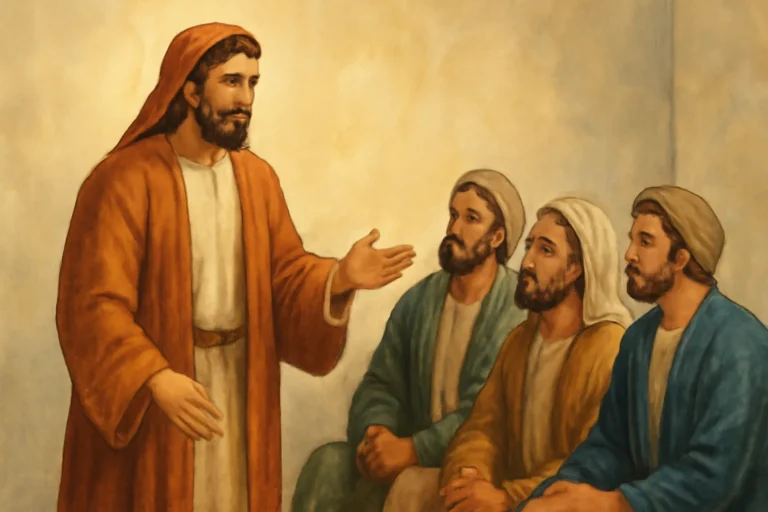
In the Parable of the Sower, the seed’s fate depends on the soil into which it falls.
The same message can be kept alive in our hearts or allowed to wither, depending
on receptivity, distraction, and commitment. The parable ends with a call to
persevering faith that bears fruit in varied seasons.
The Growing Seed and the Harvest
The spreading of God’s word is often described as a seed that grows into
something comprehensive and generous. The imagery of growth without
human control—the seed growing “night and day” as the farmer rests—reminds
readers that while human effort is essential, ultimate growth comes from
God’s gracious provision.
The Word as Seed
In Luke 8, Jesus makes clear that the seed is the Word of God. The power of
the Word to take root, produce growth, and yield a harvest depends on how
people receive it. A good heart, perseverance, and ongoing nurture lead to
a crop that multiplies.
Harvest: Reaping What We Sow
The final stage of the seed cycle is the harvest. Scripture often
casts this harvest as both a present reality and a future hope: a tangible
return on faithful sowing and a framework for living in light of God’s
promises. The harvesting imagery invites believers to assess their lives:
what are we sowing, what soil are we cultivating, and what kind of fruit do
we anticipate?
Galatians 6:7-9 – Do not be deceived: God is not mocked; for
whatever one sows, that will he also reap. We are not to grow weary in doing
good, for in due season we will reap if we do not lose heart. Key idea:
perseverance in sowing yields lasting spiritual fruit.
James 5:7-8 – “Be patient, therefore, brothers, until the coming
of the Lord. See how the farmer waits for the precious fruit of the earth,
being patient about it, until it receives the early and the late rains.” Key idea:
cultivation requires patience and trust in God’s timing.
Psalm 126:5-6 – Those who sow in tears shall reap with songs of joy;
the one who goes out weeping, bearing seed for sowing, shall come home with songs
of joy, bringing his sheaves with him. Key idea: endurance through hardship yields
a joyful harvest.
Proverbs 22:8 – He who sows iniquity reaps trouble; the sowing of
righteousness yields lasting peace. Key idea: the character of sowing shapes
the nature of the harvest.
Matthew 9:37-38 – Jesus said, “The harvest is plentiful, but the workers
are few.” This invites participation—engaging in the work of sowing and gathering
the harvest with God’s help. Key idea: kingdom work requires willing laborers.
The concept of sowing and harvesting is deeply rooted in Old Testament
wisdom and prophetic literature. The imagery of soil, break-up of fallow
ground, and hopeful expectation of rain and growth appears across various
books, creating a robust biblical grammar for growth and fruitfulness.
Hosea 10:12 – “Sow righteousness for yourselves, reap the fruit of
unfailing love; break up your unplowed ground, for it is time to seek the
Lord, until he comes and showers righteousness upon you.” Key idea:
moral preparation and divine blessing align for fruitful seasons.
Jeremiah 4:3 – “This is what the Lord says to the people of
Judah: Break up your unplowed ground and do not sow among thorns.” Key idea:
spiritual readiness matters for a meaningful harvest.
Isaiah 55:10-11 – “As the rain and the snow come down from heaven
and do not return to it without watering the earth, making it bud and
Shame and guilt are universal experiences, but the Bible offers a pathway from burden to freedom. This article gathers Bible verses and themes about shame, guilt, healing, forgiveness, and comfort. You’ll find a blend of direct verses (primarily from the King James Version for clarity and public-domain accessibility) and variations that capture the same truths…
Introduction: Why Isaiah 53:5 Matters for Healing The phrase “by his stripes we are healed” has echoed through ages as a foundational declaration about the relationship between suffering, sacrifice, and healing. Found in the prophetic book of Isaiah, this line sits at the heart of the Suffering Servant’s mission, a mission the biblical writers understand…
Introduction The Parable of the Talents sits among Jesus’ teachings about the kingdom of heaven and the responsibilities that accompany a season of opportunity. In Matthew 25:14-30, a master entrusts his servants with different amounts of wealth while he is away, and the responses of those servants reveal what it means to live with trust…
In Christian tradition, the call to Love God and Love Others stands as the cornerstone of ethical living, worship, and community. The biblical strands that weave these commands together appear across the narrative of Scripture, inviting believers to orient their entire being toward God and to extend that steadfast love toward neighbors, strangers, and even…
Bible Verses for Gift Giving: Heartwarming Passages for Every Occasion is a thoughtful guide to using Scripture as you bless others with words, prayers, and generosity. This article collects generous, uplifting, and practical verses that work well on gift cards, handwritten notes, or spoken blessings. Each section offers a sense of the occasion and practical…
Anger is a powerful emotion that appears frequently in the Bible, but its presence does not automatically condemn a person. The question many readers ask is does the Bible teach that all anger is a sin or is there a distinction between righteous anger and sinful anger? This article examines anger is a sin bible…