Bible Verse About the Woman at the Well: John 4 Explained
The story of Jesus and the Samaritan woman at the well, found in John 4, is one of the most compact yet expansive narratives in the Gospels. It moves from a simple request for water to a revelation of identity, worship, and mission. This article explores the passage from multiple angles: historical context, key verses, thematic strands, and practical applications for today. Throughout, we will consider variations of the verses across translations to broaden our understanding while staying faithful to the core message: Jesus invites personal encounter, transforms broken categories, and announces a new era of worship.
Context and Setting: Why a Well and Why Samaria?
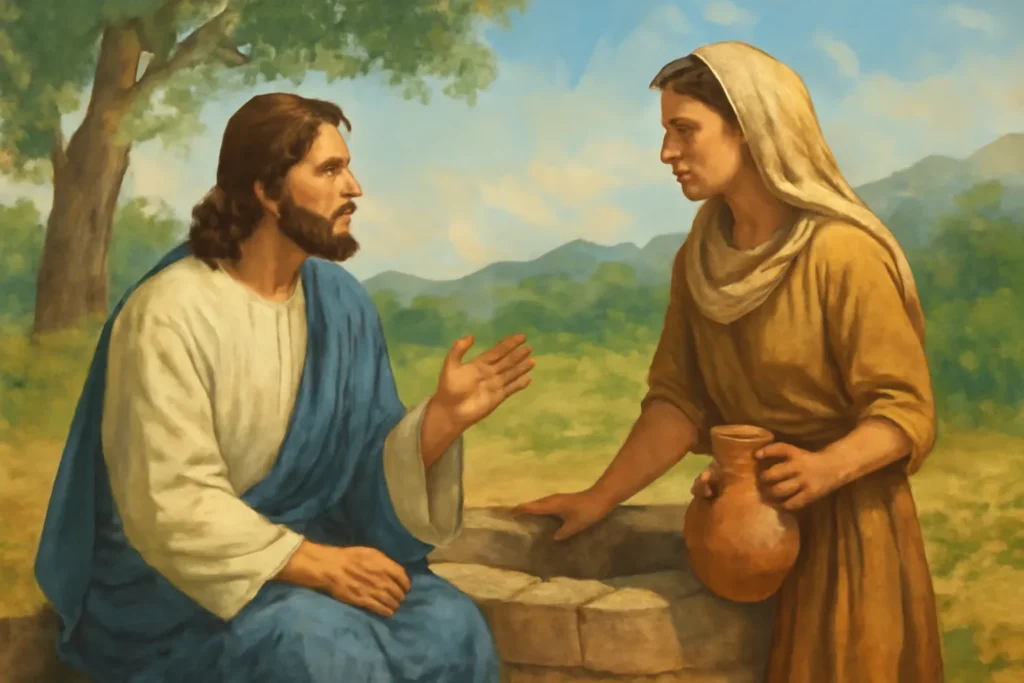
To appreciate John 4, it helps to situate the scene. Jesus travels from Judea to Galilee, passing through Samaria. The encounter occurs at Jacob’s well in Sychar, a town in Samaria. There, a Samaritan woman comes to draw water, a cultural and gendered setting that would have shaped how people in both communities perceived conversation across boundaries. The narrative deliberately places Jesus in a context of everyday need—water for daily life—while inviting a conversation about ultimate needs—eternal life, true worship, and the Messiah. The familiar motif of thirst becomes a doorway to a deeper spiritual exchange.
Some scholars note that the midday timing of the meeting underscores the woman’s ostracism and the social expectations she faced. In light of this, Jesus’ approach is striking: a respectful request for water initiates a dialogue that crosses ethnic, religious, and social lines. The scene invites readers to consider how Jesus models humble outreach and how the Gospel speaks to outsiders as well as insiders.
Key Passages and Their Variations Across Translations
The conversation unfolds through several pivotal statements. Here are compact, representative lines from different angles of the text, with attention to how wording can shape emphasis. The aim is not to archive every translation, but to show how variations illuminate different facets of the encounter.
John 4:7 (NRSV/JNT): “A Samaritan woman came to draw water, and Jesus said to her, ‘Give me a drink.’” This simple request breaks social norms and marks the start of a dialogue.
John 4:10 (KJV flavor): “Jesus answered and said unto her, If thou knewest the gift of God, and who it is that saith to thee, Give me to drink, thou wouldest have asked of him, and he would have given thee living water.” The classic line introduces the famous motif of living water, hinting at a deeper provision than physical water.
John 4:11–12 (ESV/NIV flavor): The woman responds pragmatically, and Jesus reframes thirst as spiritual need. Different translations phrase the question in slightly different terms: “Sir, you have nothing to draw with, and the well is deep” or “How is it that you, being a Jew, ask drink of me?” These variations show the encounter both as an offer and as a challenge to assumptions.
John 4:13–14 (KJV): “Jesus answered and said unto her, ’Whosoever drinks of this water shall thirst again: but whosoever drinks of the water that I shall give him shall never thirst.’” The contrast between ordinary water and the gift Jesus offers is central to the passage’s theology.
John 4:16–19 (reflection variants): Jesus invites the woman to go call her husband, prompting a revealing exchange. In some translations, the phrasing emphasizes the social reality of her life and the need for truth-telling in the encounter.
John 4:26 (I AM statement): “Jesus said to her, I that speak unto thee am he.” This direct revelation marks a turning point in the dialogue and identifies Jesus with the awaited Messiah in a surprising setting.
John 4:23–24 (worship instruction): “The hour comes, and now is, when the true worshipers will worship the Father in spirit and truth.” This teaching broadens the understanding of worship beyond place or tradition to a relational dynamic with God.
To gain broader semantic breadth, readers often compare phrases across translations. For example, the motif of “gift of God” in John 4:10 is paired with the offering of “living water”, while the Messiah’s self-disclosure in John 4:26 is rendered in slightly different cadences. Collectively, these variations reinforce a consistent arc: encounter with Jesus leads to knowledge of who he is, a recognition of one’s own need, and a reorientation toward worship that transcends cultural barriers.
The Two Central Images: Living Water and Worship in Spirit and Truth
The dialogue pivots on two interwoven images: living water and worship in spirit and truth. These phrases anchor the theology of the passage and resonate through Christian thought across centuries.
Living Water: More Than Hydration
When Jesus speaks of living water, he is signaling a supply that does not merely meet physical thirst; it produces ongoing transformation. In many biblical contexts, water is a metaphor for life, cleansing, and the Spirit’s refreshing presence. Some readers hear echoes of prophetic language that associates God’s provision with river and spring imagery. The Samaritan woman’s question—whether Jesus can draw from the well without a bucket—becomes a symbolic prompt to consider the source of life itself: the gift of God is not a ritual or location, but a personal encounter with the one who offers fullness of life.
Living water thus becomes a fount from which eternal significance flows into present life. In John’s Gospel, this aligns with Jesus’ broader mission: to give abundant life and to restore what sin and separation have disrupted. The image invites readers to reflect on where they seek sustenance—should we depend on systems, achievements, or relationships that leave us thirsty, or on a relationship with Jesus that continually refreshes the heart?
The encounter moves from a geographic debate about where to worship (on this mountain or in Jerusalem) to a fundamental truth about worship itself: it is defined by spirit and truth, not by the locale or the ancestral customs. This reframing challenges cultural boundaries and invites all people to draw near God through authentic relationship rather than through ceremonial proximity alone. The phrase
“The hour is coming, and is now, when the true worshipers will worship the Father in spirit and truth: for the Father seeks such to worship him.” (John 4:23, KJV)
Different translations render the idea with slight nuance, such as “worship the Father in the Spirit” or “worship God in spirit and truth”. Yet the core message remains consistent: worship is primarily about a living engagement with God, animated by the Spirit and shaped by truth about who God is and how humans respond in trust and obedience. This has been a guiding principle for Christian worship practices—from the early church to contemporary congregations—emphasizing heart devotion, ethical living, and communal love as the trajectory of true worship.
The unnamed woman at the well stands at the center of the narrative as a complex figure. Her presence in the story emerges as both a focal point for theological reflection and a human portrait that invites empathy. Here are some facets commonly drawn from the text and from broader interpretive reads:
Social Marginalization: A Samaritan woman, likely living with multiple past relationships or social disapproval, meets Jesus at a public, socially charged moment. Jesus’ engagement with her challenges social boundaries and demonstrates that the gospel welcomes those put at the edges.
Spiritual Curiosity: Her questions—first practical, then theological—reveal a genuine hunger for truth. When Jesus hints at “living water,” she moves from curiosity to a deeper search for meaning.
Recognition and Transformation: After a gradual revelation of Jesus’ identity and her own life, she becomes a messenger herself, returning to her town with a new message about the Messiah and inviting others to encounter him.
Agency within Grace: The woman’s courage to engage Jesus in conversation, to ask questions, and to testify to others demonstrates agency within the framework of grace. She is not a passive recipient but an active participant in the unfolding revelation.
These elements collectively present the woman as a catalyst through whom the discipleship of the community begins to take shape. In many ways, her arc mirrors the gospel’s broader invitation: encounter with Jesus leads not only to personal renewal but also to communal transformation as witnesses invite others to come and see.
Several core theological threads emerge from the John 4 encounter. These threads have informed Christian doctrine, preaching, and devotional practice for generations.
Crossing Boundaries in Mission
Jesus’ encounter with a Samaritan woman embodies a model of mission that is inclusive and disruptive of social barriers. The invitation to see salvation as universal—extending to Samaritans, women, and those who are considered outsiders—helps Christians understand the missionary impulse as grounded in love, not in cultural privilege. The narrative prefigures the Great Commission by showing that the message of life is for all people, not merely for insiders or for those who share a familiar background.
Truth-Telling and Personal Authenticity
The exchange moves toward truth-telling: Jesus reveals his identity gradually, while the woman reflects and discloses aspects of her life to him. The tension between concealment and exposure becomes a lens for spiritual discernment: how do we come before God with honesty, and how does God’s presence empower truth-telling within delicate relational dynamics?
Revelation and Faith Responses
When Jesus says, “I am he”, the Messiah figure is not simply a doctrinal title but an invitation to trust. The woman’s response—her decision to testify to the people of her town—illustrates a dynamic pattern in which personal encounter with Christ leads to public proclamation. This pattern echoes through the New Testament, where personal conversion typically yields community witness and mission.
Applications for Today: What Can We Take from John 4?
Readers today can draw several practical implications from the woman at the well and Jesus’ teaching in this passage. Here are some actionable takeaways broken into categories for reflection and use in ministry, worship, and personal life.
Engage Across Differences: Like Jesus, you can initiate conversations with people who are different from you—differences of culture, background, or belief. The Gospel’s reach is expansive, and genuine curiosity can open doors to meaningful dialogue.
Offer Living Water in Everyday Life: The metaphor of living water invites believers to see spiritual nourishment in daily life through prayer, community, and service. Consider what sources of “thirst” you try to satisfy apart from God, and how you might seek nourishment that endures.
Worship Beyond Location: The call to worship in spirit and truth transcends building or tradition. Churches, worship teams, and individual believers can reflect on how their practices cultivate sincere encounter with God, not merely conformity to ritual.
Witness Courageously: The woman’s decision to testify to her townspeople provides a blueprint for personal witness that is honest, relational, and inviting. Consider how you can share your own encounter with Christ in everyday conversation and acts of kindness.
Address Shame and Isolation: The narrative invites readers to consider the harms of social labeling. By welcoming those on the margins, communities can embody the gospel’s liberating message and model reconciliation in practical ways.
Because translators render ancient Greek into contemporary English with different choices, John 4 yields a spectrum of nuance. Here are several interpretive angles you may encounter as you study or preach the passage:
Terminology of Water: “living water” versus “water of life” versus “eternal life’s refreshment” can shift emphasis toward immediacy (present life) or ultimate fulfillment (eternal hope).
I AM He versus “I am he”: Some versions stress the personal proclamation, others the bearing of authority as Messiah. The effect is to foreground personal identification with Jesus and the trust that follows revelation.
Worship Language: Phrases like “worship the Father in spirit and truth” can be read as an instruction for worship practices or a theological summary about the nature of true worship. The balance of worship as relational submission to God and as doctrinal fidelity remains central across translations.
Social Dynamics: Some translations unpack the social dynamics more explicitly—gender, ethnicity, and social status—while others foreground the theological dialogue. Both readings enrich our understanding of how the Gospel speaks to diverse communities.
Use the following prompts to guide personal study, group discussion, or sermon preparation. Each prompt connects back to the central figures and motifs of the John 4 narrative.
What is your living water—that is, what sustains you beyond momentary satisfaction?
In what ways have you experienced or witnessed worship in spirit and truth in your life or church community?
How might you engage people who are different from you with the same openness Jesus shows in this story?
What personal truths do you need to confess or acknowledge before God to deepen your faith journey, and how can you do so with humility and courage?
Who are the “neighbors” of your life that you might invite to meet Jesus as the Samaritan woman invited her town?
For further study, consider the following tools that can enrich understanding and teaching of John 4:
Compare translations for John 4:10–14 to observe how wording shapes interpretation of “gift of God” and “living water.”
Read a map of first-century Samaria to appreciate the geographical and cultural distances being bridged in the encounter.
Study commentary notes on the historical role of Jacob’s Well and its significance in Jewish and Samaritan memory.
Explore cross-references to “living water” imagery in other biblical books (e.g., Isaiah, Jeremiah, Ezekiel, Revelation) to trace a biblical typology.
The John 4 encounter has long served as a touchstone for discussions about missional faith—that is, how the church is sent into the world to bear witness to God’s redemptive work in Jesus. Several reflective claims emerge from the text that remain salient for contemporary church life:
Church as a Diverse Community: The gospel’s universal reach begins in a context that defies the boundaries of Jew and Samaritan, male and female, insider and outsider. A faithful church models that diversity and unity in Christ.
Salvation as Ongoing Activation: The “gift of God” and the invitation to drink deeply of living water imply that salvation includes ongoing renewal, daily dependence on God’s Spirit, and a life oriented toward mission.
Witness as a Natural Response: The woman’s immediate reaction—sharing her experience with others—illustrates how transformed lives become catalysts for community inquiry and faith formation.
The woman at the well invites readers to see a familiar setting—water, thirst, and daily life—through the lens of divine revelation. Jesus meets her at a point of ordinary need and reveals extraordinary truth: the gift of God is not restricted to a particular people or a particular place, but is tenderly offered to any seeker who asks, believes, and testifies. The conversation culminates in a decisive confession and a transformative commission: to recognize Jesus as the Messiah and to carry that recognition into the community with honesty, courage, and hospitality.
As you reflect on John 4, consider how this story speaks to your own thirsts, your beliefs about worship, and your call to share the good news with bold tenderness. In a world divided by barriers—geographical, cultural, and ideological—the well becomes a symbol for the living water Jesus offers to all who come to him with openness and honesty. May your own encounter with Christ lead to a deeper worship, a clearer proclamation, and a more generous invitation to others to drink from the fountain that never runs dry.









Leave a Reply