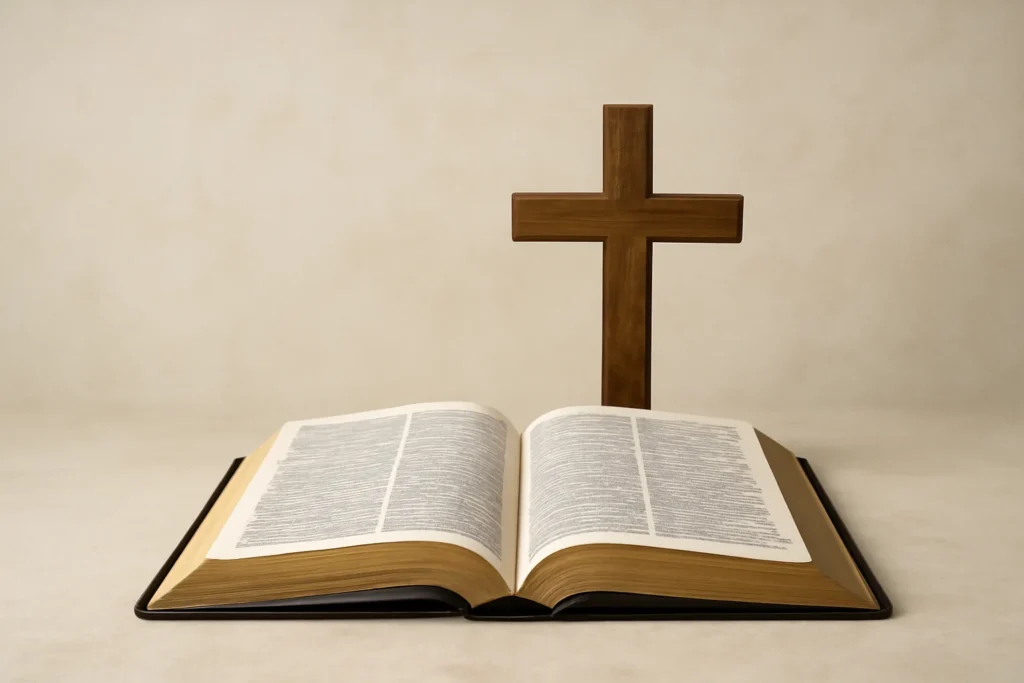
This article explores bible verses about gods from a variety of angles, clarifying when the word “gods” refers to the one true God in a plural form, to idols and false deities, or to other beings described in Scripture. By surveying both Old and New Testament passages, we can see a consistent through-line: the Bible centers on the Lord, the one true God, while warning against worship of any other power or image. The following sections present key verses, explain their meanings, and offer guidance for studying these passages with a careful, historical, and theological eye.
Understanding the Language: gods, Elohim, and the Idea of One God
In Hebrew, the word Elohim can be singular or plural in form, depending on the context. When used of the one, transcendent Creator, many readings translate it as a singular noun even though the form resembles a plural. In other contexts, Elohim can refer to judges or divine beings within a pantheon. The Bible thus uses the word in different senses, which can lead to interpretive nuance if read without attention to context.
A related theme is the repeated biblical distinction between the God who is above all and the idols or “gods” of the nations—the objects of worship that are not true divine beings. The Bible calls false gods “vanity,” “silversmiths’ works,” or “the work of men’s hands,” and it insists that such idols cannot compare to the living God who created all things.
Key contextual notes to keep in mind
When the text speaks of the LORD our God or the God of Israel, it is affirming the personal, covenantal God who reveals himself to his people.
When the text warns about idols, it is addressing the practice of worshiping objects or false deities in place of the Creator.
New Testament writers often cite older passages to show that God’s oneness is foundational, while also expanding on how Jesus relates to the Creator’s plan of salvation.
Key Verses Affirming the One True God (monotheism and the uniqueness of God)
The Bible repeatedly asserts that there is one God who alone deserves worship. The following verses are touchpoints for understanding this central claim and its implications for faith, worship, and ethics.
Exodus 20:3 — “Thou shalt have no other gods before me.” Explanation: This foundational commandment establishes exclusive worship of the God of Israel and begins the insistence on true worship over competing deities.
Deuteronomy 6:4 — “Hear, O Israel: The LORD our God is one LORD.” Explanation: The Shema proclaims the unity of God and frames the entire nation’s identity around the indivisible oneness of the divine.
Isaiah 44:6 — “Thus saith the LORD the King of Israel, and his Redeemer the LORD of hosts; I am the first, and I am the last; and beside me there is no God.” Explanation: This verse emphasizes God’s sovereignty, eternity, and exclusive character.
Isaiah 45:5 — “I am the LORD, and there is none else, there is no God beside me…” Explanation: The prophet underscores God’s unique status and raises the stakes for loyalty to the true God.
Exodus 15:11 — “Who is like unto thee, O LORD, among the gods? who is like thee, glorious in holiness, fearful in praises, doing wonders?” Explanation: A poetic affirmation of God’s incomparable greatness, even amid other nations’ beliefs in various deities.
Psalm 82:6 — “I have said, Ye are gods; and all of you are children of the most High.” Explanation: In this psalm, the term “gods” is used in a governing context and is often interpreted as a reminder of human accountability before the true God. It is also a passage Jesus later cites to discuss the limits of human authority when compared with the divine.
John 17:3 — “And this is life eternal, that they might know thee the only true God, and Jesus Christ, whom thou hast sent.” Explanation: In the New Testament, Jesus speaks of knowledge of the Father as eternal life, reinforcing monotheism while centering Jesus’s mission within the unique Godhead.
1 Corinthians 8:6 — “But to us there is but one God, the Father, of whom are all things, and we in him; and one Lord Jesus Christ, by whom are all things, and we by him.” Explanation: The apostle Paul foregrounds the unity of God while also acknowledging the distinct role of Jesus within God’s plan of creation and redemption.
Psalm 86:10 — “For thou, Lord, art great, and doest wondrous things: thou art God alone.” Explanation: This psalm celebrates God’s unique status and power as the sole sovereign among all powers.
Psalm 96:4 — “For the LORD is great, and greatly to be praised: he is to be feared above all gods.” Explanation: The psalmist places the God of Israel above any rival deities, sacramentalizing allegiance to the Creator.
Jeremiah 10:10 — “But the LORD is the true God, he is the living God, and an everlasting king…” Explanation: The prophet calls out the living, personal God who governs the cosmos and history, in contrast with lifeless idols.
Matthew 6:9-10 — “Our Father which art in heaven, Hallowed be thy name. Thy kingdom come. Thy will be done in earth, as it is in heaven.” Explanation: While not a direct verse about God’s being one, Jesus’ prayer models worship that recognizes the Father’s unique status and sovereignty in practice.
1 John 5:20 — “And we know that the Son of God is come, and hath given us an understanding, that we may know him that is true: and we are in him that is true, even in his Son Jesus Christ. This is the true God, and eternal life.” Explanation: The apostolic witness links Christ to the true God and eternal life, enriching the broader monotheistic framework of the New Covenant.
Deuteronomy 4:35 — “Unto thee it was shewed, that thou mightest know that the LORD he is God; there is none else beside him.” Explanation: A foundational call to recognize the exclusivity and authority of the Lord.
Verses Confronting Idolatry and False Gods (the problem of idols)
A major thread across biblical literature is a warning against worshiping idols and relying on manufactured “gods” that cannot save, speak, or act. The following passages illustrate how Scripture treats idols and why true worship centers on the living God.
Exodus 32:4-5 — “And he received them at their hand, and fashioned it with a graving tool, after he had made it a molten calf: and they said, These be thy gods, O Israel, which have brought thee up out of the land of Egypt.” Explanation: A dramatic demonstration of how quickly idolatry arises and how vulnerable people can be to false substitutes for divine presence and power.
Psalm 115:4-8 — “Their idols are silver and gold, the work of men’s hands. They have mouths, but they speak not: eyes have they, but they see not… their vanities and the works of deception.” Explanation: The psalm emphasizes the lifelessness and powerlessness of idols compared to the living God.
Jeremiah 10:10 — “But the LORD is the true God, he is the living God, and an everlasting king.” Explanation: Prior to admonitions against idolatry, this verse confirms the enduring reality of the one true God who cannot be mimicked by idols.
Isaiah 44:9-11 — A prophetic critique of those who fashion idols and then bow to them, calling on prophets or craftsmen who cannot save. Explanation: The passage underscores the absurdity and impotence of carved images.
1 Corinthians 8:4 — “As concerning therefore the eating of those things that are offered in sacrifice unto idols, we know that an idol is nothing in the world, and that there is none other God but one.” Explanation: In the apostolic era, the church navigates practices around idols while reaffirming the supremacy of the one true God.
Romans 1:23 — “And changed the glory of the incorruptible God into an image made like to corruptible man, and to birds, and four-footed beasts, and creeping things.” Explanation: Paul’s critique of idolatry shows how a creative act can misdirect worship away from the true Creator.
1 Samuel 15:23 — “For rebellion is as the sin of witchcraft, and stubbornness is as iniquity and idolatry.” Explanation: Though not about idols per se, this verse links disobedience and idolatrous-like self-worship to a failure to submit to the one true God.
The “gods” in Psalm 82 and New Testament Reflections
The term gods appears in a striking way in Psalm 82 and is used by Jesus in the New Testament to engage questions about authority, justice, and the nature of divine beings. These passages invite careful interpretation and rich theological reflection.
Psalm 82:6 — “I have said, Ye are gods; and all of you are children of the most High.” Explanation: The verse invites discussion about the authority granted by God to human judges or rulers and the ultimate accountability of all beings before the Most High.
John 10:34-36 — “Jesus answered them, Is it not written in your law, I said, Ye are gods? If he called them gods, unto whom the word of God came, and the scripture cannot be broken; Say ye of him, whom the Father hath sanctified, and sent into the world, Thou blasphemest; because I said, I am the Son of God?” Explanation: Jesus cites Psalm 82 to discuss authority and identity, highlighting a distinction between the divine Son and human recipients of divine revelation.
Verses That Tie together the Old and New Testaments on God and Gods
Biblical writers bridge the Old and New Testaments by showing how the one true God stands in continuity with promises made long ago, while also revealing deeper truth through Christ. The following verses help readers see that continuity and development in a unified story.
Deuteronomy 4:35 — “Unto thee it was shewed, that thou mightest know that the LORD he is God; there is none else beside him.” Explanation: Emphasizes knowability of God and the exclusive nature of divine identity across generations.
1 Timothy 2:5 — “For there is one God, and one mediator between God and men, the man Christ Jesus.” Explanation: This verse hierarchizes the relationship between God and humans, while locating Jesus within the divine plan as mediator.
Colossians 1:16-17 — “For by him were all things created… and he is before all things, and by him all things consist.” Explanation: The primordial role of Christ in creation reinforces the New Testament’s participation in the monotheistic framework.
John 14:6 — “Jesus saith unto him, I am the way, the truth, and the life: no man cometh unto the Father, but by me.” Explanation: The passage clarifies how access to the true God is mediated through Christ.
How to Read “gods” Today: A Practical Guide for Study
Engaging with scripture on the topic of gods requires careful attention to context, genre, and historical setting. Here are practical steps to help readers navigate these passages without oversimplifying their meaning.
Identify the context: Determine whether the word refers to idols, rulers, false beings, or to the rhetorical use of “gods” in a given passage.
Note the surrounding theology: Is the author arguing for monotheism, warning against idolatry, or revealing Christ’s relationship to the Father?
Consider linguistic choices: Look for parallel phrases, such as “true God” vs “idols,” and for how authors quote or reinterpret earlier scripture.
Read Jesus and Paul in dialogue with the Hebrew Bible: The New Testament often uses Old Testament passages to comment on Jesus’ identity and mission.
Practical Takeaways: Themes and Meanings You Can Use
From the broad sweep of the biblical record, several core themes emerge when you study “gods” in Scripture. These themes can guide personal study, preaching, teaching, or devotional reading.
Exclusive worship belongs to the one true God. The exhortations to worship the LORD alone are not merely ritual prescriptions but a claim about the nature of reality: the Creator alone is worthy of worship.
Idolatry’s futility is a consistent warning. Idols represent human tendency to grasp for security and significance through material things, yet they fail to provide the living help that only God grants.
God’s oneness and sovereignty are repeatedly affirmed, not as abstract ideas but as the basis for justice, mercy, and the order of creation.
Jesus’ identity in relation to God is central to Christian faith. The New Testament repeatedly ties Jesus to the true God while also presenting him as the revealer and mediator of God’s will.
Scripture interprets Scripture: New Testament authors routinely interpret, quote, and reframe older verses to illuminate the person and work of Christ within God’s unified plan.
The Bible’s treatment of the word gods covers a broad spectrum—from awe-filled declarations of the one true God to sober warnings against idols and false deities, to nuanced uses of “gods” in prophetic and apostolic writings. Across the pages of Scripture, the consistent message is that God is one, uncreated, and worthy of worship in every generation. Idols cannot save, speak, or save a people in distress; only the Creator and Sustainer of all things can do that. For believers and students, the task is not only to memorize verses but to understand their coherence within God’s redemptive work in history, culminating in Christ.
If you want to go deeper, consider a study plan that tracks the same theme through the Bible: start with the Ten Commandments and the Shema (Deuteronomy 6:4), move to the prophetic statements about the Lord’s exclusive sovereignty (Isaiah, Jeremiah), explore the psalms that celebrate the Lord’s supremacy over all “gods,” and finally study the New Testament texts that present Jesus as the culmination and fulfillment of the scriptural witness about God. By following this arc, you’ll gain a richer, more nuanced understanding of how the Bible uses the word gods and why the call to worship remains, for Christians, centered on the Triune God revealed in Scripture.





Leave a Reply