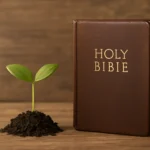
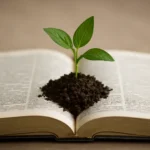
Across the pages of the Bible, seeds appear again and again—not merely as agricultural notes but as rich, multi-layered symbols. From the first pages of Genesis to the visions of Revelation, seeds carry messages about life, possibility, faith, and the covenant God makes with humanity. This article explores the meaning, symbolism, and significance of biblical seeds—the humble grain that becomes a powerful image of growth, promise, and divine purpose.
In its most practical sense, a seed is a small, living package that carries the potential to become something larger, sometimes a plant, sometimes a lineage, and sometimes a revelation. In Scripture, that basic biology is enlisted to convey spiritual truths. The seed embodies possibility, hidden life, and the expectation of fruit. When the Bible talks about seeds, it often invites readers to think beyond the physical act of sowing grain to the spiritual act of sowing faith, hope, and obedience.
There are several overlapping ways that seed imagery functions in Scripture. Consider these core ideas that recur in various forms across the biblical narrative:
Growth and transformation: Seeds require time, soil, and care to become mature plants that yield fruit. This mirrors how faith and God’s promises develop in a believer’s life.
Potential that becomes reality: A seed contains the future plant and its fruit. In theology, it often points to the fulfillment of God’s promises or the emergence of new life.
Descent and lineage: The term seed can refer to offspring and the promised people who will carry God’s blessing to the nations.
Word as seed: The Word of God is described as seed that can take root in a heart and produce lasting change.
In all these uses, seed patterns invite readers to consider the way small beginnings can lead to extraordinary outcomes when God’s purposes are at work.
Terminology and Variations
Readers will encounter a variety of terms that revolve around seed imagery. Some common seed-related phrases include:
Seed and seeds (general term for the reproductive unit of plants, and by extension, a metaphor for reproduction of life or blessing)
Kernel (the central seed or essential part, used in statements like the kernel of wheat)
Mustard seed (a tiny seed that grows into a large plant, used in Jesus’ parables)
Seed of Abraham and seed of David (descendants who carry God’s promises and messianic expectations)
Word as seed (the living, enduring Word that can take root in the heart)
In practice, you will see passages that play with these terms—sometimes literally referring to seeds in agriculture, other times using seed language to describe how faith, truth, or people multiply in God’s plan.
Seed Imagery as Symbol: Core Meanings in Scripture
Across the biblical corpus, seeds function as a reliable symbol of growth and divine initiative. Here are the main symbolic meanings that recur in Scripture, with examples to illustrate how they work in context.
Growth and maturation: A seed’s journey from dormancy to fruit mirrors spiritual development, endurance, and the long arc of God’s plan for a life or a people.
Potential and unseen life: Seeds are small and often hidden; their power lies beneath the surface, just as God’s work in a person’s heart often begins quietly before becoming visible fruit.
Covenant and blessing: The language of seed and offspring ties directly to promises made to Abraham, David, and the people of Israel, ensuring that blessing will multiply.
Word and message: The seed as the Word of God emphasizes how truth planted in the heart grows into knowledge, wisdom, and obedience.
Death and life: Some seed imagery emphasizes that life often comes through a process that involves loss—like a seed that dies to become a harvest (“kernel of wheat” imagery).
These meanings are not isolated; they intersect in many stories and teachings, creating a rich tapestry in which seed metaphor becomes a lens for understanding God’s work in the world.
Seed and Sowing: Agency, Freedom, and Responsibility
Seed imagery is not a purely passive metaphor. The act of sowing, tending, and waiting on harvest invites moral and spiritual reflection:
Responsibility to sow: People are called to share truth, extend mercy, and cultivate environments where God’s seed can take root.
Hope in the harvest: The expectation of a future yield energizes present faithfulness, even in seasons of drought or neglect.
Discerning the soil: The condition of the heart—soil—determines whether the seed will flourish and bear fruit.
Seed in the Great Biblical Narratives
The Parable of the Sower and the Soils
One of the most famous seed-centered passages is the Parable of the Sower (found in Matthew 13, Mark 4, and Luke 8). In this story, the seed represents the message of the Kingdom of God, which travels far and wide, sometimes landing on hearts that receive it with joy, other times hardening under pressure, choked by life’s concerns, or withering in persecution. The different soils illustrate how receptivity and perseverance are essential for fruitfulness. The parable concludes with a call to hear and to understand, underscoring that the seed’s effectiveness depends on the soil of the listener’s life.
The Mustard Seed: Small Things, Mighty Outcomes
The mustard seed example, cited in several places (most notably in Matthew 13:31-32 and Mark 4:30-32), is a picture of drastic growth from a very small beginning. Jesus uses this image to teach about the Kingdom of God: what begins in obscurity can come to dominate the landscape, providing shelter and blessing to many. The seedling’s expansion into a tree-like shrub also suggests hospitality, protection, and the gathering of nations under God’s rule.
The Kernel of Wheat: Dying to Multiply Life
Jesus’ teaching about the kernel of wheat that falls to the ground and dies—“unless a kernel of wheat falls to the ground and dies, it remains a single seed. But if it dies, it produces many seeds” (John 12:24)—offers a penetrating paradox: life often comes through self-giving and surrender. This seed motif points to sacrifice, resurrection, and the way in which a single act of fidelity can birth a multitude of blessings and a transformed community.
Seed of Abraham and the People of God
In the Old Testament, seed frequently refers to descendants who carry forward God’s promises. The idea of the seed of Abraham encompasses not only a biological lineage but also a spiritual family called to bless the nations (Genesis 12; 22; Galatians 3). The notion expands further to include the prophetic sense of a coming Messiah from the seed of David, whose reign would bless all peoples. In this way, the seed imagery ties together lineage, blessing, responsibility, and hope for a future fulfilled in Christ.
The Word as Seed: Revelation through Scripture
Beyond plant life and lineage, the Bible also treats the Word as seed. The apostle Peter makes a striking claim about the living and enduring word of God becoming the means by which people are born anew. In 1 Peter 1:23, believers are described as “born again, not of perishable seed but of imperishable, through the living and enduring word of God.” This identifies Scripture itself as a seed with the power to bring about new life and transformation. The seed concept here is more than metaphor; it is a claim about how faith comes to fruition through divine action in a human heart.
Seed, Covenant, and the Call to Bless the Nations
Seed imagery also appears in covenantal language. God’s promise to Abraham—“I will make you into a great nation, and I will bless you and make your name great, so that you may bless others” (paraphrase of Genesis 12:2-3)—is intimately tied to the idea that his seed would multiply and extend blessing to all nations. This is a theological grammar for mission: a seed that multiplies into a family, which becomes a nation, that serves as a channel of blessing for the world. Christians often hear this as fulfilled in Christ, whose lineage is understood as the ultimate seed through whom all nations are blessed (Galatians 3:16).
Theological Significance: Covenant, Promise, and Eschatology
The seed motif is not merely ornamental; it anchors essential biblical truths about God’s covenants, promises, and the biblical arc toward fulfillment. Here are some of the major theological trajectories connected to seed imagery.
Covenant continuity: Seed language ties generations together. The blessing God extends to one generation is often tied to the responsibility and faith of the next, forming a chain of trust that sustains the community across time.
Multiplication of blessing: Seed and offspring are blessings that grow: a seed becomes a people, and a people become a witness to the world.
Messianic expectation: The seed motif culminates in the person of Christ, the promised Seed who inaugurates the Kingdom and fulfills the deepest hopes of the covenants.
Enduring Word versus fragile life: The contrast between perishable seeds and imperishable seed emphasizes the stability of God’s promises against human frailty.
Harvest and judgment: Biblical harvest language—reaping, collecting, and accountability—frames God’s answer to history. Seeds planted in faith yield an eternal harvest; seeds sown in selfishness or rebellion multiply harm.
In practice, readers are invited to see seed imagery as a way to interpret both personal faith and communal history. Seeds become a vocabulary for remembering past faithfulness, naming present responsibilities, and orienting toward the future hope of restoration.
Eschatological Harvests
In prophetic and apocalyptic books, seed and harvest imagery recurs to describe God’s final, decisive act of gathering blessings, judging injustice, and renewing creation. The reaping of the earth and the replanting of a new heaven and new earth are presented in terms that echo agricultural cycles. The seed is not merely a starting point; it is a sign of a completed, glorious harvest to come when God’s purposes for creation are fully realized.
Seeds as Practice: What It Means for Believers Today
Faith as a Seed
Many Christian teachers describe faith as a seed that grows when nourished by prayer, Scripture, and communal life. This metaphor helps believers visualize how a quiet, internal trust can become outward strength and courage. The image emphasizes that growth often happens gradually, requires conditions favorable to life (soil of the heart, rain of the Spirit, warmth of discipline), and results in visible fruit in due time.
Planting Seeds of Truth: Evangelism and Discipleship
Sharing the Gospel can be described as planting seeds in the minds and hearts of others. Not every seed will sprout immediately, and not every seed will sprout in the same measure, but the faithful act of sowing persists across generations. Later chapters or generations may see fruit where earlier efforts seemed barren. This helps believers stay patient, hopeful, and persistent in mission.
Endurance in Hard Seasons
Seed literature often accompanies seasons of drought or waiting. The Bible acknowledges that life’s cycles include times of apparent barrenness. Yet the seed remains alive in the ground, promising eventual harvest. This can encourage readers to persevere in faith, maintain integrity, and trust in God’s timing even when immediate results are unclear.
Teaching and Formation: Rhetoric of the Soil
In pastoral settings, seed imagery can guide spiritual formation. Teachers and preachers may invite listeners to examine the soil of their hearts—what areas are receptive to the Word? Which concerns, fears, or distractions hinder growth? The process of cultivating soil parallels spiritual disciplines: reading Scripture, prayer, confession, and acts of mercy all contribute to the health of the seed’s root system and its capacity to bear fruit.
Seed of faith or fiat of faith: the initial trust that opens the door to a lifelong journey with God.
Seed of hope: a small, steadfast expectation that sustains resilience amid hardship.
Seed of wisdom: insights that, when planted, yield practical and moral fruit in daily life.
Seed of community: the small, local acts of fellowship that grow into a robust, supportive body of believers.
Practical Reflections: How to Engage with Seed Imagery
Engaging with seed metaphors can enrich devotional life, Bible study, and church practice. Here are some practical ways to invite seeds to shape faith and action:
Study the parables: spend time with the Parable of the Sower (Matthew 13, Mark 4, Luke 8) to understand how hearts respond to truth and how nurture and challenge affect growth.
Reflect on personal soil: regularly assess what conditions in your life help or hinder spiritual growth—are there rocks, thorns, or shallow soil that impede the seed?
Engage in communal sowing: participate in activities that sow seeds of faith and service, such as teaching children, sharing testimonies, or supporting missions—we often multiply impact through collective effort.
Monitor the fruit: discern whether the seed in your life results in love, joy, peace, patience, kindness, and other fruit of the Spirit; if not, consider replanting or adjusting care strategies.
When you read passages about seeds, you might note bold keywords in your Bible or in study notes such as seed, soil, harvest, and Word. Keeping these terms in focus can help you track how the authors use seed imagery to convey God’s work across history and in your own life.
Common Misunderstandings and Clarifications
Seed imagery is rich and can be interpreted in multiple ways, but a few cautions help avoid misreading the text:
Not all seeds yield immediate fruit: The Bible often emphasizes patience and long-term growth rather than quick results. A seed may lie dormant for a season but still be alive and capable of future fruit.
Symbolism varies by context: A seed used to illustrate Israel’s blessing is not always a direct reference to Jesus; context matters for determining whether a passage speaks of covenant, fulfillment, or moral exhortation.
Seed does not replace the person of faith: The seed imagery invites trust in God’s promises, but it does not diminish human responsibility—discipleship, obedience, and practical love are essential to any seed’s growth.
Seed metaphors are not purely naturalistic: While seeds are physical, their primary force in Scripture is spiritual. The seed concept is a bridge between natural processes and spiritual truths.
By recognizing these caveats, readers can appreciate the theological depth of seed language without reducing it to a simplistic farming allegory.
Conclusion: The Enduring Message of Bible Seeds
From the soil of ancient farms to the pages of prophetic poetry, seed imagery has served as a compelling framework for understanding how God works in the world. Seeds remind us that small beginnings are not insignificant; they hold the seed of what God intends to accomplish. The kingdom of God often grows in ways that begin inconspicuously—like a tiny mustard seed that becomes a shelter for many—and yet, through time, works a harvest that touches nations and ages. The Bible invites us to view our lives as fields within which God plants, waters, and nourishes with grace, so that what begins as a single seed of faith, word, or promise may become a flourishing harvest of righteousness, justice, and peace.
In every era and in every community, the seed metaphor continues to offer a hopeful, robust alternative to despair: it assures us that God’s purposes endure beyond immediate outcomes and that faithful sowing—whether of trust, truth, or love—will yield a divine harvest. By meditating on these images, readers can cultivate patient hope, resilient faith, and a life that aligns with God’s generous design for blessing the world.
Bible Verse for Planting Seeds: Grow Your Garden and Faith Gardens and faith have long walked hand in hand. The Bible speaks often of planting, sowing, and harvest not only as agricultural acts but as powerful metaphors for spiritual growth. When you choose to plant seeds in the soil, you are also choosing to plant…