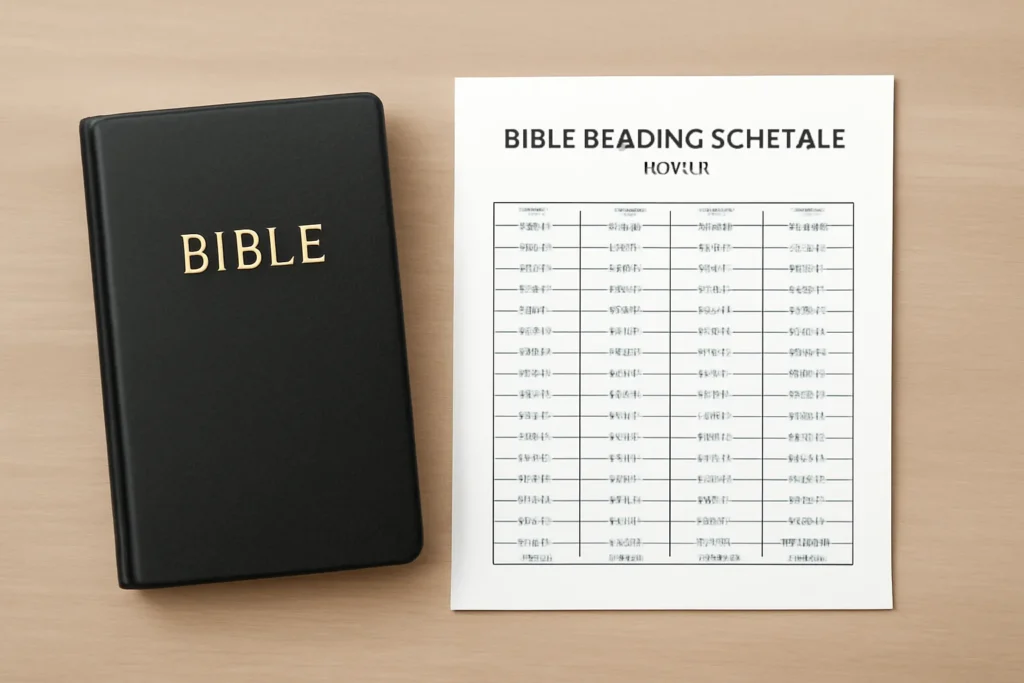
Embarking on a 365-Day Bible Reading Plan offers a structured path through Scripture that can transform daily devotional life. A bible reading schedule 1 year is designed to guide you through a substantial portion of the Bible in a manageable, steady cadence. Whether you are new to Bible reading or returning after a season away, a year-long plan provides clarity, accountability, and a sense of progress. In this article, you’ll find a comprehensive overview of the one-year Bible reading plan, its purposes, how it is usually structured, practical tips for success, and options for customization. We will use a range of terms to describe the same idea—bible reading schedule 1 year, one-year Bible reading schedule, year-long Bible reading plan, and bible plan for a year—to help you see how this approach is discussed in different communities and resources.
What is a 365-day Bible reading plan?
A 365-day Bible reading plan is a year-long itinerary that divides the Bible into daily portions. The goal is not merely to finish the text but to engage with Scripture consistently, cultivate habits, and absorb God’s word in a balanced way. The bible reading schedule 1 year commonly combines readings from the Old Testament and the New Testament in each week, sometimes integrating Psalms or Proverbs to provide poetic or wisdom-oriented reflection. The essence of a one-year Bible reading plan is that you commit to daily readings that are finite in length but cumulative in impact, building a habit that can bless your spiritual growth over the long term.
Why choose a year-long plan?
There are several compelling reasons to adopt this kind of schedule. Below are the most common benefits you might experience on your 365-Day Bible Reading Plan.
Consistency: A year-long framework turns reading into a routine rather than an occasional activity.
Comprehensive coverage: You move through large swaths of Scripture, including narratives, poetry, prophecy, and epistles, which broadens biblical literacy.
Balanced exposure: A well-designed plan alternates among genres, helping readers see connections between different parts of the Bible.
Habit formation: Repetition over 12 months tends to cement positive spiritual disciplines and can shape daily rhythms.
Accessibility: Short, daily readings are often more manageable than attempting to tackle large blocks of text irregularly.
Momentum for reflection: Regular time in Scripture creates space for prayer, journaling, and meditative reflection.
Community and accountability: Many plans offer group study options, shared readings, or prompts that encourage accountability with others.
How a one-year Bible reading schedule is structured
While there are many adaptations, most bible reading schedules 1 year share a core structure designed to keep readers moving steadily. Here are the most common elements you’ll encounter.
Daily readings
Predominantly short daily portions that fit into a single sitting.
Often combine a segment from the Old Testament with a portion from the New Testament or Psalms/Proverbs to provide variety.
Occasional longer readings may occur, but these are balanced by shorter days as the year progresses.
Old and New Testament pairing ensures exposure to the whole biblical arc, not just selective themes.
Some plans alternate by week or day, while others follow a chronological or thematic sequence.
In certain editions, Psalms and Proverbs are interspersed regularly to offer poetic reflection and practical wisdom for daily life.
Lectionary-style vs. chronological approaches
Lectionary-style plans mimic a church calendar, blending readings to align with feasts, seasons, or thematic arcs.
Chronological plans arrange texts roughly in the historical order in which events occurred, which can illuminate motifs and redemptive history.
Some plans let you choose thematic days (e.g., a day focused on forgiveness, faith, or worship) while maintaining daily rhythms.
Sample overview of a 365-day plan
Although each provider may customize their schedule, here is a representative snapshot of how a typical 365-Day Bible Reading Plan might be organized to cover the Bible in a year.
Daily readings generally range from 2 to 4 chapters, with some days shorter and others slightly longer to accommodate story arcs and poetic sections.
Weekly rhythm often includes a Psalm or Proverb reading to reinforce wisdom literature and worship language.
Each month follows a consistent pattern, ensuring that by the end of December you have read substantial portions of both testaments.
Supplemental resources, such as a brief reflection or study note, may be included to enhance understanding and application.
Choosing the right year-long Bible reading plan for you
With multiple versions available, you may wonder how to pick the best bible plan for a year for your needs. Consider the following criteria as you evaluate options for your Bible reading schedule 1 year.
Reading load: If you are new to daily reading, you might prefer a plan with shorter daily portions or a plan that includes rest days.
Translation and language: Choose a version you find clear and engaging, whether it’s a modern translation, a more formal version, or a paraphrase for accessibility.
Structure: Decide whether you want a chronological journey, a two-testament daily pairing, or a theme-based approach.
Inclusion of Psalms/Proverbs: Some plans emphasize wisdom literature or worship songs regularly, which can be vital for devotional rhythms.
Accessories: Look for plans that offer journaling prompts, reflection questions, or audio options if you learn best by listening.
Tips for sticking with a 365-day Bible reading plan
Commitment is the heartbeat of a long-term plan. Here are practical, proven strategies to help you stay on track throughout the year.
Set a specific time each day for reading, and protect that time as a non-negotiable appointment with God.
Prepare a comfortable space where you can read without distractions, with a notebook and a pen nearby for notes and prayers.
Start small: If you miss a day, don’t abandon the plan. Return the next day and continue from where you left off.
Use reminders: Alarms, calendar alerts, or mobile apps can nudge you gently toward completion.
Journal insights: A short note on what you learned, how it applies, or a prayer request helps cement impact.
Mix formats: If you’re tired of scrolling text, try an audio version or a visual study guide to vary the experience.
Engage with a community: Accountability partners, small groups, or online forums can provide encouragement and shared momentum.
Celebrate milestones: Mark the end of each month with a small celebration or a reflective reading to summarize lessons learned.
A robust bible reading schedule 1 year can be customized to fit different life seasons, responsibilities, and spiritual goals. Here are some practical customization ideas to tailor a year-long Bible reading plan to your context.
Adapting to different Bible versions
If you switch translations, read a parallel short passage in both versions to strengthen understanding and retain continuity.
For younger readers or new believers, consider a plan that uses a clearer, modern translation while gradually introducing more traditional phrasing.
Aligning with church calendars or personal themes
Some churches follow the liturgical calendar; you can align your plan with those readings while maintaining daily consistency.
You can create thematic weeks (e.g., faith, hope, love) or focus on specific figures (e.g., Moses, David, Paul) to deepen study.
Balancing genres and literary forms
Design your schedule to feature a balance of narrative, poetry, prophecy, and epistles to improve cross-genre comprehension.
Incorporate a handful of cross-references or devotional prompts to connect stories with their New Testament fulfillments or theological themes.
Using read-alouds, journaling, and reflection
The most enriching year-long Bible reading plan often combines reading with thoughtful reflection. Consider these practices to deepen engagement:
Read aloud to increase attention and memory, and to include others in your spiritual practice (family, roommate, or small group).
Journaling your insights, questions, and prayers helps convert reading into meaningful action.
Pause for meditation: After a passage, take a moment to listen for the internal prompting of the Spirit and the cry of your heart.
Cross-reference: Keep a small map or index of cross-references to notice how biblical authors weave together themes across centuries.
Many people wonder if a 365-day Bible reading plan is realistic when schedules are full. The answer is yes—with the right approach and flexibility. Here are practical strategies for busy seasons:
Shorten when necessary: A day can be as simple as a 5-minute reading, followed by a quick thought and prayer; you can catch up later when time allows.
Two-seat approach: Split a day’s reading into two brief sessions—morning and evening—to maintain momentum without feeling overwhelmed.
Use audio options: Listening to Scripture during commutes or workouts keeps the cadence moving even on tight days.
Pause the big plan, not the journey: If a week is unusually busy, commit to small, consistent steps rather than abandoning the plan altogether.
Common questions about a 365-day Bible reading plan
Below are answers to frequently asked questions. If you’re exploring the bible reading schedule 1 year, these points may clarify common concerns.
How long does it take to complete a year-long plan?
Most plans are designed so that you complete reading within one calendar year if you maintain daily engagement. The exact daily length depends on the plan you choose; some plan about 10–15 minutes per day, while others may require 20–30 minutes on certain days.
Missing a day is normal. The best approach is to resume the next day with a light reading and avoid trying to “make up” large chunks all at once. A steady, forgiving rhythm sustains motivation and reduces guilt or pressure.
Can a year-long plan work for a group or family?
Absolutely. Family reading plans or church-wide programs can use shared schedules, printed guides, and group discussions. Group accountability can significantly increase adherence and provide social encouragement.
Is a chronological plan better than a thematic plan?
This depends on personal goals. A chronological plan helps understand the historical sequence, while a thematic or lectionary-style plan can emphasize spiritual themes and application. Some readers benefit from alternating approaches across multiple years or cycles.
embracing a year of deeper Scripture engagement
A 365-Day Bible Reading Plan or one-year Bible reading schedule is more than a method for finishing the Bible. It is a deliberate spiritual discipline that shapes daily life, mind, and heart. By combining steady daily readings with intentional reflection, you can develop a robust habit that endures beyond the year and informs your decisions, prayers, and relationships. Whether you call it a bible reading schedule 1 year, a year-long Bible reading plan, or a bible plan for a year, the core promise remains the same: a year-long journey through Scripture that invites growth, clarity, and transformation. If you choose to embark on this path, may your days be marked by light, truth, and fruit that lasts beyond the calendar year.








Leave a Reply