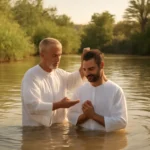
Baptism Judaism: A Guide to Immersion, Conversion, and Jewish Rituals
In many discussions about Jewish practice, the word immersion appears as a central theme across
different domains of life. In Jewish tradition, the primary ritual associated with immersion is the mikveh, a
ritual bath used for purification, spiritual renewal, and, in many communities, as a decisive step in conversion to Judaism. Although the term “baptism” is more commonly associated with Christian rites,
some people use it as a cross-cultural descriptor for ritual immersion in Judaism. This guide aims to
explain the Jewish understanding of immersion, its historical roots, how it functions in conversion,
and the various rituals and practices that surround it.
What is the concept of ritual immersion in Judaism?
The core idea behind ritual immersion in Judaism is cleansing, renewal, and the restoration of
spiritual/ritual status within the framework of Jewish law. The mikveh is not a symbolic baptism in the Christian
sense; rather, it represents a formal, halakhic (Jewish law) mechanism by which a person can become ritually pure
or regain a state that allows full participation in communal life.
There are several contexts in which immersion plays a role:
Purification and taharah—historically connected to matters of ritual purity, touch with certain
states of impurity, or preparation for certain religious duties.
Conversion—a central stage in the path to join the Jewish people for someone who is not yet
Jewish, or a person who seeks to reaffirm their Jewish identity through an accepted conversion process.
Marital status and family purity—in some communities, mikveh uses are connected to family life and
laws of niddah, though experiences vary widely among denominations.
Life-cycle events—some individuals and communities mark transitions such as becoming a parent or
after certain personal milestones with immersion.
Across the Jewish world, there are many variations in how immersion is practiced, where it takes place, and who
administers it. The mikveh remains a living, adaptable institution whose usage reflects the diversity of Jewish
life while preserving a shared thread of ritual meaning.
The Mikveh: History, Practice, and Symbolism
Historical roots and purpose
The mikveh has ancient roots in the Jewish legal tradition. Its use is grounded in the Hebrew Bible
and rabbinic literature, with later codifications clarifying when and how immersion is required or permissible. The
central idea is that immersion in living water—often naturally sourced water—but also in a bath that is connected to a
functioning mikveh pool—transforms a person’s state from a matter of ritual status to one of accepted participation
in the community.
What the mikveh entails
A standard mikveh is a dedicated facility designed to hold a specific amount of water to render the ritual
immersion valid according to halakhic standards. In practice, the mikveh combines water quality, privacy, and appropriate supervision. A person undergoing immersion stands or sits in a private
space and submerges completely, often multiple times, depending on the purpose and community custom.
The ritual emphasizes intention and compliance with halakha (Jewish law). The act itself is simple—total immersion
in the water—yet the conditions, preparation, and the reasons behind the immersion give the ritual its depth and
meaning.
Ritual symbolism and personal meaning
Many participants describe immersion as a moment of renewal and rebirth within the
covenant. The water represents a boundary-crossing experience, moving a person from one spiritual state to another.
Beyond the technical aspects, immersion often becomes a reflective practice: a time to consider one’s values, duties to
the community, and relationship with God, family, and fellow Jews.
Conversion to Judaism and the Immersion Rite
For individuals who choose to pursue Judaism, conversion involves study, mentorship, and ritual
elements that culminate in a formal embrace of Jewish life. A key component of traditional conversion is tevilah, the
act of ritual immersion in a mikveh. In most traditional paths, immersion is paired with
other requirements, including circumcision or a symbolic circumcision for those who are already circumcised—often
referred to as brit milah—and a court of Jewish scholars or a bet din that validates the
candidate’s conversion questions and commitments.
Process overview
Study and preparation—The candidate studies Jewish law, ethics, holidays, and daily practice under the guidance of a rabbi or rabbinic board.
Circumcision or hatafat dam brit—Males who are not already circumcised undergo brit milah, or, if already circumcised, a symbolic drawing of blood (hatafat dam brit) may be performed in some traditions.
Bet Din review—A panel of three Jewish scholars considers the candidate’s knowledge, sincerity, and intent to join the Jewish people.
Immersion (tevilah) in the mikveh—The final ritual immersion is performed with witnesses and proper intention, signifying entry into Jewish life.
Acceptance and naming—Many communities bestow a Hebrew name and publicly recognize the conversion as a formal entry into the community.
Roles of community and ritual specialists
Conversion processes vary across denominations. In Orthodox communities, the requirements tend to be stringent and
tightly controlled by traditional halakhic standards. In Conservative and Reform communities, there may be more
flexibility, with different paths and rabbis offering variations in study length, ritual specifics, and the scope of
the bet din panel. Regardless of denomination, the immersion ceremony remains a pivotal moment in the conversion
journey.
The concept of baptism in Judaism is not an equivalent practice to conversion by immersion in a mikveh. When
people use the term “baptism” in relation to Judaism, they are often describing the outward ritual immersion stage of
conversion or, less precisely, a general sense of purification. It is important to distinguish these as distinct
religious frameworks with different theological bases, procedures, and communal implications.
Preparation and Practical Guidelines for Immersion
Whether you are exploring the possibility of conversion or simply seeking a better understanding of ritual immersion within Jewish life, preparation is central. Practical steps often include the following:
Educational study—Foundational courses or study with a rabbi to learn about Jewish law, ethics, holidays,
rituals, and communal expectations.
Community connections—Participating in synagogue services, Shabbat meals, and other communal activities to
understand Jewish living in practice.
Personal reflection—Clarifying one’s motivations, commitments to Jewish life, and sincerity in joining the
community.
Medical or ritual considerations—For immersion, some people coordinate with a rabbi about health
considerations, ensuring a safe and respectful immersion environment.
For prospective converts, specific requirements differ by community. Some emphasize a longer period of study and a more
formal bet din process, while others may offer more accelerated paths. It is essential to engage with a qualified rabbi or
rabbinic official to understand the precise expectations for your situation.
Rituals Surrounding Immersion and Community Life
Immersion in a mikveh is often embedded within a broader set of rituals and life-cycle events. The rituals and
practices surrounding mikveh usage emphasize dignity, privacy, and spiritual intent. Some common contexts include:
Niddah and family purity—In many communities, the laws of family purity describe intervals during which
marital intimacy is restricted, followed by immersion in the mikveh to resume marital relations. These laws have varied
interpretations and levels of observance across denominations and communities.
Preparation for major life milestones—In some traditions, immersion accompanies major life events such as
marriage, conversion, or the birth of a child.
Post-surgery or medical purification—In certain contexts, immersion is used as a part of healing or
ritual renewal after illness or medical procedures, depending on community guidance.
It is important to approach these rituals with cultural sensitivity and awareness of local practice. The mikveh is a
communal resource, and its use is governed by local rabbinic authority and custom. In addition to the immersion rite
itself, communities may offer guidance on the proper attire, modesty, and etiquette surrounding the immersion process.
Terminology: Mikveh, Tevilah, and the Language of Immersion
Understanding the vocabulary helps clarify how immersion is used within Judaism. Here are some key terms:
Mikveh — The ritual bath facility or the concept of immersion used for purification, conversion, and
other life-cycle purposes.
Tevilah — The act of immersion in the mikveh, a central component of conversion and certain ritual contexts.
Brit milah — The commandment of circumcision, a significant element in male conversion processes.
Bet Din — The panel of rabbinic judges who oversee and validate a conversion or other halakhic matters.
Taharah — Ritual purity, the broader framework within which mikveh immersion often sits.
These terms reflect how Jewish ritual life blends physical action with spiritual meaning. The language underlines
that immersion is not an isolated act but part of a larger system of commandments, community expectations, and ethical
commitments.
Common Questions and Myths about Immersion in Judaism
Readers often ask about practical concerns and common misconceptions. Here are some frequently asked questions with concise answers.
Is mikveh immersion the same as baptism? No. Mikveh immersion is a religious ritual in
Judaism used for purification, ritual status, and conversion. Baptism is a separate religious rite in
Christianity with different theological meanings. The two should not be considered equivalent.
Who can attend an immersion ceremony? Attendance rules vary by community. In many cases, the
immersion itself is a private act performed with a designated independent observer or witnesses. Some
communities allow a dayan or a rabbinic official to oversee, while others emphasize privacy.
Do I have to convert to Judaism by immersion if I want to join the Jewish people? In most traditional
paths, yes. However, different denominations have different requirements for that conversion process, and some
communities may offer alternative formulations or additional steps, such as study or public commitment, alongside
immersion.
Can immersion be used for non-conversion purposes? Yes. Many people use the mikveh for personal or ritual
reasons beyond conversion, such as spiritual renewal, recovery from illness, or preparation for life-cycle events.
Variations Across Denominations: How Communities Practice Immersion
Across denominations—Orthodox, Conservative, Reform, and Reconstructionist—there are differing emphases and
practices related to immersion. Here is a broad outline:
Orthodox communities tend to maintain strict halakhic requirements, with a formal and supervised
conversion process that adheres to traditional standards. Immersion occurs under the guidance of a recognized bet din
and qualified ritual immersion site, with attention to circumcision and other prerequisites.
Conservative communities generally emphasize a balanced approach, combining traditional halakha with
modern scholarship. The immersion rite remains central to conversion, but study requirements and oversight can be
tailored to individual circumstances and rabbinic guidance.
Reform and Reconstructionist communities may place greater emphasis on personal autonomy, inclusive
interpretation, and community questions of belonging. The role of immersion in conversion can vary, and some paths
may focus more on study, commitment, and public affirmation than on strict procedural details.
Regardless of denomination, the mikveh itself remains a powerful symbol and practical resource that reflects the
continuity of Jewish life across time and place.
Where to Learn, Practice, and Seek Guidance
If you are curious about immersion, conversion, or Jewish ritual life in your area, here are practical steps to take:
Contact local synagogues or Jewish community centers to inquire about mikveh facilities,
conversion programs, and available mentors or rabbis for study.
Speak with a rabbi who can explain the specific requirements for your situation and guide you through the
appropriate process, whether for immersion or a broader path toward Jewish life.
Visit a mikveh—If possible, arrange a tour to understand the site’s layout, privacy measures, and
the practical steps involved in tevilah. Many mikvaot also offer educational resources or introductory sessions.
Explore denominational resources—Online resources, community bulletins, and literature from
various denominations can help you understand how immersion fits into different approaches to Jewish law and
practice.
The decision to pursue immersion or conversion is highly personal. It can be supported by a network of teachers,
friends, and community members who value sincere learning, ethical living, and communal belonging.
Ethical and Spiritual Dimensions of Immersion
Beyond the procedural aspects, ritual immersion in Judaism invites contemplation about the
responsibilities of being part of a people, the meaning of purity and integrity, and how one’s actions relate to the
broader community. The spiritual dimensions of immersion emphasize:
Intention (kavanah)—Appropriate mental focus and a sincere desire to join or renew one’s bond with Jewish law and community.
Community accountability—Engagement with others, learning from their wisdom, and contributing to communal life.
Daily practice—Immersion is not an isolated act; it is integrated with ongoing study, ethical behavior, and
participation in sacred time and routine.
In many ways, immersion acts as a bridge between personal life and communal belonging. It asks adherents to
acknowledge a lifeworld that includes responsibilities to family, to ritual life, and to a community of shared values.
Stories of Personal Journey: Immersion in Real Life
People approach ritual immersion from diverse life experiences—some seeking formal conversion, others seeking a
sense of renewal within Judaism, and still others exploring a connection to Jewish heritage. The stories vary in tone
and detail, but common themes include:
Finding a supportive rabbinic mentor who explains the steps clearly and respectfully.
Balancing modern life with traditional Jewish law, and discovering a path that honors both.
Experiencing a period of study, reflection, and practical preparation before the moment of tevilah.
Receiving guidance from a welcoming and patient community that helps one integrate into daily Jewish living.
Each journey into immersion or conversion is unique, and respectful listening is essential. For many, the mikveh
becomes a meaningful anchor in their ongoing relationship with Jewish practice and identity.
Conclusion: Immersion as a Living Jewish Practice
Immersion in the Jewish sense—whether considered within the framework of conversion,
ritual life, or personal renewal—serves as a powerful reminder of how Jewish law, community, and spirituality
intersect. While the term baptism is often used in interfaith discussions as a loose descriptor for
immersion rituals, Jewish immersion remains rooted in a distinct set of beliefs, procedures, and communal practices.
The mikveh is more than a bath; it is a doorway to belonging, a pedagogical tool for ethical growth, and a space in
which Jewish life can be renewed across generations.
If you are curious about exploring this path, consider reaching out to a local rabbi or Jewish educational program.
Learn about your community’s stance on tevilah, brit milah (where applicable), and bet din processes. Engage with the language of immersion, the symbolism of water, and the lived reality
of Jewish ritual life. Whether you seek personal spiritual renewal, a formal conversion, or simply a deeper
understanding of Jewish practice, the journey begins with informed curiosity and respectful dialogue.