Bible: How Many Times to Forgive? Exploring Forgiveness in Scripture
Forgiveness is a central theme across the biblical narrative, shaping personal conduct, community life, and spiritual growth. When readers ask how many times to forgive, they are wrestling with a question that blends mercy, accountability, and justice. This article offers a broad, biblically grounded exploration of forgiveness in Scripture, examining the famous pronouncement about seventy times seven, surveying additional passages, and offering practical guidance for living out forgiveness in daily life. Rather than presenting a rigid tally, this study emphasizes the Spirit-led posture of mercy that Scripture invites us to cultivate, while also recognizing the need for wisdom, boundaries, and repentance in relationships.
Understanding the Question: How many times to forgive?
People often approach forgiveness with two competing impulses: a longing for freedom from grievance and a concern that repeated harm may call for accountability or boundaries. In biblical terms, the question can be framed as: how often should mercy be offered toward someone who offends, repents, repeats the offense, and asks for forgiveness again? The biblical answers are not framed as a tidy numeric rule but as a dynamic invitation to mercy, humility, and reconciliation where possible, tempered by wisdom and safety.
In everyday language we might say, how many times to forgive is a question about whether forgiveness is elective or obligatory, about when forgiveness is unconditional and when it should be guarded, and about how grace interacts with truth. The Scripture speaks to all of these facets, sometimes emphasizing unlimited mercy toward the offender, at other times underscoring the harms that require accountability. The Bible thus presents forgiveness as a virtue that is both a divine gift and a disciplined practice for believers.
As you read, you will notice several recurring themes that help anchor the discussion: grace as the motive for forgiveness, repentance as a potential condition for restored trust, love as the atmosphere in which forgiveness flourishes, and freedom from bitterness as the outcome that God desires for His people. The emphasis is less about counting to a certain number and more about cultivating a forgiving heart that remains faithful to God and to neighbor.
The Core Scriptural Guideline: Seventy Times Seven
Matthew 18:21-22 — A hyperbolic invitation to limitless mercy
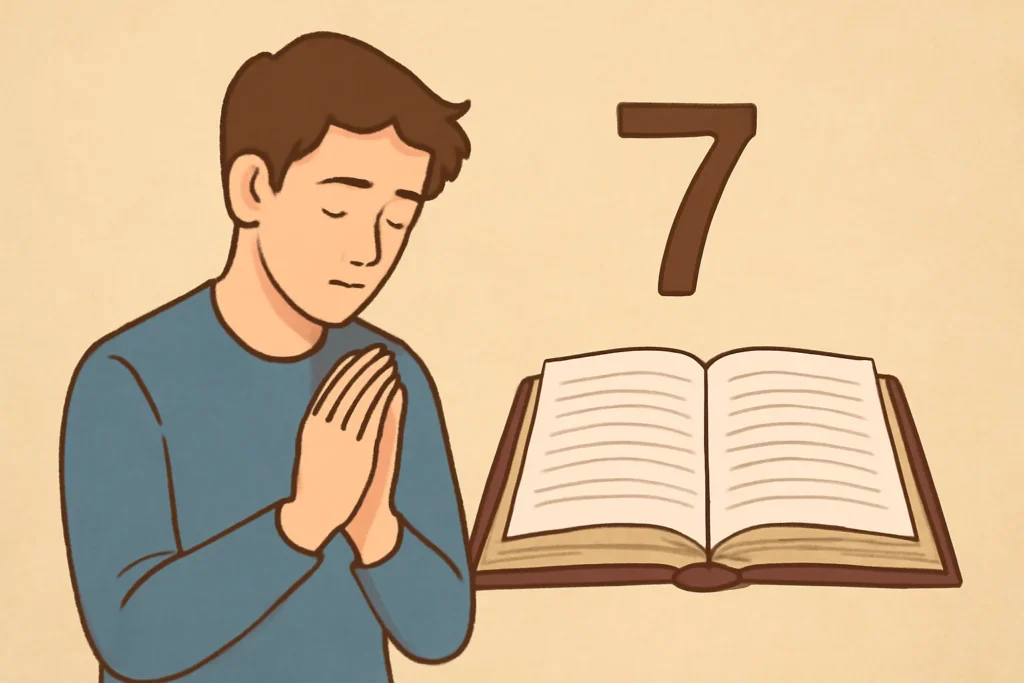
In one of Jesus’ most famous teachings on forgiveness, Peter asks Jesus, “Lord, how often shall my brother sin against me, and I forgive him? Up to seven times?” Jesus responds with a striking phrase: “I do not say to you, up to seven times, but up to seventy times seven.” (often rendered as “seventy times seven” or interpreted as an unlimited number). This passage is not a mandate to tally forgiveness in a ledger; rather, it signals that forgiveness should be abundant, countering an instinct to impose limits based on offense. The number itself functions as a rhetorical device for generosity, not a math problem to be solved.
Scholars commonly describe this as a hyperbolic instruction: the idea is not to keep a precise count but to communicate that forgiveness ought to be generous, persistent, and unbounded in the face of repeated injury. When the Gospel writer records this exchange, the message is clear: grace transcends human limits, and the community of Jesus-followers is called to imitate that liberality in everyday life.
Luke 17:3-4 — Forgiveness when a brother repents
Luke’s account adds nuance to the discussion. Jesus teaches, “If your brother sins, rebuke him; and if he repents, forgive him. And if he sins against you seven times in the day, and seven times comes back to you saying, ‘I repent,’ you must forgive.” Here, repentance becomes a definite condition for forgiveness, yet the call to forgive remains persistent even when the sin is repeated. Luke emphasizes that mercy is the biblical response when genuine repentance appears, reinforcing the link between forgiveness and repentance in fostering reconciliation.
What these passages collectively teach about repetition and mercy
Together, Matthew 18:21-22 and Luke 17:3-4 illuminate two important realities: first, forgiveness is not a rare, contingent reward for perfect behavior; second, forgiveness is deeply connected to the offender’s attitude—particularly repentance. The language of “seventy times seven” declares mercy without calculating the cost, while Luke’s wording guards against forgiving without genuine repentance. In practical terms, this means:
Forgiveness is often offered before a full restoration of trust; trust may require time and evidence of changed behavior.
Repentance matters as a sign of turning away from the harm, which can re-open paths toward reconciliation.
Repetition of harm does not automatically void forgiveness, but repeated offenses may demand discernment about how to protect yourself and others, while still upholding a merciful posture toward the offender.
Other Key Passages about Forgiveness
In addition to the Matthew/Luke passages, the Bible offers multiple texts that illuminate the practice and scope of forgiveness in diverse settings—worship, family life, community relations, and interpersonal conduct. Below are some pivotal references, each contributing a dimension to the broader question of how many times to forgive and how forgiveness operates in a mature faith community.
Forgiveness in the Lord’s Prayer and related teaching
Matthew 6:12 – “And forgive us our debts, as we also have forgiven our debtors.” This petition binds receiving forgiveness to offering forgiveness; the rhythm of receiving and extending mercy is described as interconnected.
Matthew 6:14-15 – “For if you forgive others their trespasses, your heavenly Father will also forgive you; but if you do not forgive others, neither will your Father forgive your trespasses.” These lines stress a reciprocal dimension: mercy received is linked to mercy shown toward others.
Direct exhortations to forgive and cultivate peace
Mark 11:25 – “And when you stand praying, forgive, if you have anything against anyone, so that your Father also who is in heaven may forgive you your trespasses.” The discipline of prayer and forgiveness are mutually reinforcing.
Ephesians 4:31-32 – “Let all bitterness and wrath and anger and clamor and slander be put away from you, along with all malice. Be kind to one another, tenderhearted, forgiving one another, as God in Christ forgave you.” Mercy is rooted in the example of God’s grace in Christ.
Colossians 3:13 – “bearing with one another and, if one has a complaint against another, forgiving each other; as the Lord has forgiven you, so you also must forgive.” The model is God’s forgiveness toward us, which becomes the standard for human relations.
Forgiveness, love, and wisdom for everyday conduct
Romans 12:17-21 – “Do not repay anyone evil for evil… If your enemy is hungry, feed him; if he is thirsty, give him something to drink.” The call here is to pursue peace and not be consumed by vengeance, which is a pathway to overcoming harm with mercy.
Proverbs 10:12 – “Hatred stirs up strife, but love covers all offenses.” This wisdom literature emphasizes that love has a reconciliatory power that can diffuse harm.
Proverbs 19:11 – “A person’s wisdom yields patience; it is to one’s glory to overlook an offense.” Patience and restraint are often essential to the practice of forgiveness.
Beyond these, the broader biblical arc repeatedly circles back to the themes of mercy, grace, and restoration. The texts invite believers to embody a posture of forgiveness as a way of imitating Christ and fostering communal harmony, while also recognizing the complex realities of wrongdoing, accountability, and harm that sometimes require wise boundaries.
Many theologians stress that the biblical call to forgiveness points toward an unbounded mercy that mirrors God’s own mercy toward humanity. The language of seventy times seven is often understood as a provocation to a mercy that transcends human limits. In this view, the Christian life is meant to be marked by generosity of spirit, willingness to overlook minor offenses, and a readiness to extend grace even when hurt deeply. This perspective emphasizes the transformative power of forgiveness to heal hearts and restore relationships, reflecting the character of God.
Forgiveness with accountability: boundaries and wisdom
Another prevailing thread in biblical interpretation is the recognition that forgiveness does not automatically erase the need for accountability or safety. Repeated harm may require protective steps—especially in contexts of abuse or exploitation. The biblical principle of wisdom, when applied alongside forgiveness, can lead to healthy boundaries, redress, and, when possible, reconciliation that does not expose the vulnerable to ongoing harm. In these cases, forgiveness remains a choice of the heart, while practical steps safeguard the well-being of individuals and communities. The balance between limitless mercy and prudent safeguards is a nuanced aspect of faithful living.
Practical Applications: How to forgive well
Forgiveness is not a one-time act but a sequence of choices that often unfolds over time. The following practical guidelines help translate biblical teaching into daily behavior, especially when confronted with persistent hurt or repeated offenses. These steps reflect the kind of discernment the Bible encourages for forgiveness in real life.
Name the hurt clearly. Acknowledge what happened and how it affected you, without minimizing or exaggerating the harm.
Commit to forgiving as a decision of the heart, even if emotions lag behind. Forgiveness is a choice that aligns with the Gospel’s mercy, not simply a feeling.
Pray for grace. Ask God to soften resentment, grant perspective, and empower you to extend mercy.
Address the offender when appropriate. In cases where reconciliation is possible and safe, communicate openly about the hurt and the path forward, inviting genuine repentance and change.
Set healthy boundaries. If harmful patterns continue, establish boundaries that protect you and others while maintaining a posture of mercy.
Pursue reconciliation if and when trust can be rebuilt. Reconciliation is a process that may require time, ongoing effort, and the offender’s demonstrable change.
Seek inner healing. Forgiveness is as much for the wounded heart as for the offender; engage supportive communities, counseling, and spiritual disciplines that foster healing.
These steps help translate the biblical call to forgiveness into concrete action. They also align with the biblical tension between unlimited mercy and wise discernment that protects the vulnerable and fosters genuine restoration where possible.
Common Questions and Misconceptions
Does forgiveness mean I forget the harm? Not necessarily. Forgiveness involves releasing personal bitterness and choosing mercy, but healthy memory can inform boundaries and prevent further harm.
Does forgiveness mean condoning wrongdoing? No. Forgiveness can allow space for healing while clearly disapproving of the offense and maintaining accountability where appropriate.
Is forgiveness always required, even without repentance? Scriptural guidance often links forgiveness with repentance, but believers are called to a stance of mercy that does not automatically erase consequences or safeguards.
How should forgiveness look in cases of repeated offenses? The spirit of Matthew 18 and Luke 17 calls for mercy even when offenses recur, but repeated harm may necessitate additional boundaries and, in some situations, accountability that protects others.
What about forgiving victims of injustice or abuse? Forgiveness can be a path toward healing for the victim, yet safety, justice, and appropriate boundaries are essential. Forgiveness does not require staying in dangerous or abusive situations; it often involves leaving harm behind while seeking justice and protection.
Variations and breadth: How different translations shape the conversation
Different Bible translations can color our understanding of forgiveness. While the core call to mercy remains constant, phrasing, emphasis, and examples vary. Readers sometimes encounter phrases like forgive seventy times seven, forgive endlessly, or forgive again and again in paraphrased or study-note contexts. Regardless of translation, the aim is to cultivate a mercy-filled life that mirrors the character of God in Christ. When studying, consider cross-referencing Matthew 18:21-22 with Luke 17:3-4 and with the extended passages in Ephesians and Colossians to gain a more complete sense of how forgiveness functions across situations.
Historical and pastoral reflections: forgiveness in community life
In church history and pastoral practice, the question of how many times to forgive has often led to pastoral cautions about safety, justice, and the welfare of the vulnerable. Pastors and theologians frequently highlight several guiding principles:
Forgiveness is a moral and spiritual discipline that reflects God’s mercy in Christ.
Communities are called to cultivate environments where healing begins with mercy and moves toward restored relationships where possible.
True forgiveness should be coupled with truth—the offender needs to acknowledge harm and pursue genuine change.
Justice and mercy can work together: forgiveness does not preclude consequences, accountability, or protective measures.
forgiveness as a living practice in a forgiving God
In the Bible, the question how many times to forgive invites believers into a broad and vibrant practice of mercy. The scriptural answers point toward a stance of unbounded mercy—as modeled by Christ—while acknowledging the complexities of human life, where repentance, harm, and safety intersect. The call is to adopt a posture that is both generous and wise: to forgive again and again as a reflection of God’s own forgiveness, while also recognizing the needs for accountability, healthy boundaries, and lasting healing. In this way, forgiveness becomes less about tallying a number and more about embodying a disposition of grace that transforms individuals and communities alike.
If you are exploring this topic for study, preaching, or personal growth, you might also consider personal reflection questions such as: What would it look like to forgive as a habit rather than as a reaction? How does repentance shape your readiness to forgive? What boundaries are wise to establish to protect the vulnerable while maintaining a forgiving heart? By wrestling with these questions, you participate in a biblical practice that remains at the heart of the Christian life: mercy grounded in truth, grace expressed in action, and a continuing journey toward reconciliation with God and neighbor.








Leave a Reply