Overview: The Call to Peacemaking in the Beatitudes
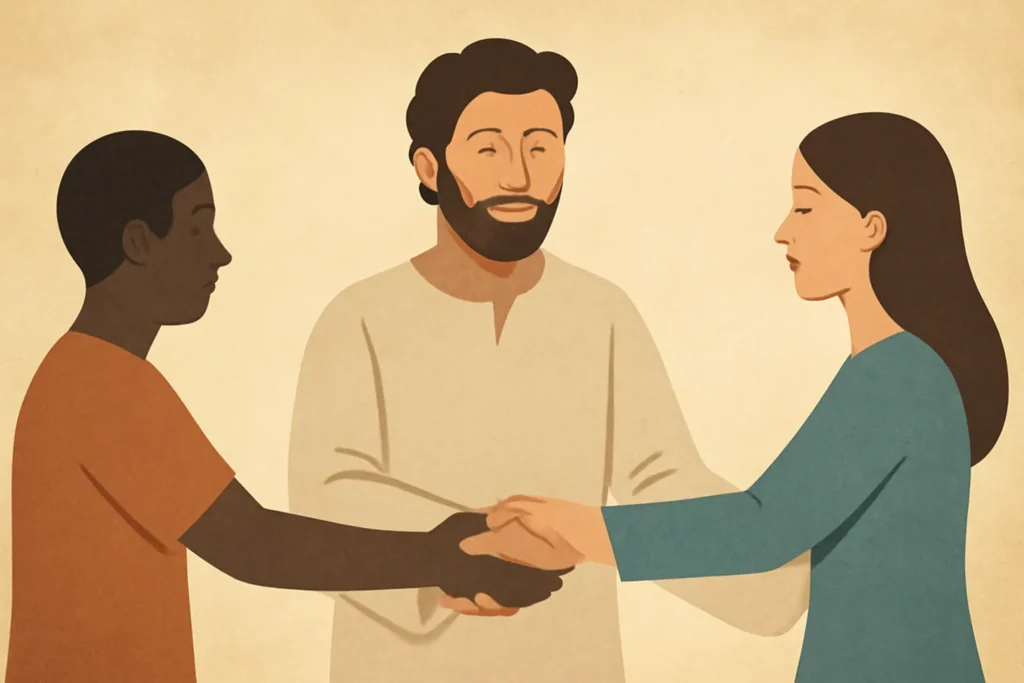
The phrase commonly rendered as “Blessed are the peacemakers” sits in the heart of the Sermon on the Mount, a collection of teachings attributed to Jesus that outlines the values and virtues of life in the kingdom of God. This beatitude is not a casual blessing for those who happen to avoid conflict; it is a commissioning to actively pursue reconciliation, justice, and harmony in a world fractured by division. When Jesus pronounces blessing on those who work for peace, he is describing a vocation that is both deeply personal and profoundly social. The blessing extends beyond a private sense of inner peace to a public identity—they shall be called the children of God—signifying a family resemblance to God himself, who is described throughout Scripture as a God of shalom, fidelity, and restorative action.
Text and Variations: What the Verse Says and How It Is Expressed
In the traditional wording of the King James Version (KJV), the verse reads:
“Blessed are the peacemakers: for they shall be called the children of God.”
This version emphasizes two concepts: the blessing and the outcome. The verb are blessed signals a divine characterization of the peacemakers’ life, while the future tense shall be called points to a visible, communal recognition that accompanies their work.
Different English translations render the sentence with subtle but meaningful nuance. Here are a few variations to provide semantic breadth:
“Blessed are the peacemakers, for they will be called children of God.” (NIV)
“Blessed are those who make peace, for they shall be called sons of God.” (older or paraphrase translations)
“Happy are the peacemakers, for they will be called children of God.” (paraphrase or contemporary wording)
“Blessed are the peacebuilders, for they will be called God’s children.” (modern paraphrase)
Even as the wording varies, the key idea remains clear: peacemaking is a divine vocation that carries a public, unmistakable mark. In the New Testament, the Greek word often associated with peace is eirene, but the term used for peacemaker conveys action, initiative, and a willingness to address conflict directly. The variations ultimately point toward a broader semantic field: to pursue reconciliation, to oppose injustice, to pursue harmony in human relationships, and to seek restoration where there is brokenness.
Historical and Literary Context: Where This Saying Fits
Placed within the Sermon on the Mount
The Beatitudes begin Matthew 5:3 with Blessed are the poor in spirit and progress through a sequence of blessings that map out the characteristics of life in the new era ushered in by Jesus. Peacemaking, like faith, mercy, and righteousness, is not passive resignation but an active posture toward a world that needs repair. As a literary unit, the beatitudes function as a curriculum for discipleship, offering both a description of the life blessed by God and a contrafactual vision of the world as it should be when God’s reign is fully realized.
Understanding the historical moment helps explain the radicality of the blessing. In 1st-century Palestine, occupied by the Roman Empire, many people understood peace primarily in political terms—humility before power, order under Rome, and security through power. Jesus’ audience, however, heard a word that reframed peace as justice, mercy, and reconciliation that crosses social boundaries. A peacemaker would be someone who refuses to participate in cycles of retaliation, who seeks reconciliation with neighbors across lines of ethnicity, class, or religious affiliation, and who bears witness to a peace that is grounded in God’s justice rather than human expediency.
To be a peacemaker is to undertake a deliberate process that diminishes hostility, addresses underlying causes of conflict, and cultivates the conditions for durable harmony. This often includes steps like dialogue, truth-telling, forgiveness, restitution, and reconciliation. It is not simply the absence of conflict but the presence of constructive, freedom-promoting engagement that honors the image of God in every person.
Peacemaking vs. peacekeeping
A useful distinction in biblical ethics is between peacemaking and peacekeeping. Peacekeeping can imply avoiding conflict at all costs, sometimes perpetuating injustice to maintain a fragile quiet. Peacemaking, by contrast, involves confronting injustice, seeking reconciliation, and choosing courageous, costly paths that restore relationships to wholeness. In biblical terms, this distinction matters because shalom—often translated as peace—encompasses justice, well-being, and flourishing for the vulnerable as well as personal harmony.
The blessing to the peacemakers is not merely a social good but a theological statement about God’s character and purposes. It aligns with broader biblical motifs:
God as the God of peace who reconciles humanity to himself and to one another.
The ministry of reconciliation entrusted to believers (2 Corinthians 5:18-19).
The reign of justice that undergirds true peace, where the vulnerable are protected and the powerful are held to account.
Several factors shape how readers interpret this beatitude:
The Greek term for peacemaker includes active initiative—initiating dialogue, building bridges, and repairing relationships.
The blessing is directed toward those who actively pursue peace, not merely those who wish for it.
The outcome, being called the children of God, signals a visible identity that marks the peacemaker as belonging to God’s family, and thus acting in a way that reflects God’s own work.
Interpretations Across Traditions
Christians across traditions have offered nuanced interpretations of this beatitude, each highlighting different aspects of peacemaking:
Catholic and Anglican traditions often emphasize integral peacemaking that includes social justice, economic fairness, and care for the marginalized as essential expressions of Christian discipleship.
Protestant perspectives frequently foreground personal reconciliation with God as the starting point of peace in relationships, while also encouraging social action to address systemic injustices.
Orthodox readings may stress the transformative work of divine grace that enables believers to embody peace in the fullness of their being, with attention to contemplative practices that foster harmony within the soul and in community life.
Historically, early Christian communities often faced real-world divisions—between Jews and Gentiles, between wealthy elites and the poor, between Romans and Christians. The call to make peace was not theoretical; it was a call to live out reconciliation in concrete ways that demonstrated the reality of God’s kingdom. In modern times, the same call remains urgent in families, neighborhoods, workplaces, churches, and nations where conflict continues to wound relationships and drain hope.
Practical Applications: How to Live as a Peacemaker
Living out the beatitude in everyday life involves concrete practices that cultivate peace rather than simply peace at a distance. Here are practical avenues for individuals and communities:
Personal reconciliation: Seek forgiveness when you have harmed someone, and offer forgiveness when wronged. Practice listening more than speaking, and validate the other person’s feelings even when you disagree.
Nonviolent conflict resolution: Use nonviolent communication, emphasize shared needs, and propose creative solutions that address underlying issues rather than only surface symptoms.
Justice-centered peacemaking: Acknowledge and confront systems and structures that perpetuate injustice. Advocate for fair treatment, equitable access to resources, and protection for the vulnerable.
Reconciliation ministries: Build or participate in programs that restore damaged relationships—families, communities, churches, and workplaces—through facilitated dialogue, mutual accountability, and communal healing.
Education and awareness: Learn about different cultures, histories, and perspectives; cultivate humility and curiosity that reduce fear and suspicion.
In practice, peacemaking often requires costly, patient action. It may involve saying hard things in love, choosing restraint in moments of anger, and choosing courageous leadership when enemies or competitors stand in the way of reconciliation. The goal is not merely to avert conflict but to construct a durable, just peace that honors the dignity of every person and reflects God’s own purposes for creation.
Church, Community, and Global Implications
Within church life, the call to peacemaking can inform everything from preaching and pastoral care to congregational governance and social outreach. Churches that embrace this calling often pursue:
Worship that shapes character: Liturgy and prayer that cultivate humility, mercy, and a longing for justice.
Pastoral care for the wounded: Ministry to victims of violence, abuse, or discrimination with a posture of solidarity and advocacy for healing and protection.
Creation of inclusive spaces: Welcoming communities for people of diverse backgrounds, with intentional practices that dismantle prejudice and promote belonging.
Public witness: Peacebuilding as a public good—participation in dialogues, peace initiatives, and policies that reduce harm and promote common good.
On a broader scale, the phrase invites Christians to engage with societal conflicts—whether interfaith tensions, ethnic disputes, or national policy debates—through a posture that seeks to understand, heal, and reconcile. It reframes political activism not as a zero-sum struggle for power but as a disciplined practice of mercy and justice, guided by a vision of humans as image-bearing beings worthy of dignity and flourishing.
Reflection and Practice: Questions for Discipleship
To personal and communal growth, consider these reflection prompts and practices. They can be used individually, in small groups, or within family settings:
Distance from conflict vs. engagement for peace: When do you tend to withdraw from conflict, and when do you lean into constructive dialogue? What motivates your choices?
Listening as a peacemaking tool: In a recent disagreement, how might listening better have facilitated healing? What steps can you take to listen with empathy and without defensiveness?
Addressing injustices: Are there relationships or communities in your life where injustice persists? What is one tangible step you can take this month to begin reconciliation?
Practical mercy: How can you extend mercy in everyday interactions—at work, in school, or in your neighborhood—without compromising truth or accountability?
Prayer for peace: How can prayer equip you to pursue peace with wisdom, courage, and humility? What role does gratitude play in peacemaking?
These prompts are not only for personal meditation; they can seed group conversations, classroom discussions, or church study guides. The aim is to move from contemplation to action, from ideal to practice, so that the character described in the beatitude becomes a lived reality in communities, nations, and international relations.
Common Misunderstandings and Clarifications
Several misunderstandings about this beatitude should be clarified to prevent misapplication:
Misunderstanding: Peacemakers are avoiders of conflict. Reality: Peacemaking often requires confronting harsh truths and facing conflict with courage and resolve.
Misunderstanding: Peacemaking equals political naïveté. Reality: Peacemaking recognizes power dynamics and seeks justice, not mere appeasement.
Misunderstanding: Peacemaking is quietism. Reality: It may involve bold actions, bold words, and creative strategies to dismantle injustice while preserving human dignity.
Misunderstanding: Only those in leadership can be peacemakers. Reality: Every believer is called to peacemaking in daily relationships and communities, regardless of status.
Historical Examples: Peacemaking in Scripture and Tradition
Across biblical narratives and church history, peacemaking has been embodied by figures who chose costly paths of reconciliation. Some illustrative patterns include:
Reconciling estranged neighbors or family members through honest dialogue and forgiveness.
Addressing collective wounds in communities by pursuing restorative justice, truth-telling, and mutual accountability.
Advocating for the vulnerable and speaking truth to power in ways that promote safety and dignity for all involved.
Engaging in ecumenical and interfaith dialogue that honors differences while seeking common ground for the common good.
These examples illustrate that peacemaking is both an ethical obligation and a hopeful invitation—a way of life that aligns human relationships with the purposes of God, even when the path is strenuous or costly.
The Living Ethic of Peacemaking
The teaching of Blessed are the peacemakers invites readers to embrace a vocation that is as much about personal integrity as it is about social transformation. It is an invitation to embody a peace that is rooted in God, shaped by justice, and enacted through mercy. The blessing promises a unique identity—the children of God—that emerges when individuals and communities act against division and for reconciliation, when they risk relational vulnerability in the service of healing, and when they pursue a peace that reflects the character and purposes of the Creator.
In a world often marked by hostility, fragmentation, and fear, this beatitude remains provocatively relevant. It challenges believers to measure their lives by the standard of reconciliation rather than retaliation, by acts of mercy rather than merely by doctrine, and by a persistent hope that peace, grounded in justice, can flourish. As readers reflect on the meaning of Blessed are the peacemakers, they are invited to participate in a tradition that has long enrolled ordinary people into a mighty work: to move toward peace in every sphere of life—home, church, workplace, and society—so that all people might encounter the God who brings true, lasting shalom.







Leave a Reply