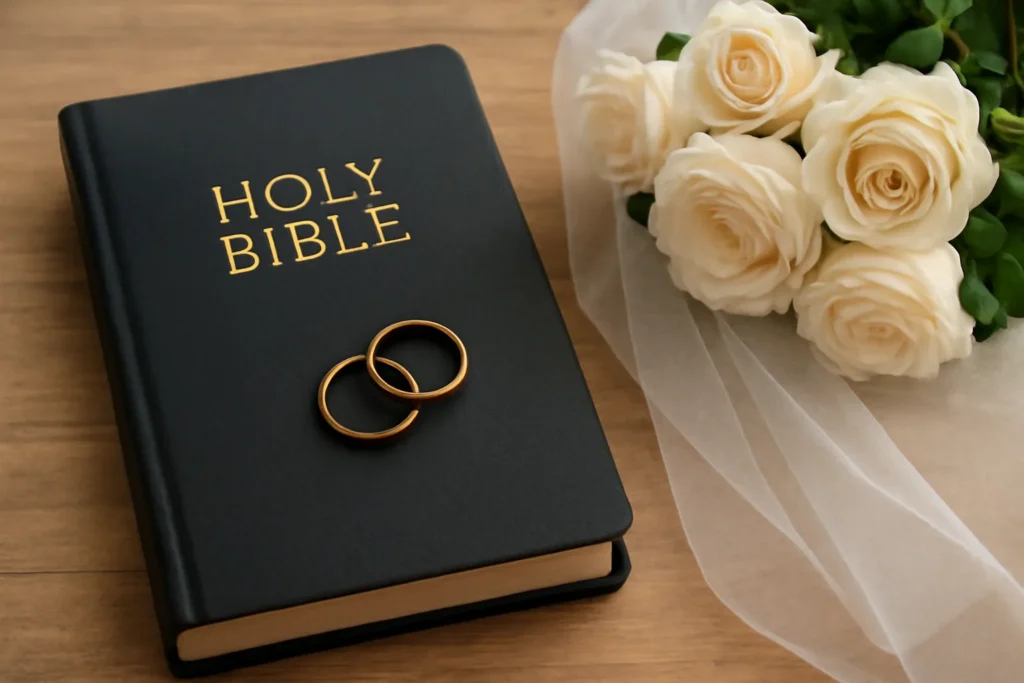
Bible weddings: Meaning, purpose, and the faith-filled path to a scriptural ceremony
A Bible wedding is more than a ceremony; it is a sacred covenant that seeks to honor God, celebrate a couple’s
commitment, and reflect the divine design for marriage. Throughout Scripture, marriage is described not merely as a social contract, but as a covenant before God and a living illustration of love, faithfulness, and mutual service. In today’s world, couples
may refer to their union as a biblical wedding, a scriptural wedding, or a holy matrimony—all variations that point back to a central idea:
God’s purposes for male and female in a lifelong partnership.
This article explores the meaning of a Bible wedding, highlights essential verses that ground a ceremony in Scripture,
and offers practical planning tips for a faith-filled event. Whether you are planning a small family gathering or a large community celebration,
the aim is to help you design a wedding that is theologically sound, pastorally sensitive, and culturally inclusive where possible.
Foundations: what makes a marriage a biblical wedding
The Bible pictures marriage as a divine institution established by God at creation. In a Bible wedding, the couple seeks to align
their vows with God’s intent, recognizing that their union points to spiritual truths beyond themselves. Consider these foundational ideas
that repeatedly surface in biblical accounts:
Covenant before Creator: Marriage is described as a sacred covenant that God blesses and sustains. The couple enters this covenant with reverence and accountability to God.
One flesh as unity: Scripture emphasizes unity and intimacy. The phrase “they shall be one flesh” (Genesis 2:24) captures the depth of companionship,
mutual dependence, and shared purpose in marriage.
Love as action, not merely feeling: Biblical weddings are oriented toward daily, sacrificial love—patient, kind, and enduring (1 Corinthians 13).
Roles within partnership: The Bible often presents complementary roles that honor both partners’ dignity, while emphasizing respect, gentleness, and care.
Key verses for a Christian wedding: principles to guide the ceremony
Including carefully chosen Scripture readings helps anchor a wedding in eternal truth. The following verses are commonly used in Bible weddings
because they articulate key themes: commitment, covenant, love, and unity.
Genesis 2:24 and related foundations
“Therefore shall a man leave his father and his mother, and shall cleave unto his wife, and they shall be one flesh.” —Genesis 2:24
This verse is often cited as the biblical understanding of lifelong union and exclusive devotion in marriage.
Jesus’ affirmation of unity
“What therefore God hath joined together, let not man put asunder.” —Matthew 19:6
“…they are no more twain, but one flesh. What therefore God hath joined together, let not man put asunder.” —paraphrase of Matthew 19:6
Pauline reflections on love and residence in marriage
“For this cause shall a man leave his father and mother, and shall be joined unto his wife, and they shall be one flesh.” — Ephesians 5:31-32
The passage continues by describing the relationship as a mystery that reflects Christ and the church, offering a lens for the couple’s love and responsibility.
“Love is patient, love is kind… it bears all things, believes all things, hopes all things, endures all things.” — 1 Corinthians 13:4-7
A practical reminder that love should guide every moment of a couple’s life together, including their wedding day.
Planning a Bible wedding: steps to a faith-filled ceremony
Planning a ceremony rooted in Scripture involves more than selecting readings and vows. It is about shaping an experience that honors God,
respects traditions, and communicates truth to family and friends. Below is a practical framework to help you approach a biblical wedding with clarity
and intentionality.
Pare down to essentials: Begin with premarital counseling that centers on Scripture, expectations, conflict resolution, and spiritual goals.
Define core beliefs: Clarify core doctrinal beliefs that will shape your marriage, including roles, prayer life, church involvement, and family worship.
Develop a shared spiritual rhythm: Establish regular times of Bible reading, prayer, and worship as a couple before the wedding day and after.
Choosing an officiant and the wedding party
Officiant selection: Choose a pastor, priest, or trusted spiritual leader who understands your faith tradition and is comfortable guiding a biblically centered service.
Pastoral involvement: Invite a mentor or a spiritual elder to participate in prayers, readings, or vows to reinforce the covenant nature of the day.
Pastoral boundaries and roles: Clarify the roles of the bride, groom, and families to avoid confusion on the day of the ceremony.
Vows, readings, and symbolic elements
Vows with scriptural resonance: Craft vows that reflect Scripture’s language and themes, such as lifelong commitment, sacrificial care, and mutual respect.
Readings with intent: Select readings that speak to covenant faithfulness, grace, compassion, and unity rather than solely romantic sentiment.
Symbolic measures: Consider a symbolic act such as a unity candle, sand ceremony, or a prayer of blessing that underscores God’s presence in the pledge.
Readings and music that align with a scriptural wedding
Readings by theme: Covenant, love, patience, and faith. Create a short list of 4–6 options so the couple can prayerfully select.
Choice of hymns and songs: Favor songs that declare faithfulness and blessing on the union. Consider hymns rooted in traditional theology or contemporary worship with biblically sound messages.
Musical balance: Use music to support, not overwhelm, the sacred character of the service. Instrumental pieces can also provide reflective moments between readings.
Decor, venue, and liturgical style
Decor that honors simplicity: Use scripture panels, a few floral arrangements, and subtle symbolism that points to covenant and grace rather than extravagance.
Venue alignment: Choose a setting that fosters reverence and communal blessing, such as a church, chapel, or a venue with a spiritual atmosphere.
Liturgical flow: Plan a service order that is clear, dignified, and prayerful, with moments for worship, confession (as appropriate), and blessing.
Legalities, budget, and practical considerations
Legal requirements: Secure marriage licenses, verify witness requirements, and ensure the ceremony complies with local laws.
Budget wisely: Allocate funds to essential elements—venue, officiant, counseling, and meaningful elements that communicate the faith-based message.
Contingency planning: Prepare for weather, travel, and family dynamics with grace and practical steps that protect the spiritual focus of the day.
Structure ideas: a sample framework for a Bible wedding ceremony
A well-ordered service helps guests understand the spiritual significance and keeps the focus on God’s presence. Below is a sample structure that you can adapt.
Entrance and welcome, with a brief invocation or prayer inviting God’s blessing on the couple.
Processional and opening words that emphasize covenant and grace.
Scripture reading(s) chosen for their relevance to love, unity, and commitment.
Commentary or reflection by the officiant on biblical foundations for marriage, followed by a short pause for prayer.
Exchange of vows, with or without personal customization, grounded in Scripture and God-centered promises.
Exchange of rings as a visible sign of the unending nature of the promise.
Prayer of blessing over the couple and, if appropriate, blessing over families and future children.
Closing remarks and declaration of marriage, followed by the couple’s first kiss or a culturally appropriate gesture.
Recessional with a song that echoes the gospel and blessing over the union.
Common questions about Bible weddings and their answers
What makes a wedding “biblical” as opposed to merely traditional?
Answer: A biblical wedding explicitly situates the ceremony within God’s design for marriage, centers vows on covenantal commitments, and invites God’s presence through prayer, Scripture readings, and spiritual guidance. It prioritizes spiritual formation over social spectacle while honoring cultural practices respectfully.
Can nonbelievers participate in a Bible wedding?
Answer: It depends on the couple’s convictions and the officiant’s policies. A Bible-centered ceremony can be gracious and welcoming, but it should honestly reflect the couple’s beliefs and boundaries. In some cases, a nonreligious or interfaith element can be woven with care, so long as the core message remains authentic to Scripture and the couple’s faith commitments.
Is a Bible wedding primarily for heterosexual couples?
Answer: Historically, most biblical frameworks describe heterosexual marriage. Modern churches vary in practice and interpretation. If a faith community includes same-sex couples, leaders often navigate doctrinal beliefs with pastoral care, seeking to reflect charity, truth, and the integrity of their religious tradition while maintaining structure that aligns with their convictions.
What if a couple wants to incorporate cultural or personal elements?
Answer: It’s appropriate to weave meaningful cultural traditions or personal stories into scripture-based vows and readings, provided they do not contradict core biblical principles and help illuminate the spiritual significance of the covenant.
How can we involve family and guests in a respectful, scripturally-sound way?
Answer: Invite family to participate through readings, prayers, or blessings, and explain the spiritual purpose of each element. Clear communication about the service’s meaning helps guests engage with reverence and joy.
Tips for a respectful, inclusive, and theologically sound ceremony
Prioritize clarity of gospel-centered language: Use phrases that reflect grace, redemption, and God’s love for the couple and the world.
Avoid padding the service with secular traditions that diminish the biblical message: Include meaningful acts that align with scriptural truth and the couple’s faith identity.
Honor both partners equally: Ensure vows and readings elevate mutual respect, leadership that serves, and shared spiritual goals rather than stereotypes about gender roles.
Provide pastoral care for guests: Offer a brief post-service opportunity for prayer or blessing, and consider a reception script that continues the spirit of gratitude and worship.
Practical guides: choosing readings, vows, and songs for a Bible wedding
The atmosphere of a scriptural wedding benefits from purposeful choices that emphasize theological meaning. Here are concrete guidelines for
selecting readings, composing vows, and choosing music.
Selecting readings with biblical coherence
Choose 2–4 readings that harmonize around covenant, love, forgiveness, and future hope.
Balance Old and New Testament passages to show the unity of the biblical story of marriage.
Keep readings succinct enough to maintain focus and allow time for prayers and reflections.
Incorporate phrases like “I will love you with patience and kindness”, or “I will cherish and protect you, in sickness and in health”, while anchoring them in biblical language.
Include a commitment to faith, spiritual growth, and a shared life of prayer and worship.
Avoid vows that may imply coercion and instead emphasize mutual consent and grace.
Opt for songs that celebrate God’s faithfulness, such as timeless hymns or modern worship pieces with biblical lines.
Consider a congregational song that invites guests to participate in praise or blessing for the couple.
Sample language and resources for preparing a Bible wedding
If you’re compiling resources for a biblical wedding ceremony, you may use the following templates and prompts as a starting point:
“Lord, we thank you for the gift of marriage. As this couple enters into covenant before You, bless them with grace, unity, and faith that endures.”
Vows: “I take you to be my lawfully wedded partner, to love you as Christ loves the church, to serve you, to walk with you in faith, and to seek God’s glory in all we do.”
Blessing: A prayer for the couple’s future, families, and spiritual growth, asking God to guide their steps and sustain their love.
Final reflections: the spiritual significance of a scriptural union
A holy matrimony is more than a celebration of romance; it is an act of worship, an invitation to the presence of
God, and a demonstration of grace in community. In a Bible wedding, a couple publicly commits to live under God’s oversight,
submit to one another in love, and pursue a life that mirrors the gospel. The ceremony becomes a catechesis for family and friends:
a demonstration that love, faith, and hope are not merely personal emotions but divine gifts meant to be stewarded within a covenant
relationship.
Variations and language you might use to describe this wedding approach
To enhance semantic breadth and reach diverse readers, you can use variations such as biblical wedding, scriptural ceremony, Christian wedding, covenant marriage, and god-centered nuptials when discussing the topic in articles,
guides, or onboarding materials. Each term emphasizes a slightly different facet—covenant, divine design, or sacrificial love—while pointing to the same biblical core.
embracing a Bible-based path for the wedding journey
A Bible wedding—whether referred to as a biblical wedding, a scriptural wedding, or a holy matrimony—invites
a couple to attune their lives to God’s purposes for marriage. It invites the gathered community to witness a vow that is grounded in Scripture,
sustained by prayer, and marked by love that serves, forgives, and hopes. By centering the ceremony on biblical truth, the couple’s union
becomes an ongoing invitation to live out the gospel together, a living testimony of divine grace in everyday life.










Leave a Reply